Lebanese President Joseph Aoun met a visiting United Nations Security Council delegation, urging action against Israel’s repeated ceasefire violations, stressing urgent support for Lebanon’s sovereignty and regional stability efforts.
Aoun highlighted Israel’s continued military presence inside southern Lebanon and frequent attacks on civilians, calling on the Security Council to pressure Israel to fully implement the November 2024 ceasefire agreement.
During discussions, Aoun explained Lebanon’s efforts to control armed groups, particularly Hezbollah, and requested the UN delegation monitor the army’s plan to disarm militias and limit weapon proliferation.
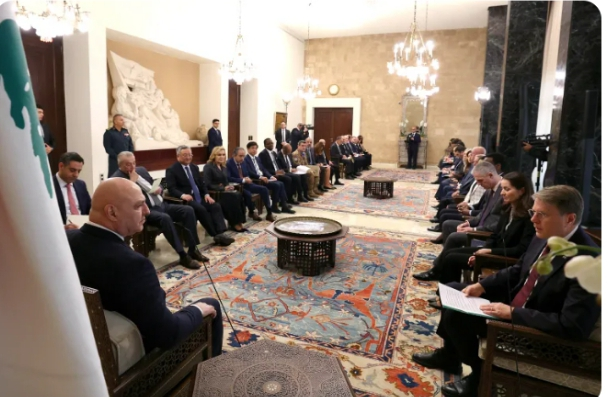
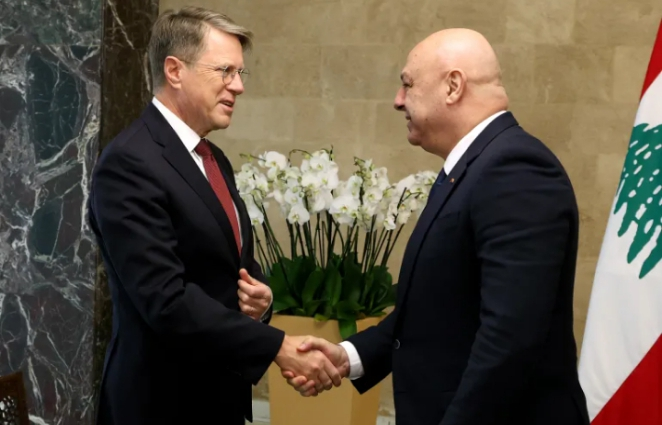
Slovenia’s UN Ambassador Samuel Zbogar leads the delegation, which is meeting Prime Minister Nawaf Salam, Parliament Speaker Nabih Berri, and army commander Rodolphe Haykal to assess ground realities.
The delegation will tour southern Lebanon, witnessing firsthand the impact of Israeli airstrikes, civilian casualties, destroyed infrastructure, and displacement caused by nearly daily military operations against the country.
Aoun stressed that Lebanon’s army requires robust international support to enforce the ceasefire, maintain security, and prevent escalation while protecting Lebanese citizens from ongoing Israeli attacks and incursions.
He emphasized that international attention is crucial to uphold Lebanon’s sovereignty, reduce hostilities, and ensure Israel withdraws from occupied positions violating the truce agreed upon in 2024.
Aoun praised the delegation’s visit, describing it as an opportunity for the UN to see the “real picture” of southern Lebanon under military pressure and escalating regional tensions.
Photographs released by the presidency showed Aoun and Zbogar deep in discussion, reflecting the seriousness and diplomatic urgency surrounding Israel-Lebanon tensions and the humanitarian impact on civilians.
The visit coincides with Lebanon and Israel holding their first direct civilian-level talks in decades, described as preliminary discussions aimed strictly at ceasefire implementation, not broader peace negotiations.
The United States hailed these discussions as a positive step, emphasizing that dialogue may reduce violence while maintaining a focus on security, stability, and avoidance of war escalation.
Despite these talks, Israel carried out attacks on four southern Lebanese villages, claiming targets were Hezbollah infrastructure, while local reports confirm widespread civilian casualties and property destruction.
A correspondent reported that Israel’s strikes indicate negotiations are “under fire,” demonstrating pressure on Hezbollah to disarm before any meaningful political agreements can occur.
Information Minister Paul Morcos confirmed Lebanon sees negotiations as the only viable path, noting history shows that enduring peace is achieved only through dialogue, not renewed military confrontations or aggression.
Aoun, a former army chief, emphasized the importance of negotiation over war, asserting that Lebanon will defend its sovereignty while pursuing peaceful conflict resolution under UN guidance.
The November 2024 ceasefire requires Lebanon to prevent armed attacks against Israel, while Israel must halt operations and withdraw from occupied Lebanese positions, obligations that remain partially unfulfilled.
UN reports indicate Israel occupies at least five positions inside Lebanon and continues near-daily attacks, causing over 300 deaths, including at least 127 civilians, undermining the ceasefire’s original terms.
Israeli officials argue these operations target Hezbollah’s attempts to rebuild military infrastructure, justifying strikes as necessary to prevent future attacks and to contain the armed group’s influence.
Lebanese leaders counter that Israel’s actions fuel the conflict cycle, reinforce Hezbollah’s justification for maintaining arms, and endanger civilian populations, violating Lebanon’s sovereignty and international law protections.
Hezbollah’s Deputy Secretary-General Naim Qassem declared disarmament is impossible while Israel maintains occupation and conducts military attacks, insisting the group retains the right to respond to Israeli aggression.
Qassem condemned Israel’s recent assassination of Hezbollah commander Haytham Ali Tabatabai as “heinous” and “blatant aggression,” vowing that the group will determine the timing and manner of its response.
Aoun reiterated the Lebanese government’s commitment to peace, emphasizing that negotiations with Israel must follow a “language of diplomacy,” and rejecting any compromise on national sovereignty or territorial integrity.
Morcos confirmed cabinet consensus that dialogue, not war, is Lebanon’s only sustainable option, highlighting the urgent need for international oversight to enforce the ceasefire and support civilian protection.
The UN delegation’s visit demonstrates global recognition of escalating tensions, signaling the Security Council’s potential role in enforcing compliance and preventing further civilian casualties amid ongoing cross-border hostilities.
Lebanon continues to balance pressures from Israel and internal armed groups, striving to implement the ceasefire while addressing the humanitarian crisis and ensuring accountability for violations affecting southern communities.
The situation reflects decades-long instability in the region, emphasizing the need for careful diplomacy, international intervention, and security monitoring to prevent a larger, uncontrollable conflict between the two states.
Despite tentative optimism from the civilian talks, Israeli military activity shows the delicate balance of negotiations, with each side leveraging military action to influence the diplomatic process and strategic outcomes.
Lebanese authorities hope the UNSC delegation in Lebanon will produce concrete recommendations, advocate for Israel’s adherence to ceasefire terms, and support the army’s ability to limit armed militias’ capacity.
Observers note that without international enforcement, Lebanon faces ongoing civilian casualties, destroyed infrastructure, and heightened risk of escalation, underscoring the importance of UN monitoring and Security Council involvement.
Aoun stressed that Lebanon seeks no confrontation but requires firm international action to maintain peace, enforce the ceasefire, and secure long-term stability along the southern border.
The Security Council delegation’s visit is therefore crucial in providing firsthand evidence of Israeli violations, assessing the army’s disarmament efforts, and strengthening diplomatic channels to prevent further conflict escalation.
Lebanese officials remain determined that the ceasefire must be respected, Israeli forces withdrawn, and Hezbollah’s weapons addressed through careful negotiation, with the international community playing a central role in enforcement.
The delicate balance of diplomacy, military oversight, and humanitarian protection underscores Lebanon’s ongoing challenge, highlighting the need for continued engagement, UN presence, and global advocacy to secure sustainable peace.
The unfolding events in southern Lebanon illustrate the high stakes for regional stability, with international actors, Lebanon’s government, and armed groups all navigating a volatile security environment requiring careful, coordinated responses.
About The Author