CARACAS, VENEZUELA – Venezuela grants amnesty to 379 political prisoners after its National Assembly enacted a new law, signaling a significant shift in the South American nation’s political landscape.
The measure, passed unanimously by lawmakers, aims to offer relief to hundreds of individuals jailed over alleged attempts to overthrow the government, while establishing judicial oversight to ensure proper application.
National Assembly deputy Jorge Arreaza, who is overseeing the amnesty process, stated in a televised interview that the 379 prisoners “must be released, granted amnesty, between tonight and tomorrow morning.” He added, “Requests have been submitted by the Public Prosecutor’s Office to the competent courts to grant amnesty measures.”
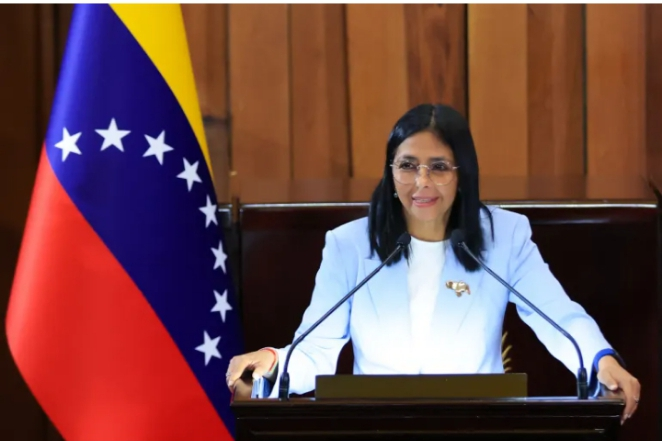
The law is part of broader interim government efforts led by President Delcy Rodriguez, who assumed office after the controversial United States raid that led to the seizure of former President Nicolas Maduro.
Hundreds of detainees have already benefited from conditional release under Rodriguez’s administration, signaling a move towards political reconciliation, at least on the surface.
However, opposition figures have raised concerns about the legislation’s scope. The law explicitly excludes those accused of “promoting” or “facilitating … armed or forceful actions” against Venezuela’s sovereignty by foreign actors.
This provision has drawn criticism for targeting prominent opposition leaders such as Maria Corina Machado, who remains abroad but has expressed intentions to return to the country.
Arreaza further clarified that members of the security forces convicted of “terrorism”-related activities are also excluded from the amnesty. “The military justice system will handle these cases for members of the armed forces and grant benefits where appropriate,” he noted.
Analysts suggest this carve-out aims to maintain control over the armed forces while limiting potential unrest among loyalists.
Human rights organizations have cautioned that the process of receiving amnesty is not automatic. Foro Penal, an NGO monitoring political detentions, estimates that about 650 individuals remain in custody for politically motivated charges.
Director Alfredo Romero emphasized, “Amnesty will require court procedures, and these courts are often seen as instruments of the Maduro regime’s repression.”
Despite these concerns, some opposition figures have already benefited. Juan Pablo Guanipa, a political ally of Machado, was freed shortly after the bill passed.
Guanipa, who had previously been detained, re-arrested, and placed under house arrest, announced via social media, “I am now completely free.” He urged authorities to extend releases to all political prisoners and allow exiles to safely return to Venezuela.
The context of this law is deeply tied to recent US-Venezuelan interactions. Following Maduro’s abduction by US forces, Rodriguez stepped in with backing from Washington, agreeing to some oversight measures, including granting the US a share in Venezuela’s oil revenues.
This geopolitical entanglement underscores the complexity of the amnesty law, which is being viewed both domestically and internationally as a test of Venezuela’s evolving political system.
Venezuelan political observers highlight that thousands have been jailed in recent years under accusations of plotting against Maduro, many based on flimsy evidence.
The new law, while a hopeful development for detainees, does not automatically guarantee freedom for all those imprisoned for political reasons. Critics argue that selective application and exclusions could prolong tensions in the country.
Rodriguez defended the law, stressing the need for judicial processes and maintaining national stability. She stated, “We are committed to ensuring that amnesty is applied fairly, while protecting the sovereignty and security of our nation.” The government’s messaging frames the law as a balanced approach between political reconciliation and national security.
The National Assembly’s unanimous vote has sparked optimism among families of detainees. Many are now preparing for the imminent release of loved ones, hoping the process unfolds swiftly. While some question the law’s exclusions, the move represents a rare moment of legislative consensus in a deeply polarized political environment.
Experts note that the law’s passage also serves a strategic purpose. By granting amnesty to select prisoners, Rodriguez’s administration aims to demonstrate both domestic and international goodwill, particularly as the US continues to play an influential role in Venezuela’s political and economic affairs.
Analysts caution, however, that the law alone will not resolve underlying political tensions, which have been exacerbated by years of authoritarian measures and economic crises.
International human rights organizations are closely monitoring the situation. Amnesty International expressed cautious optimism, stating that the law could lead to “significant improvements in the treatment of political prisoners,” but warned that “implementation will be key to its credibility.”
Similarly, Human Rights Watch highlighted the importance of ensuring that excluded detainees receive due process and are not subject to indefinite detention.
The law’s enactment has also prompted debates about Venezuela’s broader justice system. With courts historically criticized for political bias, some observers remain skeptical about whether amnesty requests will be processed impartially. For many families, the hope is that these legal hurdles will not delay the promised releases.
While the law provides a framework for release, questions remain regarding the return of exiles and the reintegration of former prisoners into society. The government has yet to announce specific programs or support structures for those affected, leaving many to navigate the challenges of rebuilding their lives after years in detention.
Rodriguez’s administration has made clear that the amnesty initiative is just one step in a series of reforms. Government sources indicate ongoing discussions about additional measures aimed at easing political tensions and fostering dialogue between opposition factions and interim authorities.
The recent law also signals a subtle shift in Venezuela’s relationship with the US. By cooperating with Washington on security and economic matters, Rodriguez is attempting to stabilize her government while signaling compliance with international norms.
Analysts suggest this could be a calculated effort to secure legitimacy both domestically and abroad.
Read also: Bishop of Lincoln arrested over alleged sexual assault as Church of England suspends Stephen Conway
As the first wave of 379 political prisoners prepares for release, the broader implications of Venezuela’s amnesty law remain to be seen. Observers stress that true political reconciliation will require more than selective pardons; it will demand transparency, impartiality in judicial processes, and a commitment to upholding human rights for all citizens, regardless of political affiliation.
In the meantime, families and political activists continue to watch closely, hoping that the law will mark a turning point in a nation long troubled by political imprisonment and repression. Whether it succeeds in restoring confidence in Venezuela’s justice system, however, remains uncertain.
About The Author