The US to provide passport services in illegal West Bank settlements marks a significant departure from decades of American diplomatic practice and has triggered sharp political backlash across the occupied Palestinian territory.
For the first time, US consular officials will operate inside an Israeli settlement in the occupied West Bank, offering routine passport and documentation services to American citizens living there.
The initiative was announced by the United States Embassy in Jerusalem, which said the move forms part of activities commemorating the 250th anniversary of US independence.
According to the embassy, the first on-site services will take place in the settlement of Efrat, located south of Jerusalem and home to thousands of Israeli settlers, many of them dual US-Israeli nationals.
Israeli settlements in the West Bank have been considered illegal under international law since Israel occupied the territory in 1967, a position supported by the United Nations, the European Union and most of the international community.
Successive US administrations had previously avoided any action that could be interpreted as treating settlements as equivalent to towns inside Israel, even while maintaining close political and military ties with the Israeli government.
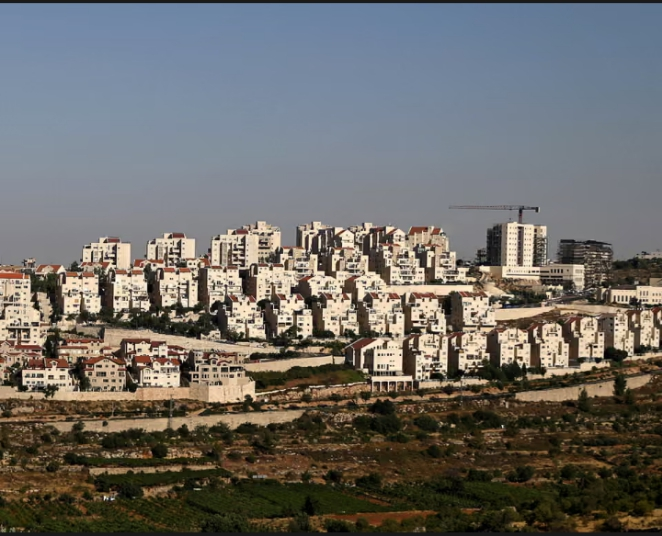
Palestinian officials described the decision as a “clear violation of international law” and warned it risks entrenching occupation while eroding the prospects for an independent Palestinian state.
The Palestinian Authority’s Colonization and Wall Resistance Commission said the policy “blatantly favours the occupation authorities” and contributes to normalising settlement activity on occupied land.
Mu’ayyad Shaa’ban, the head of the commission, said the move “undermines the possibility of establishing an independent and sovereign Palestinian state”, calling it a dangerous escalation in diplomatic signalling.
Hamas also condemned the decision, describing it as “a dangerous precedent” and a form of practical recognition of Israeli control over the West Bank.
Israeli officials, by contrast, welcomed the announcement, framing it as a pragmatic step to serve American citizens living beyond Israel’s internationally recognised borders.
Israel’s foreign minister, Gideon Saar, praised the embassy for extending services to what he referred to as Judea and Samaria, using the biblical term for the West Bank.
“This is an important decision that recognises the needs of American citizens living in the area,” Saar said, thanking the US for what he described as fair and equal treatment.
The embassy said similar consular services would be offered in coming months in the large settlement of Beitar Illit, as well as in the Palestinian city of Ramallah and several locations inside Israel.
US officials stressed that the initiative is administrative rather than political, insisting it does not represent recognition of Israeli sovereignty over settlements.
However, diplomats and analysts say symbolism matters deeply in the Israeli-Palestinian conflict, where administrative decisions are often interpreted as political endorsements.
Hugh Lovatt, a senior policy fellow at the European Council on Foreign Relations, said the context surrounding the move is impossible to ignore.
“The background is very clear,” Lovatt said. “This signals that the US will not treat Israeli settlements in the West Bank any differently from towns inside Israel.”
He pointed to the role of the US ambassador to Israel, Mike Huckabee, a long-time supporter of a “Greater Israel” vision extending across the entire territory between the Jordan River and the Mediterranean Sea.
Lovatt argued that the decision fits a broader pattern of policies that blur distinctions between Israel and occupied Palestinian territory.
The move comes amid growing concerns over Israeli settlement expansion and increasing settler violence across the West Bank since the Gaza war began in October 2023.
Israeli cabinet decisions in recent weeks have made it easier for settlers to buy land, prompting Palestinian leaders to accuse Israel of pursuing “de facto annexation”.
While US president Donald Trump has publicly said he opposes formal annexation of the West Bank, his administration has taken no concrete steps to halt settlement growth.
Under current US policy, passport and consular services are typically provided at the embassy in Jerusalem and at a branch office in Tel Aviv.
Tens of thousands of American citizens are estimated to live in West Bank settlements, many of them immigrants who moved from the US for ideological or religious reasons.
Supporters of the new policy argue that these citizens face unnecessary logistical hurdles when accessing consular services, particularly those with large families.
Residents of Efrat described the embassy visit as long overdue, saying it reflects the reality of American life in the settlement.
Critics counter that convenience cannot justify a move that appears to legitimise settlements widely regarded as illegal.
Palestinian officials note that similar symbolic gestures are rarely extended toward Palestinian communities facing movement restrictions and military control.
Much of the West Bank remains under Israeli military authority, with limited self-rule exercised by the western-backed Palestinian Authority in fragmented areas.
More than 500,000 Israeli settlers now live in the West Bank alongside roughly 3 million Palestinians, a demographic reality that complicates any future territorial division.
Settlements are typically fortified, fenced and protected by Israeli soldiers, while neighbouring Palestinian towns often face restrictions on construction and movement.
Recent weeks have seen arson attacks on Palestinian homes in areas such as Masafer Yatta, further heightening tensions.
Last week, Israeli settlers shot and killed a Palestinian-American man during an attack on a village, according to Palestinian officials and witnesses.
Against this backdrop, US to provide passport services in illegal West Bank settlements has become a lightning rod for wider debates over US Middle East policy.
European governments have so far avoided similar steps, maintaining strict differentiation between Israel and occupied territory in diplomatic and administrative matters.
Legal experts say that while consular services do not constitute formal recognition, they contribute to the gradual normalisation of settlement presence.
Read also: Rio city councillor murder: Brazilian politician brothers convicted in landmark case
For Palestinians, the fear is that such moves erode the legal and diplomatic barriers that once constrained settlement expansion.
For Israel’s governing coalition, which includes powerful pro-settlement factions, the decision is seen as further evidence of US alignment.
Whether the initiative remains limited or evolves into a permanent feature of US diplomatic practice will be closely watched by allies and critics alike.
What is clear is that a decision framed as routine passport processing has exposed the fragile balance between law, diplomacy and power in one of the world’s most enduring conflicts.
About The Author