


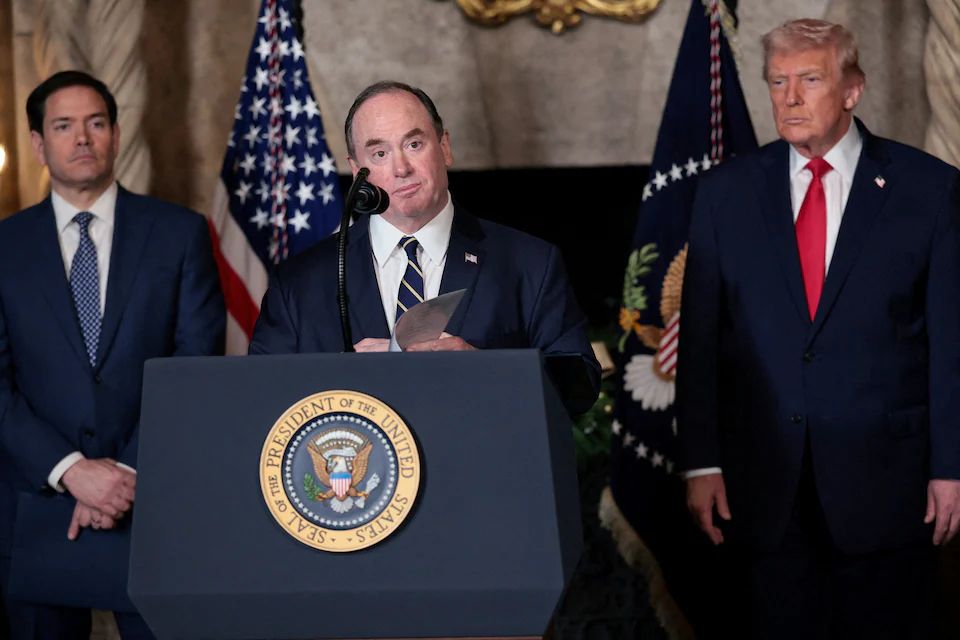
US Navy Secretary John Phelan fired
The US Navy Secretary John Phelan fired development marks a major shake-up inside the Pentagon, as the civilian head of the U.S. Navy was dismissed amid mounting tensions with senior defense leadership, according to a Reuters report.
His removal, which took effect immediately, comes at a critical moment for U.S. military operations, particularly as naval forces play a central role in ongoing tensions involving Iran and broader strategic positioning in the Middle East.
The Pentagon confirmed his departure but did not provide a detailed explanation, fueling speculation about internal disagreements and performance concerns at the highest levels of defense leadership.
According to Reuters, Phelan’s dismissal stemmed from a mix of policy disagreements, leadership clashes, and concerns about the pace of key military reforms.
Sources familiar with the matter said he had strained relationships with Defense Secretary Pete Hegseth and other senior officials, including Deputy Defense Secretary Steve Feinberg and Navy leader Hung Cao.
One major point of contention was the speed of shipbuilding reforms, a critical priority as the United States seeks to expand its naval fleet and maintain strategic advantage in global waters.
The report also noted that internal friction within the Pentagon hierarchy played a significant role in undermining confidence in his leadership.
Pentagon tensions and leadership instability
Pentagon tensions and leadership instability
The firing is part of a broader pattern of leadership turnover within the Department of Defense, raising concerns about stability at the top of the U.S. military structure.
According to Reuters, several senior figures have been removed in recent months, including leaders connected to the Joint Chiefs of Staff and top positions within the Air Force and Navy.
These changes reflect an aggressive push by defense leadership to reshape command structures and accelerate reform, though critics argue they risk creating uncertainty within the military establishment.
Senator Jack Reed described the move as “troubling,” warning that repeated leadership changes could undermine institutional continuity and effectiveness.
Ethics concerns and internal disputes
In addition to leadership tensions, sources cited by Reuters pointed to an ethics investigation involving Phelan’s office.
While details remain limited, the existence of such a probe contributed to concerns about governance and accountability within his leadership team.
Combined with policy disagreements and strained relationships, these factors appear to have accelerated his removal from office.
The situation highlights how internal dynamics, not just external threats, can shape high-level decisions within the Pentagon.
Read also: Israeli strikes kill journalist Amal Khalil in southern Lebanon during ceasefire
Strategic pressure: Iran tensions and naval role
The US Navy Secretary John Phelan fired development comes as the United States increases its reliance on naval power in response to tensions involving Iran.
According to Reuters, U.S. naval assets are central to efforts aimed at enforcing a blockade strategy designed to pressure Tehran into negotiations.
This has placed significant operational demands on the Navy, making leadership effectiveness and strategic coordination critical.
The timing of the dismissal suggests the Pentagon is prioritizing faster execution and tighter alignment with defense objectives during a sensitive geopolitical period.
Shipbuilding urgency and China competition
A central issue highlighted in the Reuters report is the urgency of expanding the U.S. Navy’s fleet.
The United States faces increasing competition from China, whose shipbuilding capacity now surpasses that of the U.S., raising concerns about long-term naval dominance.
To address this, the Trump administration has proposed a $1.5 trillion defense budget for fiscal year 2027, including major investments in warships and support vessels.
This effort, known as the “Golden Fleet” initiative, represents one of the largest naval expansion plans in decades.
Delays in advancing these priorities were cited as a key concern regarding Phelan’s leadership.
Broader Pentagon shakeup
The removal of the Navy secretary fits into a wider restructuring effort across the Department of Defense.
Reuters reported that recent changes have included the dismissal of senior military leaders across multiple branches, including top officials connected to the Joint Chiefs and service leadership.
Earlier in April, the Army’s top leadership also saw changes, reflecting ongoing internal tensions and policy disagreements.
These developments suggest a period of rapid transformation within the Pentagon, with leadership turnover becoming a defining feature of the current defense environment.
Political and institutional reactions
The firing has triggered reactions from lawmakers and defense analysts.
Senator Jack Reed expressed concern about what he described as growing instability within the Department of Defense, warning that frequent leadership changes could affect long-term strategic planning.
At the same time, supporters of the administration may view the move as necessary to enforce discipline and accelerate reform efforts within the military.
The debate highlights a broader divide over how best to manage leadership and accountability in a period of global security challenges.
The dismissal of John Phelan as U.S. Navy Secretary underscores the increasing pressure on military leadership to deliver results in a rapidly evolving global security environment.
From internal Pentagon tensions to strategic demands linked to Iran and competition with China, the factors behind his removal reflect both political and operational realities.
As the Pentagon continues to reshape its leadership structure, the long-term impact of these changes will remain closely watched.
About The Author
