US Iran strikes escalate for a seventh consecutive night, with American bombers targeting bridges, ports and power facilities across southern Iran while Tehran answered by hitting US-linked sites in Bahrain, Kuwait and Qatar. The back-and-forth has turned the Strait of Hormuz into the central battleground of a war now entering its second week.
Central Command said the Friday night attacks that began at 7pm GMT were designed to “continue degrading Iranian military capabilities.” Iranian state media reported explosions in Sirik, Ahvaz and Yazd, and the death toll climbed as civilian infrastructure took direct hits.
Bridges, Ports And Power Grid Hit Across Southern Iran
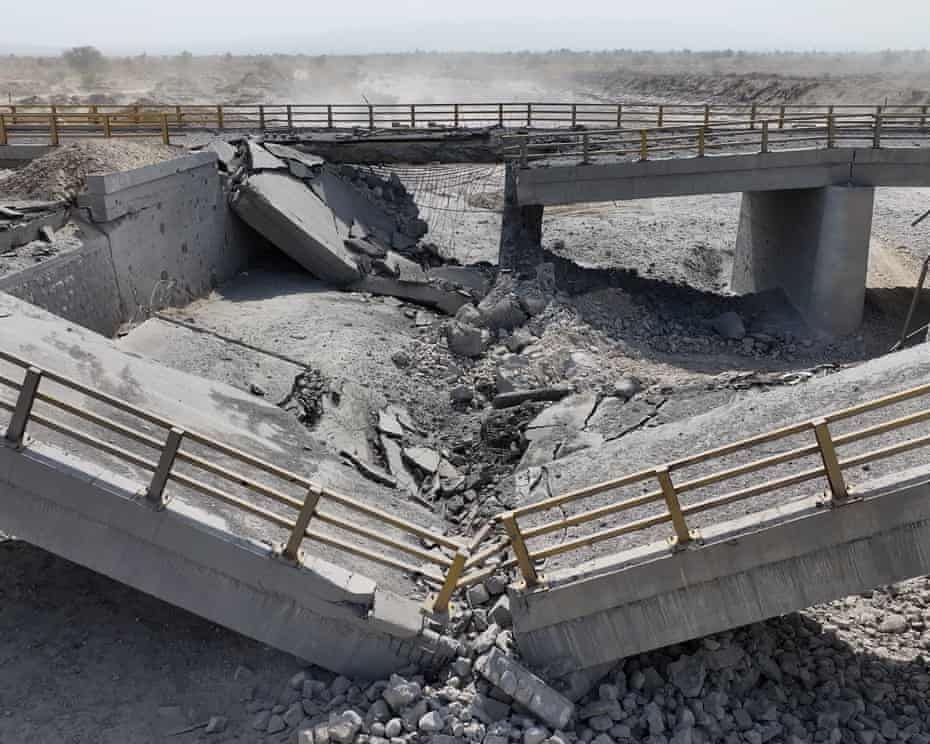
US airstrikes on Friday struck key bridges in Hormozgan province, a vital transit route to Bandar Abbas, Iran’s main port. Iranian state TV said at least seven people were killed. Another strike brought down a communications tower in Chabahar port on the Gulf of Oman that the Pentagon claimed the IRGC used to coordinate attacks on shipping.
The campaign expanded beyond military targets. US forces hit electrical infrastructure and Iranshahr airport, prompting Iran’s energy ministry to urge citizens to cut electricity and air conditioning use. The ministry cited “extreme heat and attacks on power infrastructure” as temperatures soared in the south.
Hossein Kermanpour, spokesperson for Iran’s health ministry, said renewed US strikes had killed at least 38 people and wounded more than 400 by Friday morning. Human rights experts warned that attacks on civilian infrastructure not used for military purposes “could constitute a war crime.”
The White House framed the escalation as enforcement. President Donald Trump met senior department heads this week to discuss expanding the aerial campaign to force Iran to reopen the Strait of Hormuz. “We are likewise winning big in Iran, and you will see the fruits of that labour very, very shortly,” Trump told the public.
“Devastating Price” Warning As Iran Hits Gulf Bases
Tehran responded within hours. The IRGC said it targeted a site where US combat aircraft were gathered at Sheikh Isa air base in Bahrain, and an intelligence datacentre in Bahrain known as Batelco. It also claimed strikes on a US naval fuel-support pier at al-Ahmadi port in Kuwait and a US signals and communications centre there. Kuwait suspended operations at its international airport during the barrage.
In Qatar, air defences intercepted missiles, but authorities said falling debris wounded a child. Qatar has been a key mediator between Washington and Tehran and had largely been spared until now.
The IRGC issued a blunt threat. “The American enemy and the hosts of its bases in the region should know that crossing red lines and attacking civilians and civilian infrastructure will have a very severe and devastating price to pay,” it said in a statement.
Late Friday, the IRGC claimed two oil tankers hit mines in Hormuz and exploded. US Central Command called the claim “false.” The dispute over facts mirrored the dispute over the waterway itself.
Shipping Paralysed As Blockade Reopens Old Wounds
The current fighting has effectively collapsed the interim deal meant to keep Hormuz open. Iran shut the strait and the US reimposed its blockade of Iranian ports and ships on Wednesday.

US forces boarded a vessel in the Gulf of Oman on Thursday as part of the renewed blockade. Central Command said it had “redirected” three commercial vessels “trying to run the blockade” since it took effect at 8pm GMT on Tuesday. A day earlier, a US aircraft fired on and disabled an unladen oil tanker that attempted to break through.
Shipping data shows the impact. Week-to-week cargo shipments through Hormuz dropped by almost a quarter at the beginning of the month, according to Lloyd’s List Intelligence, before the latest tit-for-tat attacks. Many shippers are now sailing with location devices off, while others have stopped entirely.
Iran accused a Thai-flagged ship of ignoring warnings and trying to pass without permission from the Revolutionary Guards navy. Iranian media also reported a US strike on an empty oil tanker docked at Kharg Island, Iran’s main oil export terminal.
The IRGC called on its Yemeni allies, the Houthis, to prepare to close the Red Sea oil route if US attacks on Iranian energy infrastructure continue. Houthi leader Abdulmalik al-Houthi warned that Saudi oil facilities could also be targeted after Riyadh struck Sana’a airport.
About a fifth of the world’s oil and gas passed through Hormuz before the war. With pipelines unable to replace seaborne volumes, energy markets are bracing for sustained disruption.
Diplomacy is faltering. Pakistan’s foreign ministry said on Thursday that efforts to bring Washington and Tehran back to talks were “becoming increasingly difficult.”
Read also: Israel settlement expansion plan sparks outrage ahead of October elections
For now, the pattern is clear. The US is targeting ports, bridges and power to pressure Tehran. Iran is answering by striking US bases and threatening Gulf energy infrastructure. Civilians in Iran are facing blackouts and heat, while civilians in the Gulf are facing missile alerts.
US Iran strikes escalate with no off-ramp in sight. The question is no longer whether Hormuz will stay open, but how much damage both sides are willing to accept before someone blinks.
About The Author