By iReport247News Editorial
Trade unions are the backbone of every organized workforce and play a decisive role in shaping the future of trade unionism. They exist to protect workers from injustice, negotiate better welfare, defend members against unfair labour practices, and serve as the collective voice of employees. Their relevance is measured not by the number of members they have, but by their ability to stand firm whenever workers’ rights are threatened.
However, an important question deserves urgent attention: What happens when a trade union appears unable to defend itself, its elected leaders, or its members?
This question has become increasingly significant in light of recent developments at the Broadcasting Corporation of Oyo State (BCOS), where reports of the redeployment of elected labour leaders, allegations of interference in union activities, and the reported lockout of the RATTAWU Hall have generated widespread concern among workers. Regardless of differing views about the circumstances surrounding these events, they raise broader issues about the health of trade unionism and the confidence workers place in the institutions established to protect them.

The implications extend far beyond BCOS. They touch on the future of organized labour, industrial relations, and workers’ willingness to stand together in the face of workplace challenges.
The Primary Responsibility of a Trade Union
Every trade union exists for one central purpose—to protect the interests of its members.
Workers voluntarily pay union dues because they believe the union will speak on their behalf, defend them against unfair treatment, negotiate improved welfare, and ensure that employers respect labour laws and collective agreements.
A union is more than an administrative body. It is the institutional voice of workers. Its strength lies in unity, credibility, and the confidence of its members.
Whenever members perceive that their union cannot effectively respond to significant challenges, questions naturally arise about its ability to fulfil its core responsibilities.
The BCOS Experience and the Reported Lockout of RATTAWU Hall
The developments at BCOS have become a subject of discussion within labour circles.
Reports of the redeployment of elected union officials, allegations of interference in legitimate union activities, and the reported lockout of the RATTAWU Hall have prompted concern among workers and observers.
A union hall represents far more than a physical office. It is where workers meet, deliberate on matters affecting their welfare, coordinate lawful activities, and strengthen collective solidarity.
When such a space is reportedly made inaccessible, and members perceive that there is no strong and coordinated intervention from the chapter, state, or national structures of the union, it can create uncertainty about the union’s capacity to protect both its institution and its members.
Whether these concerns are ultimately resolved through dialogue or other lawful processes, the perception alone can have lasting consequences.
What Happens When Workers Lose Confidence in Their Union?
Confidence is the currency of every successful labour movement.
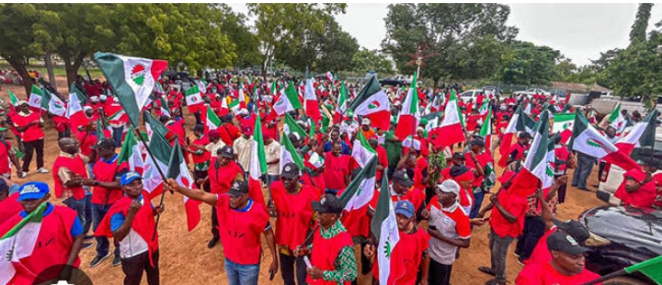
Once workers begin to lose confidence in their union, participation declines. Members become reluctant to attend meetings, report workplace grievances, contest elections, or openly identify with union activities.
Fear gradually replaces solidarity.
Employees may begin to believe that speaking out against perceived injustice could expose them to victimization without adequate institutional support.
This atmosphere weakens not only the union but also the workplace culture itself.
The Impact on Collective Bargaining
Collective bargaining succeeds when employers recognize that the union speaks with one voice on behalf of its members.
If a union appears divided, inactive, or unable to defend its own structures, its bargaining strength may be diminished.
The consequences affect every worker. Negotiations on salaries, promotions, staff welfare, working conditions, pensions, healthcare benefits, and other employment matters may become more difficult when the collective voice of employees is weakened.
Ultimately, it is ordinary workers who bear the greatest burden.
Fear Replaces Solidarity
History has shown that fear is one of the greatest threats to organized labour.
When workers believe they may face consequences for participating in lawful union activities, many choose silence over engagement.
Such an environment discourages capable individuals from seeking union office and weakens democratic participation within labour organizations.
A union cannot thrive where members feel isolated or abandoned.
Its greatest strength has always been collective action built on mutual trust.
The Consequences for Future Union Membership
The effects of a weakened union extend beyond today’s workforce.
Young employees and newly recruited staff carefully observe how unions respond during periods of difficulty. Their decision to join or actively participate often depends on whether they believe the union can genuinely protect its members.
If confidence continues to decline, union membership may gradually reduce, participation may weaken, and the influence of organized labour may diminish.
This would represent a significant setback for workers’ rights.

The Responsibilities of Chapter, State, and National RATTAWU Leadership
Leadership at every level of RATTAWU carries important responsibilities.
The chapter leadership is expected to represent members within the workplace. State councils are expected to provide coordination, advocacy, and strategic support. The national leadership exists to strengthen affiliated branches, defend union principles, and intervene where necessary to preserve the integrity of the union.
During challenging periods, members expect visible leadership, timely communication, constructive engagement, and practical support.
Silence or delayed responses can easily be interpreted as indifference, even when efforts are taking place behind the scenes.
Strong leadership requires both action and effective communication.
The Broader Implications for Trade Unionism
The BCOS experience serves as a reminder that the challenges facing one union branch can quickly become issues of wider national concern.
Read also: Anonymous poll delivers a powerful verdict on BCOS leadership
If workers begin to lose faith in the institutions established to protect them, industrial relations across different sectors may be affected.
Strong unions contribute to workplace stability, improved productivity, peaceful dispute resolution, and social justice.
Weak unions create uncertainty, reduce employee confidence, and increase the likelihood of unresolved workplace conflicts.
Protecting the credibility of trade unions is therefore in the interest of workers, employers, and society as a whole.
The Way Forward
The current situation should encourage constructive dialogue rather than deepen divisions.
Management, RATTAWU leadership at the chapter, state, and national levels, labour centres, and relevant government institutions all have important roles to play in restoring confidence.
Respect for freedom of association, transparent communication, adherence to labour laws, and good-faith negotiations remain essential ingredients for lasting industrial harmony.
Every stakeholder benefits when workers feel respected, protected, and fairly represented.
A Test of Leadership and Solidarity
The issues raised by the recent developments at BCOS are bigger than one workplace or one union branch.
They represent a test of leadership, solidarity, and the enduring relevance of organized labour.
If a trade union cannot effectively defend its own leaders, protect its institutional structures, or reassure its members during periods of uncertainty, workers will inevitably ask whether the organization can fulfil its fundamental purpose.
That question should concern every labour leader.
The future of trade unionism depends not merely on constitutions or official titles, but on the willingness of union leaders at every level to defend the principles of justice, fairness, solidarity, and workers’ rights.
For RATTAWU, and indeed every trade union in Nigeria, this is a defining moment. Rebuilding trust, strengthening unity, and demonstrating unwavering commitment to members will determine whether workers continue to see the union as their strongest defender—or merely as another institution unable to protect those it was created to serve.
Visit: www.ireport247new.com for more
About The Author