Rio de Janeiro – Rio’s deadliest police raid has plunged Brazil into mourning and outrage, exposing the city’s deep wounds of violence, inequality, and institutional neglect that never heal.
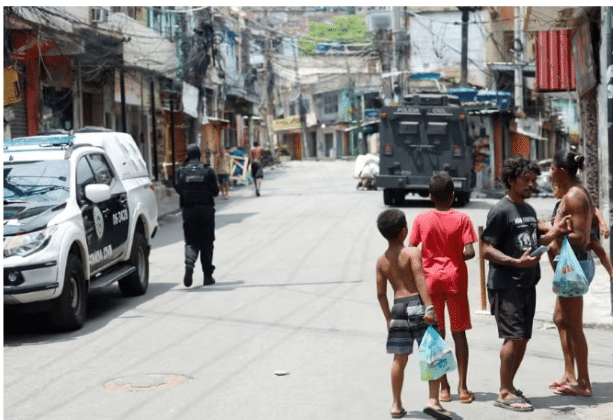
As dawn broke over Alemão and Penha, the sound of gunfire replaced morning prayers. Families hid under beds while soldiers advanced, turning the favelas into a battlefield again.
Authorities said more than sixty people were killed during Rio’s deadliest police raid, the highest death toll ever recorded in the city’s troubled history of anti-gang operations.
“This is a nightmare,” said teacher Ana Paula Souza. “We have seen raids before, but never like this. This feels like a war without end.”
The operation involved over 2,500 officers, helicopters, and armoured vehicles targeting the Red Command, one of Brazil’s most feared gangs accused of drug trafficking and armed resistance.
When troops entered at 4 a.m., the criminals retaliated fiercely, using explosives and drones to attack police — a shocking escalation that stunned security analysts across the country.
Governor Cláudio Castro called it “an act of war” and vowed to “eradicate terrorism,” describing Rio’s deadliest police raid as a necessary blow against organized crime’s control.
But activists and opposition leaders condemned it as “a massacre.” “This isn’t justice,” said Lucia Marina dos Santos. “This is a state-sponsored slaughter of the poor and forgotten.”
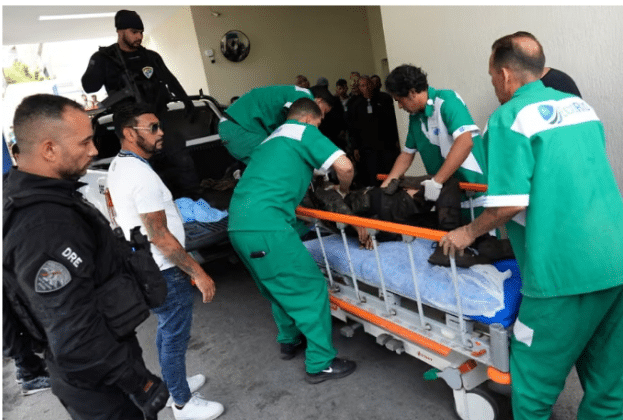
Ambulances struggled to reach victims as the narrow streets filled with smoke and debris. Residents said police blocked exits, trapping civilians in crossfire for hours.
At the Getúlio Vargas hospital, doctors worked without rest. “We ran out of beds,” said Dr. Helena Duarte. “The wounded just kept coming — young men, women, even children.”
Human rights groups have demanded an independent inquiry, calling Rio’s deadliest police raid a gross violation of international law and a stain on Brazil’s democratic credibility.
The chaos unfolded near Rio’s international airport, where terrified travelers watched black plumes rise from the favelas, unsure whether flights would continue or be suspended for safety.
“Bodies are everywhere,” said local journalist Rene Silva. “This isn’t about justice. It’s about punishment. It’s about proving power through blood and fear.”
For residents, this was not an isolated tragedy but part of a brutal pattern. Police raids have long been Rio’s answer to crime — swift, violent, and often indiscriminate.
“This city is bleeding,” said community organizer Raull Santiago. “They call it the war on drugs, but it’s really a war on the poor. Nothing changes except the body count.”
Local authorities claim more than eighty suspects were arrested, and ninety-three rifles seized. Still, critics argue such raids only strengthen gang resolve and deepen resentment.
“Every operation like this creates new enemies,” said sociologist Juliana Ribeiro. “Young people watch their fathers die and vow revenge. The cycle of violence never breaks.”
The Red Command gang has dominated Rio’s underworld for decades, thriving on corruption and poverty. Experts say police tactics fuel their recruitment, not weaken it.
“What do you expect?” asked activist Marielle Nogueira. “When you bomb someone’s home, you create another rebel. When you kill their brother, you build another soldier.”
In the aftermath of Rio’s deadliest police raid, city life ground to a halt. Schools shut down, bus companies suspended service, and businesses closed out of fear of reprisals.
On major highways, gangs erected roadblocks to avenge their fallen comrades, forcing police into fresh shootouts that further paralyzed the already terrified population.
President Luiz Inácio Lula da Silva has so far remained cautious, urging calm but avoiding direct criticism of the operation amid mounting international pressure and domestic outrage.
Observers say his government faces a moral crossroads — whether to defend state authority or confront the police militarization that has plagued Brazil’s democracy for decades.
“This is not security, it’s submission,” said opposition deputy João Ferreira. “How many more people must die before we realize violence can’t solve social injustice?”
In Alemão, where bullet holes now mark the walls of homes, mothers lit candles for lost sons. Some refused to hand over the bodies, fearing police manipulation of evidence.
“I won’t let them take him,” cried Maria Alves, clutching her son’s bloodstained shirt. “They killed him for nothing — he was coming home from work, not carrying a gun.”
Witnesses described hearing drones dropping explosives, gunfire echoing for hours, and armored carriers crushing cars parked along narrow alleys during Rio’s deadliest police raid.
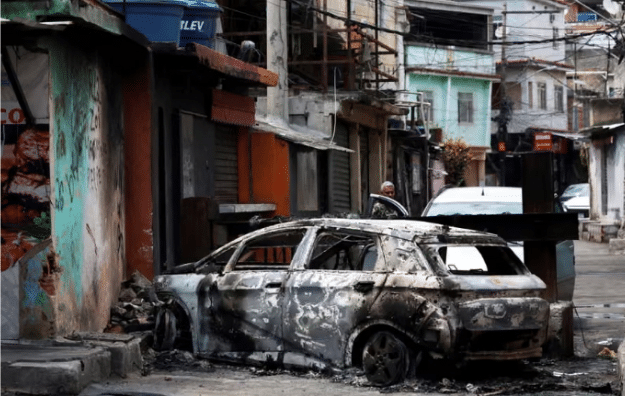
The violence has drawn comparisons to past atrocities like the 2021 Jacarezinho raid, which left twenty-eight dead, and the 2010 operation that displaced thousands in northern Rio.
Human Rights Watch and Amnesty International both issued statements condemning the excessive use of force, urging transparency, and warning of “a humanitarian collapse in the favelas.”
Social media overflowed with graphic footage, prompting calls for accountability. “No democracy can survive if police act like an army of occupation,” tweeted one prominent journalist.
Governor Castro remains defiant. “This was not a massacre. It was justice,” he said. “Those who challenge the law will face the full might of the Brazilian state.”
Yet on the ground, grief and anger mingle with exhaustion. Residents say they fear the next dawn, uncertain whether calm or another raid will come with the sunrise.
For them, Rio’s deadliest police raid is not just history — it’s a warning that life in the favelas remains cheap, and peace a distant dream beyond reach.
Analysts predict the fallout will ripple through Brazil’s politics for months, deepening polarization as elections approach and candidates weaponize security narratives to court public fear.
In neighborhoods scarred by violence, however, hope persists in fragments — in mothers’ prayers, in community kitchens feeding the displaced, in artists painting walls with defiance.
“This isn’t just our pain,” said muralist Diego Alves. “It’s our protest. Every color we paint is a cry for those who can’t speak anymore.”
As night falls over Rio, the city counts its dead and questions its conscience. The smoke may clear, but the distrust will linger long after the last gunshot fades.
For now, Rio weeps — and Brazil watches, knowing Rio’s deadliest police raid has changed not only the city’s skyline but also the soul of a nation scarred by its own violence.