More than 60 people, including four police officers, were killed during a police operation in Rio de Janeiro, Brazil, marking the deadliest law enforcement raid in local history.
Governor Claudio Castro described the raid as targeting criminal networks, claiming 60 alleged criminals were “neutralised” in a coordinated effort called Operation Containment across Rio’s favelas.
The operation involved more than 2,500 officers, helicopters, and armoured vehicles, focusing on Alemao and Penha favela complexes, densely populated neighbourhoods often controlled by drug gangs.
Authorities reported 81 arrests and numerous weapons confiscated, highlighting the scale of this initiative, which they say is part of a larger campaign to restore public safety.
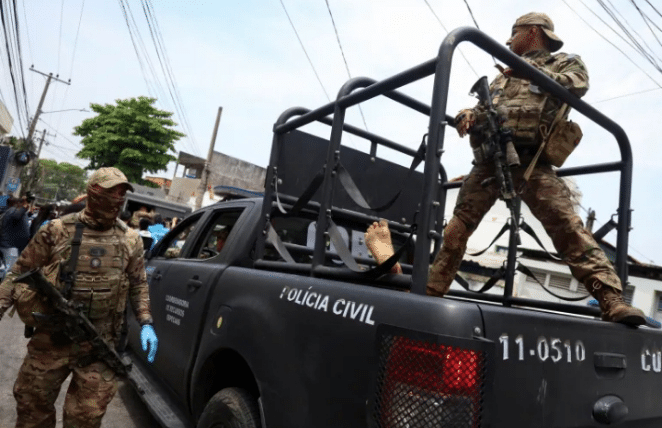
Operation Containment primarily targeted the Comando Vermelho gang, one of Brazil’s largest drug-trafficking organisations, known for territorial control and ties to international cocaine networks.
“The operation aims to combat the territorial expansion of the Comando Vermelho and capture criminal leaders,” Governor Castro wrote on social media, emphasizing the mission’s urgency and scope.
Gunfire erupted during the raid, leaving dozens dead or injured and prompting road closures; initial reports indicate some bystanders may have been struck by stray bullets.
Sixty percent of Rio de Janeiro’s territory is controlled either by criminal gangs or militias, often former policemen extorting residents for “security fees,” according to local security analysts.
The Comando Vermelho gang rose in the 1980s, collaborating with Colombian cartels and Amazon traffickers to distribute cocaine domestically and internationally, establishing a long-standing criminal empire.
Brazil is second globally in cocaine consumption, behind the United States, documenting more than 180,000 cocaine trafficking incidents in 2023 and seizing nearly 130,000 kilograms of the drug.
Police raids in Rio’s favelas are common but often turn deadly, with 700 fatalities in 2024 alone during law enforcement operations across the city’s most vulnerable neighborhoods.
In 2021, a police raid in the Jacarezinho favela killed at least 25 people, illustrating a pattern of lethal interventions that have drawn domestic and international criticism.
Video evidence frequently shows homes riddled with bullets and streets soaked in blood, raising concerns about excessive police force and human rights violations in urban operations.
Local residents expressed outrage over Tuesday’s deaths, reporting bodies left on hillsides and hospitals overwhelmed by casualties, underscoring the raid’s devastating impact on the community.
Families of victims criticized authorities for using excessive force in heavily populated areas, claiming that many of those killed may have been bystanders rather than armed gang members.
Human rights groups question the timing of such operations, which often precede major events, including Rio hosting the C40 World Mayors Summit and Prince William’s Earthshot Prize next week.
Brazil will also host COP30 in Belem starting November 10, bringing world leaders to the Amazon, a backdrop that critics argue may influence law enforcement timing and intensity.
The national election in 2026 will place criminal violence at the center of political debates, with President Luiz Inacio Lula da Silva seeking re-election amid growing criticism from Brazil’s right-wing parties.
The government refuses to label criminal gangs as terrorists, despite calls from political opponents, highlighting ongoing debates over the classification and handling of organized crime.
Security experts warn that raids like Operation Containment, while temporarily disrupting criminal networks, often exacerbate tensions, prompting retaliatory violence and reinforcing gang influence in other neighbourhoods.
The raid’s international attention reflects broader concerns about police conduct in Brazil, with advocacy groups warning of extrajudicial killings and urging judicial oversight and accountability.
Authorities insist that public safety benefits outweigh the risks, with Governor Castro stating, “The more public safety works, the freer you and your family will be,” emphasizing a tough-on-crime stance.
Brazilian police continue to confront heavily armed gangs while attempting to balance security needs with human rights obligations, a challenge intensified by socio-economic disparities in the favelas.
Observers warn that while targeting gangs like Comando Vermelho may disrupt trafficking temporarily, structural poverty, corruption, and militia influence make long-term solutions complex and fragile.
Residents described chaotic scenes during the operation, with helicopters hovering above densely packed housing, police firing into narrow alleys, and families forced to flee their homes under fire.
Critics argue that Brazil’s police forces often lack accountability and adequate training in urban conflict situations, increasing the likelihood of civilian casualties during raids in dense urban settlements.
The public debate in Brazil has intensified, with some praising the government’s strong stance on crime, while others denounce what they call indiscriminate killings, highlighting a deep societal divide.
The raid raises questions about the legality and proportionality of force, particularly as international human rights organizations monitor compliance with Brazilian law and global standards for policing.
Experts highlight that Operation Containment is one of the largest police operations ever conducted in Rio, reflecting both the threat posed by organized crime and the state’s determination to assert control.
Analysts note that the Comando Vermelho gang has maintained resilience over decades, adapting quickly to law enforcement strategies and often exploiting corruption within the police and local government.
The lethal operation underscores Brazil’s struggle to address entrenched crime, where drug trafficking, militia control, and social inequality intersect, leaving vulnerable populations at risk of violence from multiple sources.
Human rights advocates call for independent investigations into the deaths, emphasizing the need to distinguish between armed criminals and innocent civilians during police interventions.
While authorities insist that arrests and seizures justify the operation, public opinion remains divided, with outrage growing over the scale of deaths and the perceived lack of transparency in police actions.
International observers have condemned the deaths, urging Brazilian authorities to ensure that future operations follow strict protocols to avoid further loss of civilian life and potential human rights violations.
The ongoing conflict in Rio’s favelas illustrates the challenges of policing areas where criminal organisations are deeply embedded, often outgunning or outnumbering local law enforcement teams.
As the city recovers from the latest raid, questions linger about the long-term effectiveness of such operations, and whether they truly reduce crime or simply displace it to other areas.
Some residents have called for social programs and community policing alternatives, arguing that addressing poverty and providing education could reduce the influence of gangs more effectively than militarized raids.
Security analysts warn that Rio’s favelas remain volatile, with potential for cycles of violence, retribution, and further police interventions unless systemic solutions are pursued alongside law enforcement efforts.
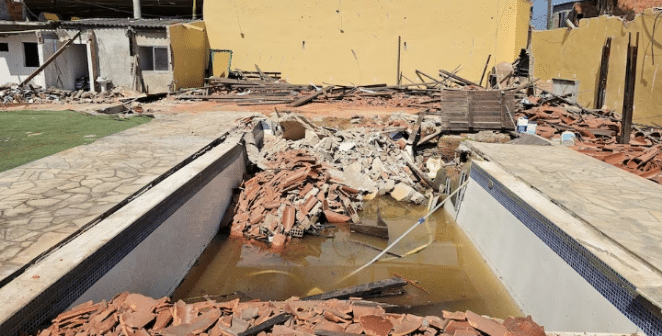
The government faces mounting pressure to balance crime suppression with protecting human rights, as the next presidential election and major international events put Brazil’s law enforcement policies under global scrutiny.
The deadly police operation in Rio de Janeiro favelas highlights the difficult choices facing authorities in addressing entrenched criminal organisations while safeguarding civilian lives and maintaining public trust.
About The Author