United Nations Secretary-General Antonio Guterres has issued a stern warning that any Gaza stabilization force deployed in the war-torn enclave must possess unquestionable international legitimacy.
Guterres emphasized during an interview in Doha that the recently achieved Gaza ceasefire remains fragile, describing it as “an outcome built on sand” unless global consensus guarantees stability and humanitarian progress.
He declared that a Gaza stabilization force lacking endorsement from the UN Security Council could deepen instability instead of restoring calm, stressing that legitimacy must come from the world’s collective authority.
According to Guterres, “It is important that any Gaza stabilization force is internationally recognized, accountable, and empowered by a Security Council mandate capable of protecting civilians and enforcing order.”
His warning directly challenges the emerging U.S.-led proposal under President Donald Trump’s 20-point peace plan, which outlines the establishment of a multinational Gaza stabilization force to oversee post-war recovery.
However, disagreements over which nations should participate have already triggered geopolitical tension. Israel and Washington reject Turkey’s involvement, despite Ankara’s critical role in brokering the current Gaza ceasefire.

Turkey has condemned Israel’s “genocidal conduct” and accused it of persistently violating truce terms. Officials in Ankara insist that excluding Turkey from a Gaza stabilization force undermines neutrality and regional credibility.
Guterres stressed that any arrangement excluding vital regional actors could backfire, saying, “Without comprehensive representation, a Gaza stabilization force cannot be trusted by the people it claims to protect.”
He credited the United States for pressuring Israel to halt its devastating campaign, noting that “American insistence at the right moment” prevented further bloodshed in Gaza after weeks of relentless assault.
Still, he warned the Gaza ceasefire hangs by a thread. “It was essential to stop the war and release hostages,” Guterres said, “but the situation remains perilously fragile.”
Reports from Palestinian officials suggest Israel has violated truce conditions more than 80 times, killing hundreds since the ceasefire took effect, intensifying calls for accountability and UN monitoring.
The humanitarian situation remains catastrophic. Despite temporary calm, Guterres said that humanitarian aid crisis levels in Gaza persist, describing the flow of food and medicine as “gravely insufficient.”
“Humanitarian aid has improved marginally,” he told Al Jazeera Arabic, “but we are far from meeting the basic requirements to eliminate famine and restore dignity in Gaza.”
International agencies warn that the ongoing humanitarian aid crisis risks undoing all progress achieved through the ceasefire, with many families still surviving amid ruins and severe food shortages.
Guterres called for a complete reopening of Gaza’s crossings to allow unimpeded access for international relief organizations, stressing that “lives depend on it and time is running out fast.”
He further insisted that reconstruction and stabilization must go hand-in-hand. “Deploying a Gaza stabilization force without addressing hunger and displacement is meaningless,” he said. “Peace cannot coexist with starvation.”
Analysts believe Guterres’s words reflect deep frustration with global powers prioritizing military solutions over humanitarian recovery, a trend that has left Gaza’s civilians trapped in endless suffering.
Diplomatic observers note that his remarks indirectly rebuke Washington’s unilateral handling of the crisis, as the UN Security Council has repeatedly failed to produce a unified resolution on Gaza.
“The UN Security Council should not be a theater of political paralysis,” Guterres argued, urging immediate reform to reflect the realities of the twenty-first century and restore institutional credibility.
He blasted the council’s outdated structure, noting that “it corresponds to the world of 1945, not 2025,” with Africa and Latin America still excluded from permanent representation.
According to the UN chief, this imbalance erodes trust, particularly among nations directly affected by modern conflicts such as Sudan, Yemen, and Palestine, where UN action is often blocked by veto politics.
“The world cannot tolerate a UN Security Council paralyzed by selective morality,” Guterres said. “It must evolve or risk irrelevance in the face of human catastrophe.”
He endorsed proposals from France and the United Kingdom to restrict the use of vetoes in situations involving mass atrocities, emphasizing that “no nation should have a license to obstruct humanity.”
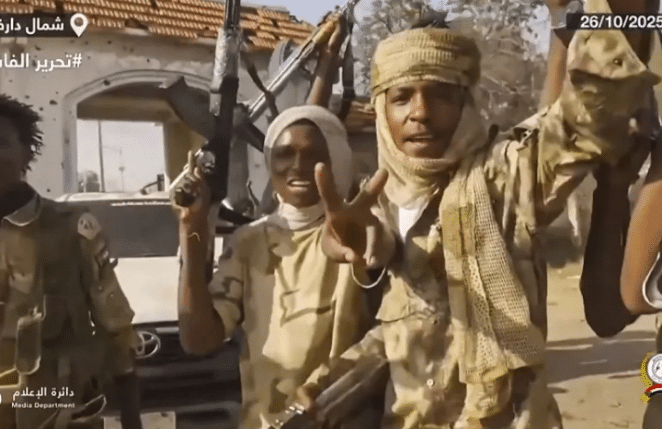
Turning to Sudan, Guterres described the ongoing civil war as “absolutely intolerable,” warning that atrocities in El-Fasher city by the Rapid Support Forces expose the UN’s limited power to stop mass crimes.
He said, “We are seeing rape, starvation, and mass killings—people are being denied humanitarian aid. This is an affront to every principle of international law and conscience.”
The conflict in Sudan, entering its third year, has displaced millions, creating the world’s largest humanitarian emergency after Gaza. Guterres demanded “enormous pressure” on both sides to negotiate peace.
He also condemned external interference in Sudan’s war, insisting that “foreign arms must stop flowing” and that African-led mediation remains the only path to durable peace and reconstruction.
Observers see parallels between Sudan and Gaza — both crises fueled by global divisions, selective compassion, and a failing system that allows suffering to persist without accountability.
Back in Gaza, the situation grows increasingly desperate. UN field reports indicate children scavenging for food while hospitals operate without fuel, oxygen, or anesthesia for surgical operations.
“The humanitarian aid crisis has reached breaking point,” a UN field officer warned, urging immediate international coordination to deliver supplies before disease and hunger spiral beyond control.
Despite the limited truce, Israel’s sporadic airstrikes continue, with eyewitnesses reporting civilian casualties and large areas of rubble where neighborhoods once stood, erasing any illusion of safety.
Guterres’s persistent demand for a legitimate Gaza stabilization force reflects both moral urgency and institutional self-defense — the UN’s credibility depends on demonstrating leadership in a fractured world.
He noted, “If we fail to protect the vulnerable, we betray the very Charter we claim to uphold. Gaza is the test of our collective conscience.”
The Gaza stabilization force debate thus encapsulates a wider struggle over global order — whether the postwar system can still deliver justice or has permanently surrendered to great-power politics.
Critics argue that unilateralism has replaced cooperation, with nations weaponizing humanitarian crises for influence while civilians pay the price for diplomatic inertia and moral decay.
“Every bomb dropped without accountability, every veto used to block compassion, erodes humanity itself,” a European diplomat said, echoing Guterres’s somber warning on the future of multilateralism.
While the ceasefire endures tentatively, no one doubts that another escalation could erupt at any moment, particularly if aid delays and truce violations continue unchecked.

A lasting peace, experts insist, depends on whether a credible Gaza stabilization force can emerge — one with both military effectiveness and moral legitimacy to enforce international law.
Anything less risks repeating history: fragile truces collapsing into chaos, civilians trapped in cycles of hunger and war, and institutions standing powerless amid destruction they promised to prevent.
Guterres concluded his remarks with a simple but devastating observation: “Peace without justice is illusion. Legitimacy without compassion is hypocrisy. We cannot allow Gaza to prove both.”