The European Union’s delay in enforcing EU Israel sanctions has drawn fierce criticism, raising serious questions about the bloc’s commitment to international law and human rights protections in Gaza.
Kaja Kallas, EU foreign policy chief, defended the move, stating, “We don’t move with the measures now, but we don’t take them off the table because the situation is fragile.”
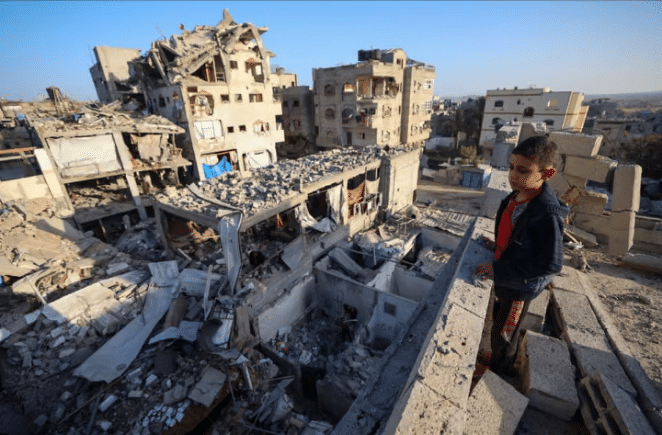
Critics argue the EU’s hesitation signals weakness, emboldening Israel’s government while leaving Palestinians exposed to ongoing violations and disproportionate military operations across Gaza’s densely populated areas.
Sven Kühn von Burgsdorff, former EU representative to Palestinian territories, told the Guardian: “Kallas missed the point on legal accountability. Restrictive measures are essential to enforce European and international law consistently.”
The EU’s association agreement with Israel mandates compliance with human rights. Ignoring obligations undermines the bloc’s credibility, suggesting Brussels prioritizes diplomacy over justice and accountability for victims.
Legal experts emphasize that EU Israel sanctions are required under international law and ICJ guidance. Delays risk tacitly endorsing Israel’s occupation and the ongoing oppression of Palestinians.
Burgsdorff co-organized a statement signed by 414 former diplomats, warning that postponing sanctions emboldens extremists on both sides, threatening prospects for establishing a future Palestinian state in accordance with international agreements.
Nathalie Tocci, former EU foreign policy adviser, criticized the decision: “Now is the moment to keep pressure. Weak enforcement only invites further violations and risks collapse of fragile ceasefire efforts.”
The Trump Gaza plan’s first phase has already been marred by violence. Tocci warned European inaction could undermine the fragile ceasefire, causing the plan to fail before meaningful implementation begins.
Deep divisions persist within the EU over Middle East policy. Some members vocally support Palestine, while others align with Israel’s nationalist government, preventing unified, effective diplomatic or sanctions enforcement measures.
Massive protests across Europe decry Gaza’s civilian deaths. Yet, the EU’s decision to delay sanctions demonstrates political compromise is consistently prioritized over justice and protection of civilians.
The bloc has been called a “payer, not a player,” offering humanitarian aid while failing to exert real pressure through EU Israel sanctions, undermining its moral authority on human rights issues.
EU officials cite participation in Trump’s “board of peace,” highlighting reconstruction funding commitments. Critics insist financial involvement cannot replace sanctions or accountability mechanisms for repeated human rights violations.
A leaked EU paper revealed serious gaps in the Trump Gaza plan. Palestinian authority engagement and West Bank issues remain inadequately addressed, reflecting Europe’s diplomatic approach lacks real enforcement power.
Burgsdorff insisted Europe must fill gaps in Trump’s plan, addressing settlements in the West Bank and securing a credible path toward a two-state solution to avoid long-term instability.
Plans for an international stabilization force led by Egypt are underway. Critics warn that deployment of troops cannot substitute for concrete EU Israel sanctions or legal enforcement mechanisms to deter further violations.
Claudio Francavilla from Human Rights Watch criticized EU hesitation: “Governments continue shielding Israeli authorities. Occupation, apartheid, forced displacement, and oppression persist unabated despite statements and promises.”
Europe’s delay in enforcing sanctions undermines its claims of defending human rights. Hesitation effectively signals tolerance for ongoing atrocities and reduces leverage on Israel to comply with international law.
Experts warn Europe’s weakness may embolden other states to flout international law, eroding global mechanisms designed to protect civilians in conflict zones such as Gaza.
Tocci warned that reverting to “familiar patterns” risks Europe being a mere spectator, unable to leverage diplomatic clout to influence peace and prevent escalation of violence.
The disconnect between EU leaders and citizen sentiment highlights political inertia. Public demands accountability, yet delayed sanctions leave civilians exposed to continued harm and instability.
Even temporary pauses in EU Israel sanctions carry serious consequences. Delays signal tolerance for violations, giving extremists opportunities to disrupt fragile ceasefire agreements and undermine diplomatic solutions.
Europe’s moral failures extend beyond Gaza. Hesitation undermines credibility, creating an impression of indifference when geopolitical interests conflict with human rights enforcement responsibilities.
Without decisive measures, including targeted sanctions, the EU risks appearing complicit in prolonging conflict, obstructing Palestinian self-determination, and weakening faith in international law and EU human rights commitments.
Burgsdorff emphasized: “Europe must demonstrate political ambition and move beyond merely paying. Inaction damages credibility and emboldens perpetrators of atrocities committed against civilians.”
Francavilla added: “Continued delays in EU Israel sanctions reinforce impunity, strengthen occupation, and perpetuate humanitarian catastrophe in Gaza, sending the wrong signal to all actors in the region.”
The pause on sanctions represents a troubling trade-off, sacrificing principle for political expediency while victims of violence remain unprotected and justice remains unfulfilled, critics argue.
EU leaders have a narrow window to act decisively. Failure risks historical condemnation for allowing violations to continue unchecked, undermining long-term prospects for peace in the Middle East.
Human rights advocates stress that sanctions are not symbolic gestures—they are legal obligations to ensure accountability and prevent further escalation of conflict in Gaza and surrounding territories.
Brussels faces growing pressure from citizens and member states. The choice is stark: enforce EU Israel sanctions and uphold law, or continue appeasing political interests at the expense of justice and human safety.

Fragile ceasefire agreements remain under threat due to EU indecision. Critics warn that every day of delay erodes European influence and reduces the likelihood of a sustainable, enforceable resolution.
The current policy exposes structural weaknesses in EU foreign policy, where political compromise routinely overrides legal and ethical imperatives, leaving civilians at risk and credibility permanently diminished.
Unless the EU immediately resumes sanctions, Europe risks cementing a legacy of impotence, emboldening violators, and failing Palestinians in their pursuit of justice, safety, and basic rights.
Pausing EU Israel sanctions is more than procedural—it is a symbolic abdication of responsibility, demonstrating inability to confront violations under political or diplomatic pressure from member states.
Europe’s credibility as a defender of human rights is at stake. Hesitation not only undermines moral authority but also weakens its capacity to influence conflict resolution effectively on the ground.
The pause sets a dangerous precedent. Critics argue that without immediate corrective action, Europe risks complicity in perpetuating injustice, escalating violence, and destabilizing the region further.
EU Israel sanctions remain the clearest tool to enforce accountability, yet Brussels’ delay signals that political calculations outweigh obligations to protect civilians and uphold law.
In sum, the EU’s pause is a failure of leadership. Critics warn that decisive action is urgently needed to prevent further atrocities and restore credibility in the Middle East.
Civilians in Gaza face ongoing uncertainty, violence, and displacement while EU inaction continues. Every day without sanctions further entrenches occupation and diminishes prospects for lasting peace.

Europe’s delayed response reflects systemic flaws in the union’s foreign policy, exposing the inability to act decisively under political pressure and failing those it purports to protect.
Unless sanctions are immediately reinstated and enforced, the EU risks appearing complicit in violations of international law, emboldening Israel and undermining hope for justice and self-determination.