The $100m Energoatom kickback scheme has sent shockwaves through Ukraine’s political and energy circles, exposing deep-rooted corruption within the state nuclear power company amid ongoing Russian bombardments.
Ukraine’s National Anti-Corruption Bureau launched a sweeping operation after uncovering evidence that a network of officials manipulated nuclear energy contracts for illegal profit over fifteen months.
Investigators described the scheme as “systemic theft,” implicating senior energy officials, intermediaries, and business figures who allegedly siphoned off vast sums from strategic state operations worth billions.
According to the bureau, a “high-level criminal organisation” controlled company purchases, forcing contractors to pay illegal kickbacks worth nearly $100 million to retain essential energy projects.
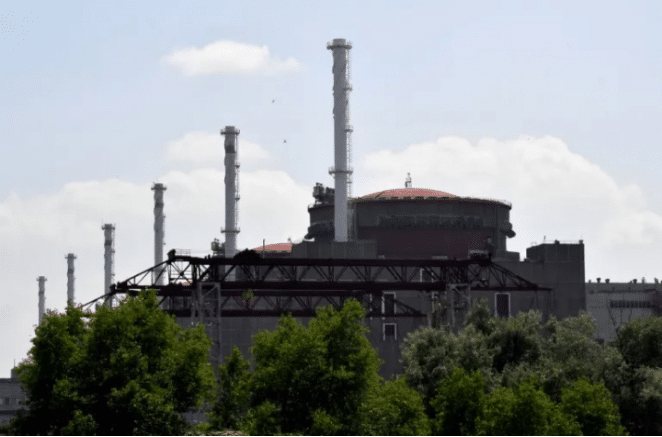
Detectives said the operation centered around Energoatom, the state-run company providing more than half of Ukraine’s electricity, crucial to national resilience as winter approaches under constant Russian air strikes.
“The minister’s adviser and the company’s head of security created conditions where all suppliers had to pay illicit benefits or lose contracts,” one investigator explained.
Sources familiar with the case revealed the suspects imposed a 10 to 15 percent surcharge on construction projects, including upgrades to the Khmelnytskyi nuclear plant, as part of the scam.
Photos released by investigators showed piles of US dollars, euros, and hryvnias stuffed in bags, symbolizing the staggering scale of the corruption that now grips Ukraine’s energy system.
One official involved in the Ukraine corruption probe said the investigation was “the most significant since the defense sector scandal earlier this year,” underscoring the difficulty of reforming entrenched patronage.
President Volodymyr Zelenskyy addressed the nation on Monday evening, calling for decisive legal action and “criminal verdicts” against everyone involved in the $100m Energoatom kickback scheme.
“Every person who participated in corrupt deals will face the consequences. There will be no exceptions, no hidden protection,” Zelenskyy declared in his televised statement.
The Zelenskyy accountability drive comes at a sensitive moment as Kyiv struggles to maintain public trust and secure vital Western aid while enduring massive infrastructure destruction from Russian missile attacks.
Energoatom confirmed its headquarters were searched by investigators, pledging full cooperation and promising to make the findings public once the probe concludes. “We have nothing to hide,” a spokesperson said.
Deputy Energy Minister Svitlana Grynchuk acknowledged being briefed but insisted she would ensure “a transparent process” and accountability for anyone found complicit in manipulating nuclear energy deals.
“I hope the transparency of this investigation reassures our international partners,” Grynchuk told reporters, emphasizing that energy reform remains a “non-negotiable condition” for Ukraine’s recovery and integration with Europe.
The European Union membership bid continues to hinge on measurable progress in rule of law, governance, and financial integrity—issues repeatedly highlighted by Brussels as prerequisites for accession negotiations.
Ukraine’s struggle against corruption predates the war, but observers say the urgency has grown sharper as billions in reconstruction funds and military assistance pour into the country.
“The credibility of Ukraine’s institutions depends on whether these agencies can actually deliver convictions, not just investigations,” said an analyst close to the country’s reform process.
NABU’s chief detective, Oleksandr Abakumov, described how the group used fake consultancy firms and offshore accounts to disguise illegal transfers tied to lucrative nuclear energy contracts.
“These were not isolated thefts,” Abakumov stated. “It was a coordinated mechanism designed to exploit procurement loopholes in a system already weakened by wartime urgency.”
Investigators carried out seventy raids, analyzed over a thousand hours of recordings, and mobilized all available detectives to trace financial trails leading across multiple jurisdictions.
Officials said the scandal involved Energoatom’s head of security, a former energy minister’s adviser, and four other employees, all accused of abusing authority and manipulating tenders.
A senior anti-graft officer said the suspects effectively “privatized decision-making” inside one of Ukraine’s most strategic institutions, handling massive contracts “as if it were a personal business empire.”
“A strategic enterprise with annual income exceeding 200 billion hryvnias was controlled not by legitimate managers but by shadow actors without any formal authority,” NABU’s statement read.
Legal experts in Kyiv argue that if proven, the $100m Energoatom kickback scheme could become a defining test of Ukraine’s ability to meet international expectations for accountability.
Western partners, including the European Commission and the International Monetary Fund, have repeatedly urged Kyiv to strengthen anti-corruption institutions as a condition for ongoing financial and security support.
Domestic critics warn that repeated scandals risk undermining morale among citizens already enduring blackouts, shortages, and constant shelling during the harshest period of the ongoing war.
“Corruption is not just a moral issue—it’s a national security issue,” said an opposition lawmaker demanding the dismissal of senior energy officials linked to the scandal.
Lawmakers are expected to table a motion calling for the removal of Deputy Minister Grynchuk and former minister German Galushchenko, now serving as justice minister, pending the investigation’s outcome.
Neither has publicly responded to those demands, though both face increasing pressure from civic groups and media commentators pushing for institutional reform and stricter oversight mechanisms.
Energoatom’s prominence in maintaining Ukraine’s power grid—particularly amid Russian strikes on energy facilities—makes the revelation particularly damaging to public confidence.
Russia has targeted transmission lines and substations linked to nuclear facilities but avoided direct strikes on reactors, according to Ukrainian authorities monitoring the ongoing bombardment.
Still, large parts of the country remain without power, with emergency generators sustaining hospitals, command centers, and critical infrastructure during prolonged outages.
In the broader context, anti-corruption agencies remain a cornerstone of Ukraine’s bid to reshape governance systems in line with European norms and to curb wartime profiteering.
Zelenskyy’s decision to reverse earlier attempts to restrict agency independence was widely viewed as a political recalibration under pressure from civil society and Western backers.
Public protests over transparency and judicial reform earlier this year forced Kyiv to reaffirm the autonomy of its main investigative bodies, a move praised internationally as a sign of renewed commitment.
“Ukraine cannot win this war only with weapons; it must also win the battle for integrity,” said a reform advocate, warning that the Energoatom revelations risk eroding investor confidence.
The Ukraine corruption probe highlights a recurring dilemma: balancing wartime urgency against the slow, procedural demands of democratic accountability in an embattled nation.
Analysts suggest that exposure of corruption within critical infrastructure sectors could accelerate the introduction of foreign-led audits and tighter procurement rules for postwar reconstruction.
As evidence continues to surface, NABU has vowed to trace every transaction related to the alleged laundering network, both domestically and across offshore jurisdictions.
Abakumov confirmed that international partners have been approached to assist with forensic accounting and data recovery from seized electronic devices connected to the suspects.
“The goal is to prove the complete structure of this network and secure irreversible convictions,” he said. “This is not symbolic—it’s structural cleansing.”
Zelenskyy, whose popularity has fluctuated during wartime leadership, views the Zelenskyy accountability drive as both a domestic necessity and a diplomatic message to Ukraine’s allies.
His administration insists that internal reform remains inseparable from military resilience and postwar reconstruction, an argument gaining traction among European policymakers.
In many respects, the scandal underscores the paradox of wartime governance: extraordinary unity against invasion coupled with persistent internal battles over corruption and influence.
Ukrainian citizens, weary from years of scandal and conflict, reacted with a mix of outrage and resignation, demanding harsher penalties for those exploiting state resources during crisis.
Some civic activists have urged the creation of a public oversight commission to monitor all energy sector contracts, arguing that existing structures remain too vulnerable to manipulation.
The anti-corruption bureau continues to appeal for public assistance, inviting whistleblowers to come forward with additional evidence or witness testimony regarding Energoatom procurement.
For Kyiv, the timing could not be more delicate. With winter’s onset and energy demand rising, ensuring transparency in nuclear operations is critical to sustaining the nation’s power supply.
Ukraine’s partners in Europe and North America are watching closely, viewing this scandal as a benchmark for whether reforms are taking tangible root under wartime pressure.
Should convictions follow, it may bolster international trust; if not, doubts could resurface about Kyiv’s ability to control elite capture and entrenched crony networks.
As investigations deepen, the $100m Energoatom kickback scheme stands as both a test and a symbol of Ukraine’s ongoing struggle to cleanse its institutions while fighting for survival.
Ultimately, the outcome of this case may define not only the credibility of its anti-corruption framework but also the future pace of its European integration.
About The Author