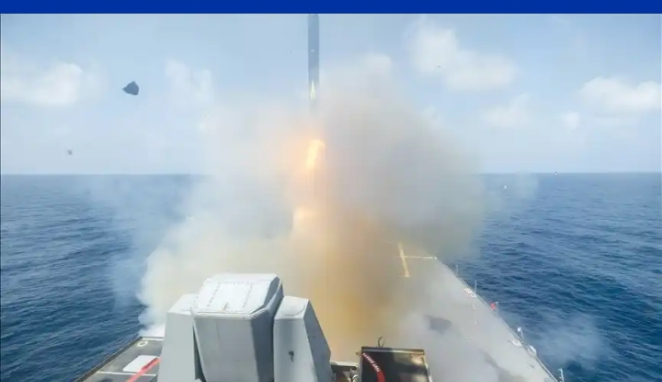
Sir Keir Starmer reaffirmed on Wednesday that the UK will not join Iran war without legal basis, responding directly to fresh attacks from US President Donald Trump.
Trump criticized Starmer for refusing to allow American planes to launch their initial strikes against Tehran from British bases, declaring that the Labour leader was “not Winston Churchill.” Starmer’s stance signals a cautious approach to the escalating Middle East crisis, emphasizing that any military engagement must be legally and strategically justified.
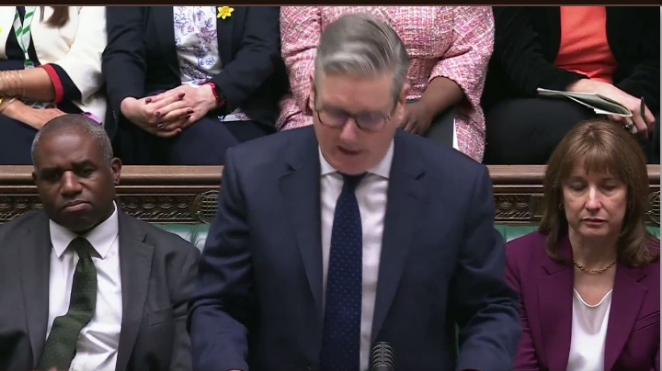
At Prime Minister’s Questions (PMQs), Starmer told MPs: “What I was not prepared to do on Saturday was for the UK to join a war unless I was satisfied there was a lawful basis and a viable, thought-through plan.
That remains my position.” His remarks underline a commitment to parliamentary oversight and legal procedure, directly countering Trump’s repeated attempts to pressure the UK into military cooperation. “Decisions about war are not taken lightly, and the rule of law must guide our actions,” Starmer added.
The Labour leader’s stance comes amid a rapidly escalating Iran-US conflict, with Western officials warning that the region could see further air and missile strikes.
In recent days, Tehran has faced multiple attacks, including US-led air raids that targeted Iranian military infrastructure. While the UK has provided intelligence support, it has stopped short of allowing American aircraft to operate from British bases, prompting Trump to publicly criticize Starmer in an unusually pointed rebuke.

The crisis has prompted the UK government to charter British evacuation flights from the Middle East to protect nationals at risk. A repatriation flight from Muscat, Oman, is scheduled to carry British citizens, their partners, and children under 18 with valid travel documents.
This flight is part of an unprecedented effort by the UK Foreign Office to ensure the safety of nationals caught in conflict zones. According to officials, over 136,000 British nationals have registered in the region, making it the largest response of its kind in UK history.
Foreign Office minister Chris Elmore confirmed to MPs that the Iranian ambassador, Seyed Ali Mousavi, had been summoned over the escalating tensions.
“This is part of our ongoing diplomatic effort to communicate the UK’s position clearly and to demand that the safety of all foreign nationals is respected,” Elmore said. He added that the Foreign Office has received nearly 4,000 inquiries from citizens in the region since the beginning of the crisis, reflecting widespread concern about personal safety and evacuation options.
During PMQs, the debate over the UK’s role in the conflict intensified. Conservative MPs, including Kemi Badenoch, criticized Starmer’s cautious approach. “The Government needs to stop being naive over countries like China and threats in the Middle East,” Badenoch said, referencing both the geopolitical implications of the Iran-US conflict and broader security concerns.
She accused Starmer of undermining British credibility by prioritizing legal caution over immediate action.
In response, Starmer defended the principle of legality in military engagements. “We cannot and will not commit British forces to conflict unless there is a lawful mandate, a clear objective, and a plan that ensures we are acting responsibly,” he said.
Analysts note that Starmer’s position reflects a broader parliamentary culture in the UK, which historically requires debate and approval before military intervention. This contrasts with Trump’s approach, which often favours rapid unilateral action.
The practical challenges of evacuating citizens amid the Iran-US conflict have highlighted operational difficulties. Hannah Connell, a British mother stranded in the UAE with her children, described the evacuation process as chaotic.
“We packed immediately and took a taxi to the airport, unsure whether it was even open. It was a leap of faith,” she told reporters. Connell said that although her family eventually returned safely, dozens of seats on flights remained empty while many others were desperate to leave. Her account underscores the complexity of coordinating repatriation in a region where airspace closures and military operations have disrupted commercial flights.
British Airways has announced additional flights from Muscat to London Heathrow, departing on March 6 and 7, to accommodate more British citizens stranded abroad.
The airline confirmed that operations from Abu Dhabi, Amman, Bahrain, Doha, Dubai, and Tel Aviv remain suspended due to safety concerns.
The Foreign Office has advised that citizens consider available commercial options only if their presence in the region is not essential, emphasizing both the logistical difficulties and the potential dangers of attempting travel through conflict-affected areas.
Meanwhile, the UK has also begun preparing for potential military contingencies in Cyprus. HMS Dragon, a Roya
l Navy destroyer, is undergoing maintenance and ammunition loading in Portsmouth, with deployment expected next week.
The ship is tasked with protecting the British base at RAF Akrotiri, which was struck by a drone earlier this week. Western officials confirmed that assessments suggest the drone was a Shahed type, although they could not verify whether it was launched from Iran.
In addition, Royal Navy Wildcat helicopters armed with Martlet anti-drone missiles are being deployed to the region within days, adding a defensive layer before HMS Dragon’s arrival.
US bombers are also expected to arrive at British bases, including Diego Garcia and RAF Fairford, within days. Officials previously denied US use of these bases for strikes against Iran, a decision that drew Trump’s ire.
Daily Cobra meetings—high-level UK defence and security briefings—are being held to address the complex operational problem posed by Iran’s escalatory actions.
The situation underscores the tension between providing strategic support to allies and ensuring compliance with UK legal and parliamentary frameworks.
The conflict has sparked broader political debate in Westminster.
Greater Manchester Mayor Andy Burnham criticised the central government for resisting further devolution of powers, arguing that local leaders are better positioned to respond to emergencies. “What is the rationale for Westminster hanging on to all of the power over those things when clearly they can’t do it from where they are?” Burnham asked, highlighting frustration with bureaucratic delays amid crises like the Iran conflict.
Meanwhile, the Labour party is navigating internal scrutiny as well. Questions have arisen regarding security concerns linked to foreign influence, such as reports of a Labour MP’s partner being arrested on suspicion of spying for China.
While unrelated to Iran directly, these incidents contribute to a heightened atmosphere of caution and strategic calculation in UK politics. Starmer’s insistence on legal grounding before military involvement is consistent with this culture of risk management.
In addition, the geopolitical stakes extend beyond immediate military considerations. Critics like Badenoch argue that Starmer’s focus on legal procedures could be misread by adversaries as weakness, especially in light of China’s expanding influence in Europe and the Middle East. Starmer, however, maintains that adherence to law and parliamentary oversight preserves the UK’s credibility and ensures public trust in decisions regarding war.
Public opinion also plays a role. Polls suggest a significant portion of the British population supports cautious involvement in foreign conflicts, prioritizing legal justification and long-term planning over immediate military intervention.
Analysts say this creates a delicate balance for the UK government: supporting allies such as the US while maintaining domestic legitimacy. Starmer’s statements are therefore designed to reassure both Parliament and the public that decisions on war will be carefully considered.
As the Iran-US conflict continues to unfold, the UK faces multiple challenges: ensuring the safety of nationals abroad, coordinating evacuation flights, maintaining diplomatic pressure, and preparing military contingencies.
Starmer’s insistence that the UK will not join Iran war without legal basis highlights the legal, political, and operational dimensions of these challenges, marking a clear distinction between the UK’s approach and that of the US under Trump.
Observers note that Starmer’s approach reflects a broader post-Brexit UK strategy: maintaining sovereignty in decision-making, even amid allied pressure.
By grounding military decisions in law and parliamentary scrutiny, Starmer seeks to avoid hasty commitments while demonstrating leadership in crisis management.
His emphasis on lawful and planned action sets a precedent for how future conflicts may be approached by the UK, balancing international obligations with domestic accountability.
The coming days will test the effectiveness of the UK’s evacuation efforts and its diplomatic stance. With additional flights scheduled, the deployment of HMS Dragon, and heightened military readiness in Cyprus, the government is attempting to manage a rapidly evolving crisis.
Meanwhile, Starmer’s PMQs interventions and repeated emphasis on legal basis serve as a counterpoint to Trump’s aggressive posture, framing the UK’s role in measured terms.
In conclusion, Sir Keir Starmer’s clear messaging underscores a commitment to legality, parliamentary oversight, and strategic caution.
Amid escalating Iran-US conflict and public concern over British citizens abroad, his insistence that the UK will not join Iran war without legal basis reinforces the principle that military action must be justified, planned, and transparent.
With evacuation flights, diplomatic engagements, and military preparedness ongoing, the UK navigates a complex international crisis, balancing humanitarian, strategic, and legal imperatives.
Read also: Nearly 150 missing after Iranian warship sinks near Sri Lanka, rescue underway