

For the first time in two decades, the U.S. passport ranking decline has shocked analysts, signaling a deeper erosion of global trust and influence once considered untouchable.
The new Henley Passport Index shows America tumbling out of the top ten, falling to twelfth place, tied with Malaysia. It’s an embarrassing symbol of waning prestige.
A decade ago, the U.S. passport was a global powerhouse granting unrivaled access. Today, the U.S. passport ranking decline captures how isolationist policies have diminished America’s soft power reach.
Henley & Partners, which compiles the global ranking, emphasized that openness and cooperation drive mobility. By contrast, restrictive U.S. travel rules now backfire, limiting reciprocal access worldwide.
According to the latest index, Singapore leads with visa-free access to 193 destinations, followed by South Korea and Japan. America’s stagnant 180 destinations expose its backward slide.

Analysts say this U.S. passport ranking decline is more than numbers. It’s a public verdict on Washington’s inward-looking foreign policy and its alienation of long-time allies and trading partners.
The shift also illustrates a redistribution of global mobility power, where Asia’s strategic engagement and liberalized policies have overtaken America’s outdated visa framework.
Christian H. Kaelin of Henley & Partners described the U.S. passport ranking decline as a “fundamental shift in global mobility and soft power dynamics,” a statement that drew both alarm and frustration.
He argued that nations embracing international openness are soaring ahead, while those clinging to past privilege — like the United States — are watching their advantage evaporate in real time.
Over the past decade, consecutive U.S. administrations tightened immigration and travel restrictions, initially framed as security measures. But the ripple effect has been diplomatic backlash and growing reciprocity demands.
Countries once offering Americans visa-free entry have revoked privileges in protest. Brazil’s recent reversal, requiring visas and proof of financial capacity, epitomizes how global patience is wearing thin.
Meanwhile, rising Asian economies are capitalizing on the gap. Their passports open borders once closed, while U.S. travelers face expanding bureaucratic hurdles and heightened scrutiny at foreign gates.
Observers say the U.S. passport ranking decline reflects a broader identity crisis. The American brand, once synonymous with freedom and opportunity, now carries bureaucratic red tape and political suspicion.
The fall from seventh place last year to twelfth in 2025 wasn’t random. It mirrored a decade-long erosion tied to diplomatic friction, shifting alliances, and global skepticism toward U.S. policy.
Experts note that reciprocity plays a critical role. America allows visa-free entry for only 46 nationalities, a fraction of the privileges U.S. citizens expect abroad.
This double standard, analysts say, undermines goodwill and demonstrates a growing imbalance in global relations — an imbalance now quantified by the U.S. passport ranking decline.
Peter J. Spiro, a law professor at Temple University, observed that this trend is pushing Americans to seek dual citizenship, a strategy once dismissed as unnecessary but now increasingly normalized.
“Multiple citizenship is becoming the new American dream,” Spiro said, capturing a generational shift driven by mobility anxiety rather than patriotism.
The irony is sharp. For decades, the U.S. passport symbolized global dominance. Now, it’s a case study in complacency and how diplomatic arrogance corrodes privilege.
Travel freedom once reflected political respect. Today, it mirrors reciprocity and reputation — two areas where the United States is visibly slipping, fueling debate about its future as a global leader.
Critics point directly at the U.S. passport ranking decline as a policy failure, not just a public relations embarrassment. They argue Washington underestimated the long-term impact of restrictive border management.
From visa delays to student entry bans, U.S. policy has made entry difficult for others, prompting retaliatory measures abroad. Nations are simply returning the favor with quiet precision.
Henley & Partners’ data confirms the pattern: countries that foster mutual entry agreements prosper. Those relying on outdated exclusivity — the U.S. included — are sliding backward fast.
China and Vietnam have both excluded Americans from their new visa-free lists, an unmistakable diplomatic signal that global mobility is no longer U.S.-centric.
Even traditional allies, fatigued by Washington’s unpredictability, are recalibrating. European partners are now more closely aligned with Asia on mobility standards than with their transatlantic counterpart.
The U.S. passport ranking decline also impacts perception in business and diplomacy. Investors interpret mobility limits as red flags for declining international influence and cooperation potential.
In the corporate world, this loss translates to missed opportunities. Restricted access curtails executive travel and undermines the country’s image as an open, investment-friendly environment.
Domestically, the symbolism cuts deep. Americans accustomed to global privilege now face an unsettling reality: the world’s gates are closing, slowly but deliberately, on U.S. exceptionalism.
The Henley Index, based on International Air Transport Association data, quantifies what diplomats already know — America’s global convenience is fading, one visa requirement at a time.
The U.S. passport ranking decline underscores that prestige must be maintained through openness, not entitlement. Nations willing to engage diplomatically enjoy mobility gains; those that isolate, lose ground.
For the average U.S. traveler, the changes are tangible: longer application times, tighter documentation checks, and rising fees from previously accessible nations.
The Biden administration has promised to review visa reciprocity agreements, but experts warn that restoring trust will take years, not months, after decades of hardline precedent.
Tourism officials admit the country’s reputation as a “welcoming destination” has suffered under bureaucratic expansion and political polarization. America’s borders, once its pride, have become its own cage.
In policy circles, this U.S. passport ranking decline is being used as a wake-up call — proof that mobility is power, and America’s power is shrinking by choice, not necessity.
“Global travel freedom is now the most measurable indicator of influence,” Kaelin added. “If America continues down this restrictive path, recovery will be slow and painful.”
Some officials defend the restrictions as necessary for security. Yet the data show diminishing returns — stricter controls haven’t improved safety metrics but have damaged international cooperation.
Diplomats quietly acknowledge the moral cost. America’s message of openness and opportunity is increasingly undermined by the barriers it erects, both physical and bureaucratic.
The loss of global mobility rights exposes more than policy flaws. It reveals a moral contradiction — a nation advocating freedom while rationing it selectively across borders.
In symbolic terms, the U.S. passport ranking decline represents the end of an era where American citizenship guaranteed access, opportunity, and automatic respect.
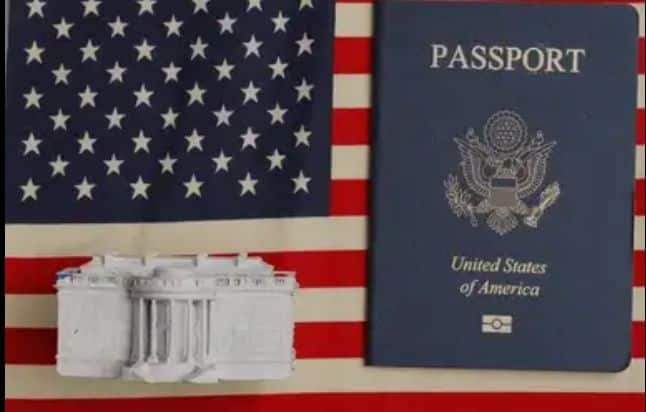
Now, even that passport — once the envy of travelers everywhere — is losing its shine, mirroring a broader unraveling of global dominance and diplomatic goodwill.
If the United States wants to reclaim its travel prestige, it must rediscover the value of reciprocity, empathy, and consistency — the real currencies of global respect.
Without that recalibration, the U.S. passport ranking decline will continue — a reflection not of world bias, but of America’s own strategic and moral complacency.


