Tom Homan, Trump’s border czar, has announced he will remain in Minnesota until ongoing immigration enforcement challenges are fully addressed.
Homan was sent to the state following two fatal shootings of U.S. citizens by federal immigration officers during Operation Metro Surge, a large-scale enforcement operation that has sparked protests and drawn national attention.
The federal operation, previously led by Greg Bovino, the top border patrol official assigned to Minnesota, faced immediate backlash after the deaths of Renee Nicole Good on January 7 and Alex Pretti last week. Both were killed during encounters with federal immigration officers, raising questions about the use of force and accountability in the state.
“I’m staying until the problem’s gone,” Homan told reporters, emphasizing the administration’s determination to maintain federal oversight in Minnesota.
The statement underscores Trump’s commitment to aggressive enforcement measures, even amid growing criticism from local residents and officials concerned about the impact on community safety.
Community leaders have condemned the operation as heavy-handed, describing it as disruptive to daily life and harmful to trust between residents and law enforcement.
Protests in Minneapolis have grown in size and intensity, with organizers demanding transparency and reforms in federal enforcement practices. Many residents have expressed fear over continued operations, citing concerns for both immigrant and citizen safety.
Trump’s decision to deploy Homan reflects a broader push to enforce immigration laws strictly in states with significant immigrant populations.
Supporters argue that strong federal action is necessary to curb illegal immigration and related criminal activity, while critics warn it risks escalating tensions and undermining local governance.
Legal experts and human rights advocates are calling for independent investigations into the circumstances surrounding the deaths of Good and Pretti.
Questions persist regarding the protocols followed by ICE and border patrol officers, including the justification for lethal force against U.S. citizens, and whether proper accountability measures were in place.
The federal presence in Minnesota has also sparked tension between state and local authorities. Officials have expressed concern that aggressive federal tactics may strain relationships with local law enforcement and provoke further unrest.
Analysts suggest the situation could serve as a model for similar federal interventions in other states, potentially heightening nationwide political and social divisions.
As Homan continues his presence in Minnesota, the city remains on high alert. Residents and activists are preparing for ongoing federal operations while seeking avenues for legal recourse and community protection.
Observers note that the resolution of this crisis may influence broader national immigration policies and set precedents for federal intervention in domestic law enforcement.
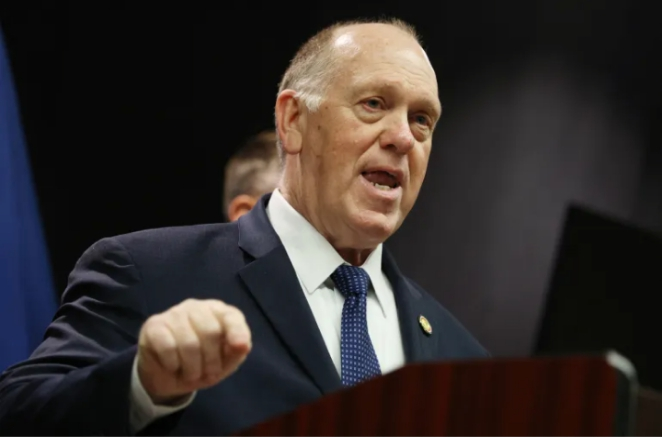
Trump’s border czar has signaled that federal enforcement will not relent until authorities deem the situation under control.
While supporters applaud the firm stance, critics argue that a balanced approach—combining enforcement with legal oversight and community engagement—is essential to avoid further violence and maintain public trust.