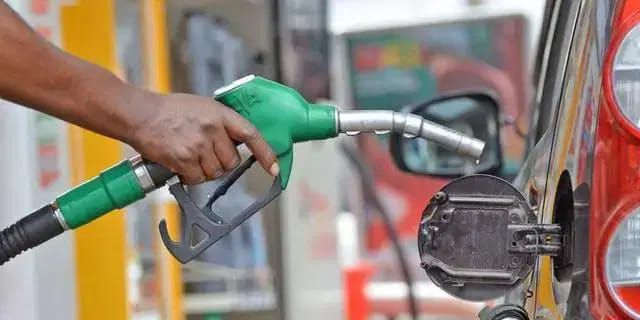
Cuba’s oil– US President Donald Trump has warned Cuba to “make a deal” immediately, pledging to cut off all oil and financial support to the island nation following the removal of Venezuelan leader Nicolas Maduro.
Trump’s statement, posted on his Truth Social platform on Sunday, drew sharp criticism from Cuban President Miguel Diaz-Canel, who insisted that no country would dictate Cuba’s policies.
Washington has maintained a long-standing economic embargo against Cuba, but the Trump administration has intensified pressure in recent days, especially after the dramatic capture of Maduro and his wife by US special forces.
The operation, described by the White House as a “lightning raid,” resulted in the deaths of dozens of Maduro’s security personnel, many of whom were Cuban nationals.
Trump claimed that the United States now controls Venezuela’s oil sector through a naval blockade, giving Washington leverage over Havana’s access to subsidized Venezuelan oil.
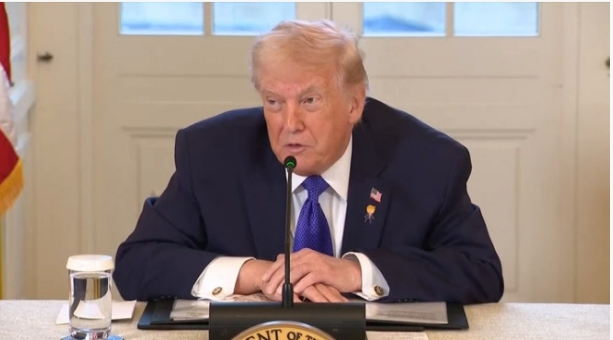
“There will be no more oil or money going to Cuba—zero!” Trump wrote on Truth Social. He added: “I strongly suggest they make a deal, BEFORE IT IS TOO LATE.”
Trump accused Cuba of having relied heavily on Venezuelan oil for decades, in exchange for providing security services to Maduro and his predecessor Hugo Chavez.
“Most of those Cubans are dead from last week’s U.S.A. attack, and Venezuela doesn’t need protection anymore from the thugs and extortionists who held them hostage for so many years,” he said, without offering details on how a deal would work or what it might entail.
When asked about the potential deal later on Sunday, Trump told reporters aboard Air Force One that the US would focus on protecting Cuban expatriates in America or those who left the island under duress.
“Most importantly, right now, we’re going to take care of the people that came from Cuba, that are American citizens, or in our country,” he said, without explaining how this would be coordinated with the Cuban government.
Trump has repeatedly signaled that Cuba’s government is “ready to fall” due to an escalating economic crisis and its dependence on Venezuelan oil.
Earlier on Sunday, he reposted a humorous suggestion that US Secretary of State Marco Rubio, a Cuban-American, could also become the president of Cuba—commenting, “Sounds good to me!”
Cuban officials rejected Trump’s threats, reaffirming their sovereignty.
Diaz-Canel stated that Cubans are “ready to defend the homeland to the last drop of blood,” while Foreign Minister Bruno Rodriguez emphasized that Cuba is entitled to import fuel from any willing exporter without interference from US sanctions.
The US embargo against Cuba, first introduced during the Cold War in 1962, has significantly shaped the island’s economy for decades.
Since 2000, Venezuela has been Cuba’s main supplier of oil under agreements struck by Hugo Chavez. Analysts say the potential cutoff of Venezuelan oil could worsen Cuba’s economic hardships, particularly as the country struggles with inflation, energy shortages, and food scarcity.
On the streets of Havana, opinions among residents were mixed. Retiree Mercedes Simon, 65, dismissed Trump’s threats.
“Trump is not going to touch Cuba,” she told AFP. “All the presidents talk, talk, talk about Cuba, but they don’t act.” Marcos Sanchez, 21, working in the restaurant sector, urged dialogue: “The two countries should find common ground without resorting to violence.”
Trump’s remarks on Cuba follow his recent aggressive posture toward other nations, including Colombia, Mexico, Iran, and Greenland, after asserting control over Venezuela’s leadership.
Several Republican lawmakers praised Trump for his assertive approach toward Havana.
Congressman Mario Diaz-Balart, a Cuban-American from Florida, said on X: “The tyranny in Cuba will not survive the second term of President Trump, and Cuba will finally be free after decades of misery, tragedy, and pain.”
Read also: Americans on the run as US warns of paramilitary threats in Venezuela
The ongoing tensions highlight the complex geopolitical landscape in Latin America. While the US seeks to curb the influence of Cuban-backed forces in the region, Havana’s leaders remain defiant, warning that any attempt to isolate Cuba could provoke resistance.
Experts suggest that the standoff may further strain diplomatic channels, complicate trade and migration issues, and increase instability in an already volatile region.
The international community continues to monitor the unfolding situation closely. Analysts note that any disruption to Cuban oil imports could have ripple effects across the Caribbean, affecting energy prices, transportation, and food supply chains.
Meanwhile, Trump’s rhetoric signals that the United States may pursue a more aggressive foreign policy in Latin America, potentially escalating tensions with countries historically allied with Cuba and Venezuela.
As the standoff develops, observers say that both Washington and Havana face critical decisions. Cuba must navigate economic hardship without Venezuelan oil, while the United States must balance punitive measures with diplomatic consequences.

The coming weeks will likely determine whether Trump’s ultimatum leads to tangible policy changes or remains another chapter in a decades-long saga of US-Cuba relations.
About The Author