The Trump visit to Malaysia has set the stage for one of Southeast Asia’s most delicate diplomatic moments, challenging Prime Minister Anwar Ibrahim’s effort to balance global powers.
When Donald Trump arrives in Kuala Lumpur this weekend for the ASEAN summit, it will mark the first visit by a sitting US president to Malaysia in nearly a decade.
The Trump visit to Malaysia signals renewed American engagement in the region and gives Anwar a rare chance to strengthen his global profile amid shifting geopolitical dynamics.
Malaysia, a multi-ethnic nation of 35 million situated strategically between Thailand and Singapore, has long practiced non-alignment — maintaining friendships with both Washington and Beijing.
Trump is only the third US leader to visit Malaysia after Barack Obama and Lyndon B. Johnson, highlighting the exceptional nature of this diplomatic occasion.
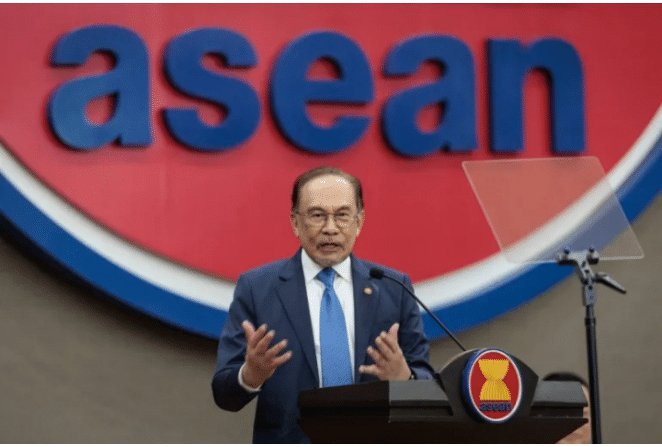
While Trump’s critics see him as an unpredictable guest, many in Malaysia view his attendance at the ASEAN gathering as an opportunity to reinforce regional cooperation.
The Trump visit to Malaysia coincides with a summit bringing together world leaders such as Japan’s Sanae Takaichi, Brazil’s Luiz Inácio Lula da Silva, and South Africa’s Cyril Ramaphosa.
Absent from the event are China’s Xi Jinping, India’s Narendra Modi, and Russia’s Vladimir Putin, whose absence underscores how much attention the US presence is attracting.
Anwar’s administration views the Trump visit to Malaysia as both a diplomatic win and a delicate test — balancing relations with the United States while maintaining deep ties with China.
Economically, Malaysia is deeply intertwined with both giants. The US remains a leading investor in Malaysian technology and energy, while China dominates as its top trading partner.
In 2024, the US ranked as Malaysia’s third-largest trading partner and top foreign investor, while China led trade volumes and ranked third for overall investment inflow.
This interdependence makes Malaysia particularly sensitive to the ongoing tariff and export-control battles between Washington and Beijing.
“Optimally, Malaysia wants to productively engage both China and the US on multiple issues,” said Thomas Daniel of the Institute of Strategic and International Studies Malaysia.
Daniel emphasized that constructive neutrality remains central to Kuala Lumpur’s diplomacy: “It is in our national interest to maintain open, balanced channels with both.”
Anwar Ibrahim has portrayed the Trump visit to Malaysia as an opportunity to advance trade, security, and peace initiatives across Southeast Asia’s increasingly polarized landscape.
His team has hinted that Anwar will use private talks with Trump to address not only economic issues but also sensitive humanitarian concerns, including the war in Gaza.
“The through-line is autonomy — avoid entanglement, maximize options, and extract benefits from both poles without becoming anyone’s proxy,” said Awang Azman Awang Pawi, a University of Malaya professor.
US tariffs on Malaysian goods — currently 19 percent — are expected to top the summit’s agenda, along with China’s potential restrictions on rare-earth exports.
For Kuala Lumpur, the ultimate goal of the Trump visit to Malaysia is to preserve “rules-based trade” that allows economic progress independent of political rivalries.
Mohd Ramlan Mohd Arshad, a lecturer at MARA University of Technology, said prolonged US-China confrontation would be “the worst-case scenario for Malaysia’s export-driven economy.”
Trump is also expected to preside over a peace accord between Thailand and Cambodia, two ASEAN neighbors that clashed briefly along their border earlier this year.
The Trump visit to Malaysia could therefore be remembered not only for its symbolism but also for tangible diplomatic outcomes in regional conflict resolution.
For Anwar, domestic politics remain as intricate as international diplomacy. Leading a diverse coalition since 2022, he must balance nationalist, Islamic, and progressive factions at home.
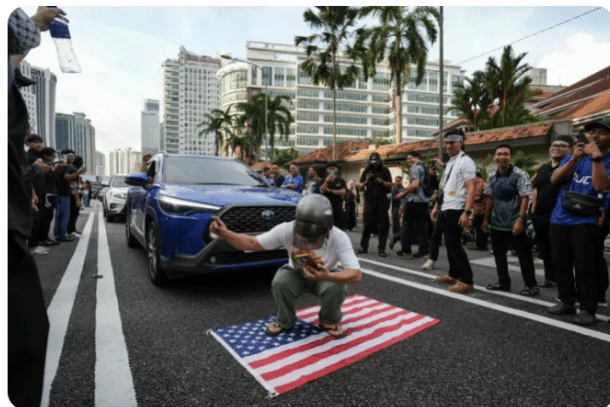
Malaysia’s Muslim-majority population has been especially vocal about the US role in the Israel-Gaza war, with frequent protests demanding stronger support for Palestinians.
In the weeks before the Trump visit to Malaysia, some opposition figures urged Anwar to withdraw the invitation altogether, citing Trump’s backing for Israel’s military campaign.
Former Prime Minister Mahathir Mohamad denounced the visit, saying, “A person like Trump, no matter how powerful, should not be welcomed in Malaysia.”
Anwar, however, defended his decision, describing diplomacy as “practical work done in an imperfect world to advance the people’s interest.”
He told a Kuala Lumpur audience that true leadership “demands balance, discipline, and the courage to stay the course even when the ground shifts beneath us.”
That philosophy reflects Malaysia’s long tradition of pragmatic foreign policy — preferring quiet engagement over ideological confrontation.
Sharifah Munirah Alatas, an independent scholar and former lecturer at the National University of Malaysia, noted, “Anwar and Malaysia cannot afford to act otherwise.”
According to Alatas, the Trump visit to Malaysia takes place amid heightened Sino-American tension under what she calls “the Trump 2.0 era of unpredictable diplomacy.”
She added that ASEAN will continue emphasizing non-alignment as its defining principle, resisting pressure to choose between rival powers.
The Malaysian government also hopes the summit will produce practical commitments — particularly regarding regional trade stability and peacekeeping mechanisms.
Awang Azman argued that success should be measured not by photo opportunities but by agreements reached. “If trade and ceasefire accords are signed, that’s meaningful progress,” he said.
However, he warned that if discussions stall, “the Trump visit to Malaysia will remain largely symbolic — a diplomatic show rather than a strategic turning point.”
Even symbolism, though, can carry weight. Analysts say the visit reinforces Malaysia’s image as a credible intermediary in an increasingly fragmented Asia-Pacific order.
Beyond Kuala Lumpur, the summit serves as a reminder that smaller nations can still exercise agency amid superpower rivalries.
The Trump visit to Malaysia also offers the US a platform to reassert its regional influence after years of perceived disengagement from Southeast Asia.
Observers suggest Trump is eager to highlight his peacemaking credentials ahead of next year’s global political contests, especially through ASEAN-brokered agreements.
Cambodia has already nominated Trump for the Nobel Peace Prize for his role in mediating the Thai-Cambodian truce — a move seen by critics as politically calculated.
Nevertheless, even skeptical diplomats concede that the Trump visit to Malaysia has revitalized attention on ASEAN as a potential stabilizing force.
The visit’s success, experts say, will depend on whether new frameworks emerge for trade resilience, climate cooperation, and peaceful conflict resolution.
If Trump’s meetings result in written agreements rather than rhetorical gestures, Malaysia could emerge as an unexpected winner in great-power diplomacy.
For Anwar, that outcome would cement his reputation as a statesman capable of navigating contradictions — engaging the world’s largest economies while safeguarding Malaysia’s autonomy.
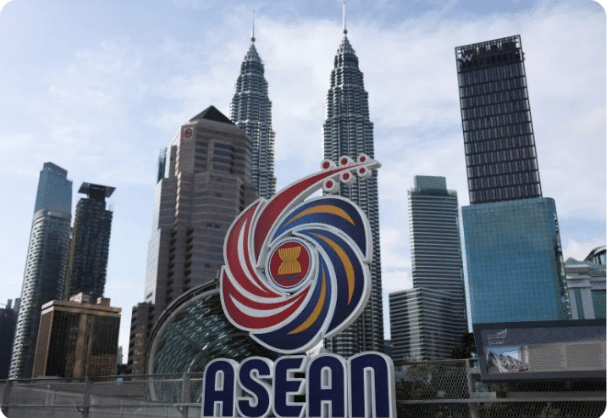
In that sense, the Trump visit to Malaysia is more than a diplomatic event; it is a mirror reflecting Southeast Asia’s evolving balance between pragmatism, power, and principle.
About The Author