Donald Trump confirmed he will meet Venezuelan opposition leader Machado next week, marking his first direct engagement with her since she won the Nobel peace prize in October.
Trump’s announcement marks a shift from his previous dismissal of Machado, whom he had said “doesn’t have the support within or the respect within the country,” signaling renewed US engagement.
Speaking on Fox News Thursday, Trump called a potential meeting with Machado “a great honour” and said, “I look forward to saying hello to her,” emphasizing cordial diplomatic intent.
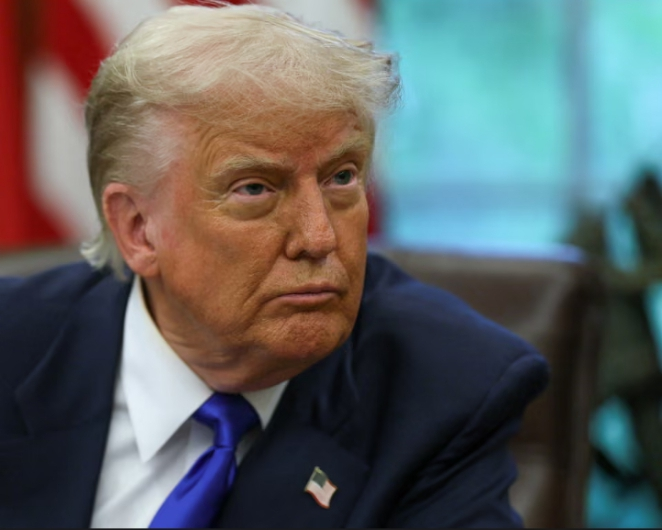
He also suggested he would accept the Nobel peace prize from Machado if offered, noting, “I’ve heard that she wants to do that. That’d be a great honour,” showing respect.
The meeting will be the first direct engagement between Trump and Machado, who has not spoken with him since winning the Nobel prize in October, highlighting a long-standing political distance.
Machado welcomed the announcement, praising recent developments in Venezuela. She said: “Injustice will not last forever and … truth, although it be wounded, ends up finding its way,” signaling hope.
Trump’s announcement follows a high-profile US-led operation that resulted in the capture of Venezuelan President Nicolás Maduro, leaving the country’s political future uncertain and sparking international attention.
The operation was part of a broader US campaign, including strikes on alleged drug shipments in the Pacific and Caribbean, which have killed more than 100 people since September.
Trump warned that future operations could extend to land targets, citing Mexican cartels as a major focus. Analysts called this a significant escalation in the US approach to organized crime.
Trump claimed he had offered Mexico’s president Claudia Sheinbaum permission for US troops to tackle cartels. She reportedly refused, maintaining Mexico’s sovereignty and rejecting US intervention on its soil.
Meanwhile, Venezuela’s interim president, Delcy Rodríguez, has begun releasing an “important number” of political prisoners. The releases include foreigners and opposition candidate Enrique Marquez, reflecting apparent US influence.
Machado hailed the prisoner releases as a step toward justice after years of political repression, framing the move as a small but meaningful victory for human rights and democracy.
Trump, however, emphasized that Venezuela would not be ready to hold elections immediately. “It will take time for the country to get to a place where it can hold elections,” he said.
The White House has not provided further details about the Machado meeting. Analysts say the engagement could indicate closer US alignment with the opposition while maintaining ties with Rodríguez’s government.
In a New York Times interview, Trump said the US was “getting along very well” with Rodríguez’s government and that they were providing everything “necessary,” suggesting pragmatic coordination despite political tensions.
Machado has long championed democratic reforms and human rights while facing criticism from Maduro loyalists. Her engagement with Trump highlights growing international focus on Venezuela’s opposition.
Read also: Syrian Army shells SDF positions in Aleppo as thousands flee
Trump stressed the US’s aggressive stance on drug cartels, linking Venezuela’s instability to regional challenges posed by Mexico’s criminal networks, framing interventions as part of a broader hemispheric strategy.
He said: “We are taking strong action, and it will not be limited to the seas,” indicating that future operations may target land-based cartel infrastructure directly.
Analysts caution that escalation could spark diplomatic tensions. Sheinbaum stated the Americas “do not belong” to any single power, rejecting Trump’s framing of US dominance following Maduro’s capture.
The Machado meeting is expected to be closely watched for signs of how the US may support Venezuela’s opposition while maintaining dialogue with Rodríguez’s interim government.
Machado’s Nobel recognition and recent praise of political prisoner releases could offer Washington a pathway to engage the opposition without fully alienating the existing administration, analysts said.
The White House did not immediately provide logistical details for the meeting. Observers expect discussions will focus on political transition, humanitarian concerns, and regional security cooperation.
Venezuelan political analysts noted that the prisoner releases may ease tensions domestically but will not resolve deeper governance issues, particularly the power vacuum created by Maduro’s removal.
Trump’s comments on extending operations to Mexico underscore the administration’s broader strategy to link Venezuela’s instability with regional organized crime challenges, reflecting a highly interventionist approach.
The US president’s statement followed reports of targeted strikes in Venezuelan ports and Caribbean waters, forming part of a sustained campaign to pressure Maduro and his loyalists.
Trump’s engagement with Machado contrasts with past dismissals of her political influence, demonstrating a recalibration of US support toward opposition leaders recognized internationally for democratic advocacy.
Observers highlight that Machado’s Nobel prize and political visibility strengthen her bargaining power and offer the US an alternative interlocutor in Venezuelan affairs.
Venezuelan interim government figures, including Rodríguez, are cautiously balancing engagement with Washington while asserting legitimacy and authority domestically, illustrating the delicate political dynamics at play.
Trump’s focus on cartel activity in Mexico signals an expansion of US security priorities, intertwining anti-drug campaigns with broader geopolitical influence in Latin America.
Political analysts warn that threats of land strikes could provoke diplomatic friction, requiring careful coordination with regional partners, while reinforcing the US administration’s willingness to act unilaterally.
The upcoming meeting may also address humanitarian issues, including the treatment of political prisoners, access to food and medical aid, and ongoing migration pressures across borders.
Machado has consistently advocated for democratic reforms, including free elections and accountability for government abuses, positioning herself as a key figure for international engagement in Venezuela.
Trump’s statements highlight the tension between short-term operational gains, such as Maduro’s capture, and the long-term challenge of stabilizing governance structures and supporting democratic institutions.
Observers expect Washington to weigh Machado’s advice carefully, using her political influence to shape future US policy while avoiding overt alienation of Rodríguez’s interim administration.
Analysts also note that the prisoner releases may help reduce immediate domestic unrest but cannot replace broader structural reforms or address entrenched economic challenges in Venezuela.
Trump’s threats against the Mexican cartels reinforce the US administration’s narrative of hemispheric responsibility, linking security operations in Venezuela with wider concerns about organized crime networks.
Political commentators suggest that Machado’s meeting with Trump could serve as a symbolic endorsement of opposition legitimacy, signaling to international audiences that the US supports democratic voices.
The situation remains volatile, with Maduro loyalists still active, US-led operations ongoing, and regional governments monitoring Washington’s moves, highlighting the delicate balance of diplomacy and coercion.
Observers will watch the Machado-Trump meeting closely, particularly for indications of coordinated strategy on political transition, anti-cartel operations, and humanitarian priorities across Venezuela and neighboring countries.
Venezuelan opposition figures are cautiously optimistic, emphasizing the importance of sustained international attention and support in ensuring Maduro-era abuses do not continue under interim governance.
Trump’s comments and actions underscore a broader US policy approach that combines military, diplomatic, and symbolic measures to influence political outcomes in Latin America.
The meeting also signals Washington’s readiness to engage opposition leaders recognized internationally while maintaining limited but pragmatic dialogue with interim administrations in unstable regions.
Analysts conclude that Machado’s political credibility, recent Nobel recognition, and engagement with Trump position her as a central actor in shaping Venezuela’s post-Maduro future.
US and Venezuelan officials are expected to provide further updates on meeting outcomes, prisoner release programs, and security operations in the coming days, keeping international attention focused.

With Maduro removed, the political landscape in Venezuela remains fragile, with multiple actors vying for influence, underscoring the importance of strategic engagement from the US and regional partners.
Trump’s combination of diplomacy, prisoner-focused incentives, and security threats illustrates a multi-layered approach aimed at stabilizing Venezuela while asserting US influence in the hemisphere.