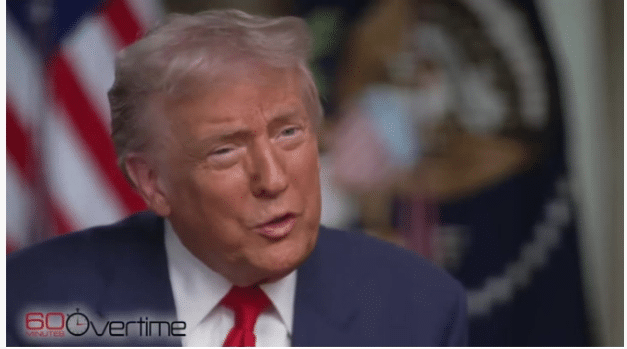
Donald Trump has once again stirred controversy in Washington by demanding what he calls a “nuclear obliteration” of the Senate’s long-standing filibuster rule, deepening divisions in Congress.
The Trump filibuster rule change proposal reignited fierce debate over legislative power, accountability, and the protection of minority voices within the American democratic framework that has endured for centuries.
Speaking at a rally in Pennsylvania, Trump insisted Republicans should “end the filibuster once and for all” to push through what he described as “common-sense reforms.”
He accused Democrats of hypocrisy, arguing they would abolish the US Senate filibuster immediately if given the opportunity, framing it as a test of political strength, not principle.
“The Democrats would nuke it on day one,” Trump declared, amplifying calls for what his advisers have dubbed the “nuclear option” — a procedural shortcut that could reshape Congress.
Critics warn the Trump filibuster rule change could destroy bipartisan cooperation, leaving future minority parties powerless to delay or amend legislation, potentially eroding the balance central to American governance.

A spokesperson for Senate Majority Leader John Thune reaffirmed that his position “remains unchanged,” emphasizing that long-term institutional stability must outweigh short-term partisan advantage or presidential pressure.
Thune’s allies reportedly fear Trump’s escalating rhetoric risks pushing moderate senators into public defiance, threatening Republican unity just months ahead of another crucial election cycle.
The filibuster, a Senate tradition allowing extended debate to delay or block votes, has often served as both a tool of obstruction and a safeguard of minority influence.
Lawmakers must continue speaking to maintain the floor; once they yield, the chamber can proceed to vote, creating opportunities for dramatic marathon speeches or political theater.
In recent memory, the most talked-about case of prolonged debate involved Cory Booker’s lengthy address, often cited as the Cory Booker longest speech in Senate history.
Booker spoke for more than twenty-five hours in a symbolic stand against what he saw as Trump’s divisive agenda, though technically it did not constitute an actual filibuster.
Historically, the longest recognized filibuster remains Strom Thurmond’s twenty-four-hour, eighteen-minute speech in 1957, famously opposing the landmark civil rights bill that sought to end racial segregation.
That Strom Thurmond civil rights filibuster has since become a cautionary symbol of how the tactic can obstruct progress even while being defended as a procedural right.
Trump’s critics point to such examples as evidence that eliminating the filibuster would remove essential brakes against hasty, majoritarian lawmaking that history might later regret.
Supporters, however, argue the opposite — that the US Senate filibuster no longer protects debate but instead fuels gridlock, empowering obstructionists to derail even widely supported measures.
Republicans remain split, with some echoing Trump’s call for “nuclear obliteration,” while others worry the move could backfire spectacularly should Democrats regain full control of Congress.
The Republican majority rule debate has therefore resurfaced as one of the most consequential ideological tests facing the party since Trump’s departure from the White House.
Analysts suggest Trump’s latest intervention is designed to pressure congressional Republicans into loyalty pledges ahead of the 2026 midterms, where control of both chambers remains uncertain.
In doing so, he reasserts dominance over GOP messaging, framing himself as the movement’s only true defender against what he calls the “Democrat machine of obstruction.”
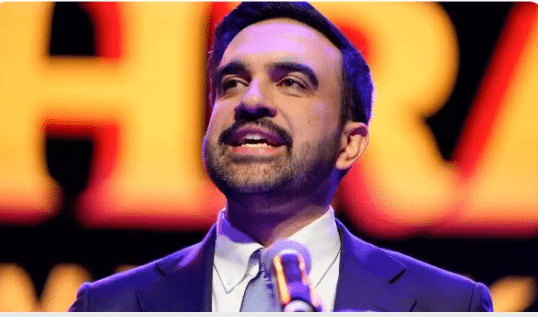
Yet his renewed call comes at a curious political moment, coinciding with his conspicuous silence on Zohran Mamdani’s groundbreaking election victory in New York City.
Mamdani, a Democratic socialist and the first Ugandan-born legislator to win in New York’s state assembly history, has become a symbol of progressive momentum within immigrant communities.
Observers noted that while Trump addressed topics ranging from foreign policy to Senate procedure, he offered no acknowledgement or congratulations regarding Mamdani’s landmark achievement.
This omission drew sharp commentary from political analysts who interpreted it as deliberate, given Mamdani’s outspoken criticism of Trump’s stance on immigration and racial justice.
The juxtaposition — Trump calling for institutional destruction while ignoring a multicultural milestone — highlighted the widening ideological gulf shaping American and global political narratives.
For many Americans, the Trump filibuster rule change represents more than a procedural tweak; it symbolizes competing visions of power, fairness, and governance in polarized times.
Trump insists his plan would “free the Senate from paralysis,” portraying opponents as elitists clinging to outdated traditions that prevent effective decision-making on critical national issues.
His detractors counter that dismantling such checks would turn the Senate into a partisan battlefield where each majority seeks revenge for the last administration’s actions.
Former Senate clerks warn that removing the filibuster could lead to rapid, unstable policy swings, undermining investor confidence and eroding trust in the nation’s legal continuity.
Political scientists describe the filibuster as both anachronistic and essential — a paradox that ensures the Senate’s deliberative identity but often paralyzes its legislative capacity.
Under current rules, sixty votes are required to end debate on most matters, effectively forcing bipartisan compromise or guaranteeing stalemate when divisions are deep.
Trump’s proposal for a Trump filibuster rule change would lower that threshold, enabling a simple majority to pass bills — a seismic alteration to the chamber’s constitutional rhythm.
The last significant modification occurred in 2017, when then-Majority Leader Mitch McConnell invoked the “nuclear option” to confirm Supreme Court justices by simple majority.
That precedent dramatically reshaped judicial politics, fueling years of partisan conflict and emboldening both parties to consider further procedural shortcuts for political expediency.
Trump’s allies now argue that similar boldness is needed to “rescue America” from what they describe as bureaucratic stagnation and Democratic obstructionism in the Senate.
Detractors say the former president’s language — invoking “nuclear obliteration” — reflects more desire for domination than reform, an effort to reassert personal relevance.
Some Republican senators, though aligned ideologically, privately express unease over Trump’s intensifying rhetoric, fearing it could alienate moderate voters crucial for swing states.
The dynamic underscores a broader tension within the GOP: loyalty to Trump’s populist energy versus adherence to traditional conservative respect for institutional limits.
As the debate unfolds, Democrats remain cautious, condemning Trump’s framing while quietly aware that abolishing the filibuster could one day serve their legislative ambitions too.
In effect, both parties recognize that whoever breaks the rule first will fundamentally alter the Senate’s equilibrium, possibly beyond repair for future generations.
For Trump, the strategic calculus seems clear — dominate the conversation, reignite loyalty, and force rivals into reactive positions ahead of a volatile political season.
His continued refusal to acknowledge Mamdani’s election victory only deepens perceptions of a leader more interested in confrontation than reconciliation or symbolic unity.
Political observers see a pattern: every time Trump faces institutional limits, he seeks to redefine the rules entirely rather than navigate within established democratic frameworks.
That instinct fuels his appeal among supporters who view Washington as corrupt and unresponsive, and who cheer any call to “burn down the swamp.”
However, historians caution that such impulses have historically led to instability, citing examples from reconstruction to modern populist movements abroad that dismantled constraints on executive authority.
As pundits debate the implications, the Senate remains gridlocked, emblematic of an America torn between nostalgia for tradition and hunger for transformative action.
The Trump filibuster rule change discourse thus becomes a microcosm of the nation’s broader identity crisis — how to balance freedom with restraint, progress with preservation.
Meanwhile, Mamdani’s silent omission in Trump’s remarks resonates internationally, with Ugandan media celebrating his victory as symbolic of global democratic participation and cross-cultural representation.
Trump’s contrasting silence underscores his selective engagement with narratives that align with his political brand, avoiding those that challenge his populist core messaging.
Even as Trump reemerges as the GOP’s defining voice, his strategy risks alienating independents increasingly weary of permanent crisis and institutional warfare.
Yet his loyal base remains steadfast, interpreting every outburst as proof of authenticity and resistance against what they perceive as an entrenched Washington elite.
In political terms, the renewed discussion around the US Senate filibuster offers Trump another platform to galvanize populist sentiment and reshape Republican orthodoxy in his image.
Whether Congress heeds his call or resists it may determine not just legislative outcomes, but the very character of American governance in the decade ahead.
For now, the Capitol stands divided — a stage where voices battle not only over laws but over the meaning of democracy itself in a post-Trump era.
If history is any guide, the push for Trump’s filibuster rule change will test the endurance of America’s constitutional balance more fiercely than any speech or slogan.
And as Trump pushes toward his next campaign rally, the question remains: will he build new institutions or merely threaten to obliterate the old ones?

About The Author