The Trump Iran war is intensifying as Tehran refuses to yield control of the Strait of Hormuz, while President Donald Trump tells Americans to accept higher gasoline prices as the conflict continues.
Trump Warns Americans About Higher Fuel Costs
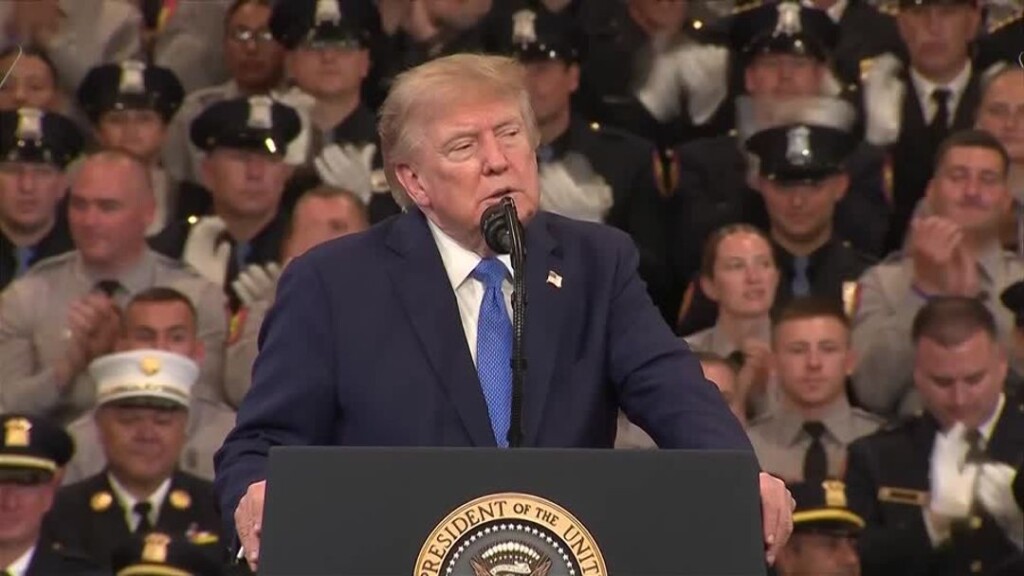
Trump told supporters at a political rally in Garden City, New York, that Americans may have to pay more at the pump while the United States continues its campaign against Iran.
The president argued that higher fuel costs are an acceptable consequence of preventing Iran from obtaining a nuclear weapon, one of his administration’s stated justifications for the war.
Trump Defends the Cost of Confrontation
Trump described Iran as a “very evil country” and said paying “a tiny little bit more for your gasoline” was worthwhile if it helped prevent Tehran from acquiring nuclear weapons.
His remarks come at a politically sensitive moment, with American motorists already facing substantially higher gasoline prices compared with the same period last year.
According to the American Automobile Association, the average US gasoline price stood at approximately $4.08 per gallon on Friday, representing a 29% increase from a year earlier.
The increase is particularly significant because Trump campaigned on a promise to reduce energy costs, making fuel prices a potentially important issue for voters.
Democrats are also seeking to make the economic consequences of the conflict a major issue ahead of November’s congressional elections.
Iran Refuses to Give Up Control of Strait
Iran has responded defiantly to Washington’s demands, insisting that control of the Strait of Hormuz blockade remains firmly in Tehran’s hands.
Iranian Deputy Foreign Minister Kazem Gharibabadi said the waterway would only operate according to Iran’s decisions, rejecting American claims that Washington could simply restore unrestricted maritime traffic.
Tehran Demands Recognition of Its Position
“This strait will be opened and closed only under Iran’s command,” Gharibabadi said in a statement posted on X.
He added that Iran would continue enforcing the blockade unless Washington accepted what Tehran described as the reality of its military and political position.
“The Strait of Hormuz cannot be seized by a tweet or an aircraft carrier, by issuing an order or by delivering an election speech,” Gharibabadi said.
His remarks underline the widening gap between Washington and Tehran, with neither side appearing ready to make the concessions necessary to revive peace negotiations.
Oil Tanker Traffic Grinds to a Halt
The Strait of Hormuz oil crisis is already having a major effect on international energy transportation, with tanker traffic falling to levels far below those recorded before the war.
Only two vessels passed through the strategic waterway on Friday, according to analysis from ship-tracking company Kpler.
No Crude Oil Shipments Detected
Kpler reported that no crude oil shipments were visible among the vessels travelling through the strait, although some ships could potentially have crossed without transmitting their tracking signals.
The current traffic level is dramatically below the more than 130 vessels that reportedly passed through the waterway each day before the conflict began.
The disruption matters globally because the Strait of Hormuz previously carried approximately one-fifth of the world’s oil supplies.
Any prolonged interruption could therefore affect fuel prices, shipping costs, inflation and economic growth well beyond the Middle East.
Vessels Face Growing Security Risks
Ships attempting to navigate the waterway without Iranian permission face the possibility of missile or drone attacks, further discouraging commercial operators from using the route.
The United Arab Emirates’ Abu Dhabi National Oil Company said two of its vessels were attacked while transiting the strait on Thursday evening.
More Attacks Reported
UAE state media also reported that another vessel came under attack on Friday, increasing concerns about the safety of commercial shipping.
The attacks have added pressure to an already fragile global energy market and could further discourage tanker operators from attempting to pass through the strategic waterway.
Washington and Tehran also use different terminology for the maritime restrictions, with Iran describing its enforcement of traffic as a blockade while the United States uses the term for Washington’s restrictions on Iranian vessels leaving their ports.
No Sign of Peace Talks Resuming
Diplomatic efforts to end the conflict remain stalled, with Iranian officials indicating that Tehran has not decided to resume negotiations with Washington.
Foreign Minister Abbas Araqchi said the United States would need to meet Iran’s conditions concerning the Strait of Hormuz before shipping could return to normal.
Iran Rejects Previous Ceasefire Characterisation
Araqchi also rejected the suggestion that the two sides were simply trying to extend an existing ceasefire.
“We did not have a ceasefire in the first place that we would now want to extend,” he said.
“We had ‘the end of the war,’ and now there is a new situation,” Araqchi added, indicating that Tehran considers the conflict to have entered a fundamentally different phase.
The comments suggest that diplomatic progress remains unlikely in the immediate future as both governments continue to insist on sharply different conditions.
Iran Also Feels Economic Pressure
Despite its defiant public position, Iran is also suffering significant economic consequences from the conflict and restrictions on its oil exports.
Iranian President Masoud Pezeshkian acknowledged the economic damage, blaming high inflation partly on the US blockade of Iranian ports and sanctions targeting the country’s oil exports.
Economic Pain Deepens
The pressure on Iran is being compounded by restrictions affecting its ability to generate foreign currency and maintain normal international trade.
Trump and Treasury Secretary Scott Bessent have both promised additional measures designed to increase the financial cost for Tehran.
Bessent previously warned that Washington would announce further measures against Iran, signalling that the economic campaign could become even more aggressive.
Oil Prices Rise as Conflict Deepens
Financial markets are already responding to the worsening situation, with crude oil futures rising by about $1 per barrel on Friday.
Benchmark Brent crude was on track for a weekly increase of approximately 6%, while West Texas Intermediate was heading toward a weekly gain of 5.4%.
Energy Markets Remain on Edge
The sharp weekly increases demonstrate how sensitive oil markets have become to developments surrounding the Strait of Hormuz.
If tanker traffic remains severely restricted, traders could face increasing uncertainty over future supplies, potentially keeping energy prices elevated.
For American consumers, the consequences are already visible at petrol stations, where higher gasoline prices are creating additional financial pressure.
Regional Conflict Risks Continue to Grow
The Iran war and gas prices are unfolding alongside renewed violence involving Iran-backed groups elsewhere in the region.
In Yemen, the internationally recognised government said Houthi forces fired six ballistic missiles toward the Red Sea port of Mocha, reportedly killing four civilians.
Houthis Raise Fears of Wider War
The Houthi-run SABA news agency separately reported that the group had targeted an Aramco facility in Saudi Arabia’s Najran with a drone.
The developments have renewed fears that the conflict could expand across multiple fronts, threatening additional energy infrastructure and strategic shipping routes.
A wider regional conflict could place even greater pressure on global energy markets while increasing the economic burden on countries already dealing with elevated fuel prices.
Trump Faces Economic and Political Test
Trump’s decision to tell Americans to accept higher gasoline prices represents a notable shift in the political conversation surrounding energy costs.
The president had campaigned on lowering energy expenses, but the continuing conflict with Iran is now contributing to conditions that could keep prices elevated.
Read also: Indonesia earthquake Kills 20 as rescuers search for survivors
With congressional elections approaching, the economic consequences of the war could become increasingly important to voters.
At the same time, Iran’s refusal to surrender control of the Strait of Hormuz means the confrontation remains unresolved.
For now, the Trump Iran war continues to combine military pressure, economic sanctions, energy disruption and increasingly hostile rhetoric, with no clear diplomatic breakthrough in sight.