

The Trump correspondents dinner shooting sent shockwaves through Washington after gunfire abruptly disrupted one of the most symbolic gatherings between the presidency and the press, forcing the evacuation of Donald Trump and senior officials.
What began as a carefully staged evening meant to project unity between political leadership and journalists quickly turned into a scene of fear and urgency, as security agents moved decisively to secure the venue and protect attendees.
According to The Guardian, the president and first lady were swiftly escorted out of the ballroom after the sound of gunfire triggered panic among hundreds gathered for the annual White House correspondents’ dinner.
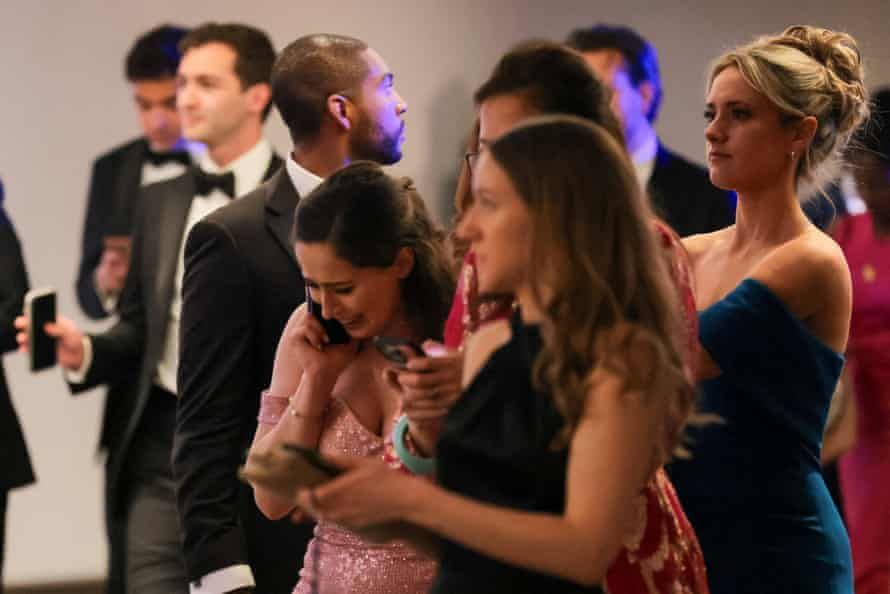
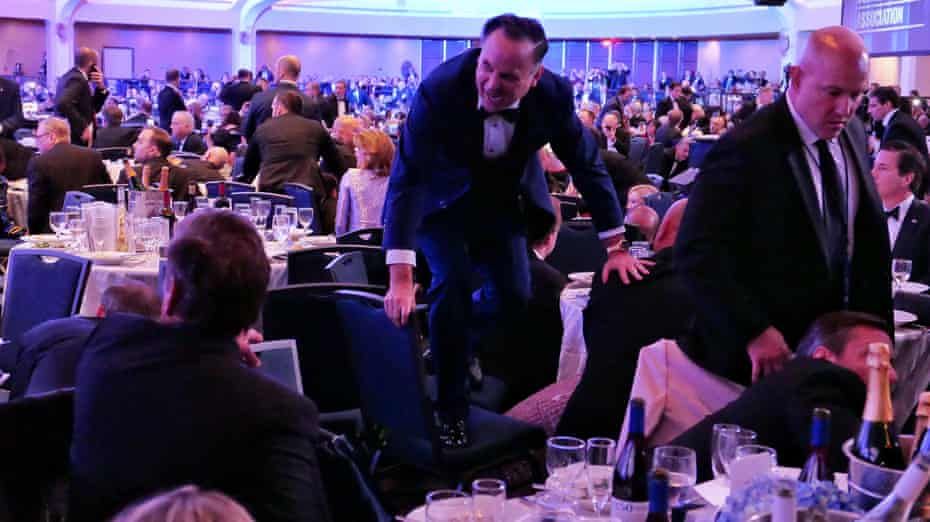
Witnesses described a sudden shift from routine conversation to chaos, with people shouting warnings and scrambling for cover as armed personnel flooded the room to contain the situation.
One attendee said, “People just dropped instantly. There was no hesitation, everyone thought the worst,” capturing the immediate fear that spread across the ballroom.
Donald Trump later confirmed he was unharmed and praised the rapid response, saying the situation was “very unexpected but incredibly acted upon by Secret Service and law enforcement.”
He added, “It’s a dangerous profession,” reflecting on the risks associated with high-profile public events involving national leadership.
Chaos, fear and a rapid security operation
The White House dinner gunfire incident began just as guests settled into the evening, underscoring how quickly a controlled environment can become volatile when a threat emerges without warning.
The correspondents’ dinner has long been a fixture of American political culture, bringing together journalists, lawmakers and public officials in a rare setting that blends formality with informal interaction.
That tradition was shattered as the first sounds rang out, prompting immediate action from security teams trained for precisely such emergencies, even in highly controlled environments.
According to Reuters, law enforcement officials confirmed that the suspect was armed with multiple weapons, including a firearm, raising the level of risk and urgency in the response.
A senior officer said, “The individual had access to multiple weapons, which significantly elevated the threat level and required an immediate tactical response.”
Authorities said the individual was subdued and taken into custody at the scene and is expected to face multiple charges, including firearms and assault-related offences.
Another official added, “At this stage, we have no indication of additional suspects, but all possibilities remain under investigation,” underscoring the caution guiding the inquiry.
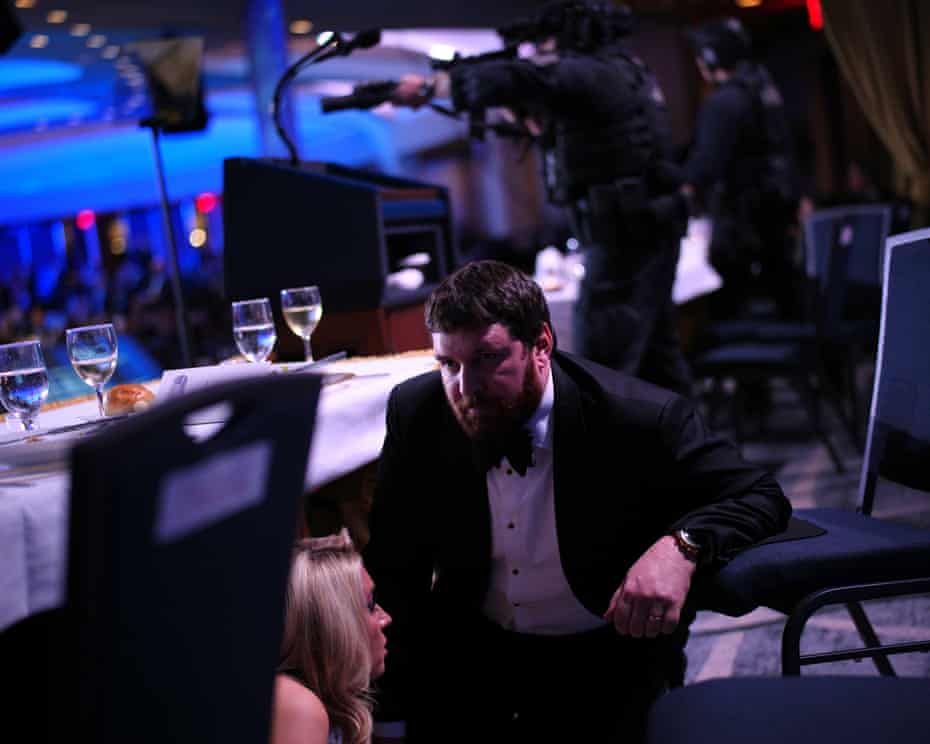
Guests described being forced to remain under tables for several minutes as security teams worked to secure the room and ensure there were no additional threats.
One witness said, “You could hear people crying, others praying. Nobody knew if it was over,” highlighting the emotional toll of the incident.
Another attendee explained that the confusion made the situation worse, as people struggled to distinguish between actual gunfire and the reactions of those around them.
Security gaps, political tensions and deeper implications
The Trump evacuation incident has triggered renewed scrutiny of US political event security, particularly regarding how a suspect could gain access to such a high-profile gathering.
Early indications suggest the individual may have entered the venue as a legitimate guest, raising concerns about screening processes and access control at major events.
Security analysts say incidents like the Washington Hilton shooting highlight the importance of layered protection systems designed to detect threats before they reach critical zones.
A security expert familiar with federal event protocols said, “No system is foolproof, but breaches like this typically point to gaps in screening, credential verification or behavioural detection.”
The expert added that large gatherings combining political leaders and media presence require “multiple overlapping security layers, not just perimeter checks,” to minimise risk effectively.
While the response from security personnel has been widely praised, analysts argue that prevention remains the ultimate benchmark, and any breach demands a full reassessment of protocols.
Beyond the immediate security concerns, the incident has also drawn attention to the broader political climate surrounding Donald Trump and his relationship with the media.
During his presidency, interactions between the White House and sections of the press have often been marked by tension, criticism and sharp exchanges over policy and coverage.
The correspondents’ dinner exists partly to bridge that divide, serving as a symbolic platform where political leaders and journalists share the same space despite their differences.
Analysts note that while such tensions are part of democratic systems, they also contribute to the heightened visibility of events like this, making them focal points for national attention.
There is currently no evidence linking the attack directly to political motivations, and officials have cautioned against drawing conclusions before investigations are complete.
However, experts say high-profile gatherings tied to political power and media influence can attract individuals seeking attention or impact, regardless of underlying motives.
The president reflected on the significance of the evening, stating that the event was intended to honour freedom of speech and the role of journalism in society.
He remarked that, despite the disruption, the shared experience brought people together in an unexpected way, highlighting a moment of unity during crisis.
Historical context adds another layer to the incident, as the Washington Hilton has previously been associated with security threats involving US presidents, reinforcing its sensitivity as a venue.
This background is likely to influence future planning decisions, with authorities reassessing whether similar events should continue in their current format or require additional safeguards.
For journalists, the incident underscores the risks associated with covering political events, even in controlled environments that are typically considered secure.
Media analysts say the psychological impact on attendees should not be underestimated, as moments of sudden danger can reshape perceptions of safety in professional settings.
The Trump correspondents dinner shooting also raises questions about how public events are managed in an era of increasing security challenges and political polarisation.
Authorities are expected to examine every stage of the incident, from entry procedures to response coordination, to identify weaknesses and implement improvements.
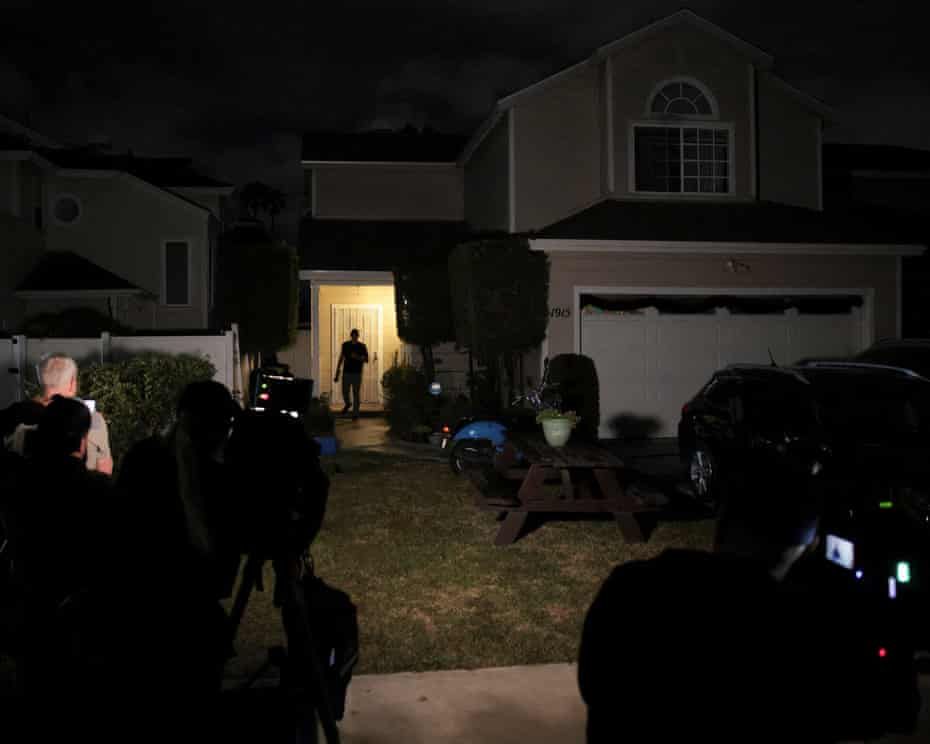
According to Reuters, officials are continuing to gather evidence and interview witnesses as part of a comprehensive investigation into the suspect’s actions and intent.
The Guardian reported that the suspect is undergoing evaluation while authorities work to establish a clearer understanding of the events leading up to the attack.
For now, officials have emphasised that swift action by security teams prevented a potentially more serious outcome, containing the threat before it escalated further.
In the aftermath, discussions are already underway about enhancing screening systems, increasing coordination among agencies and reviewing venue selection criteria for major events.
The Trump correspondents dinner shooting stands as a reminder that even long-standing traditions are not immune to disruption in a changing security landscape.
Read also:US allows Venezuela to fund Maduro lawyer in drug trafficking case
It also highlights the resilience of those involved, as attendees and officials responded quickly to an unexpected threat and worked together to restore order.
Yet the central question remains clear as Washington reflects on the incident: how can high-profile democratic gatherings be secured without undermining the openness they are meant to represent?
About The Author
