President Donald Trump broadens US travel ban, adding Syria, Palestine, and four additional countries to the list, citing security concerns and potential risks to American citizens.
The White House announced that six new countries – Palestine, Syria, Burkina Faso, Mali, Niger, and South Sudan – are now included in the US travel prohibition.
Trump’s decree describes Palestinians as individuals traveling on “PA-issued or endorsed travel documents,” reflecting the US stance of not formally recognizing Palestine as a sovereign state.
The president cited security threats, claiming US-designated terrorist groups operate in the West Bank and Gaza Strip and have previously murdered American citizens in these regions.
The administration also raised concerns about compromised vetting capabilities due to ongoing conflicts in Palestinian territories, stating that proper screening of travelers is currently impossible.
Democratic Congresswoman Rashida Tlaib condemned the expansion, calling it “racist cruelty” targeting African and Muslim-majority countries, including Palestinians fleeing violence, persecution, and humanitarian crises.
“This administration is deliberately attempting to reshape America’s demographics,” Tlaib said, emphasizing the humanitarian consequences of barring vulnerable populations from entering the United States.
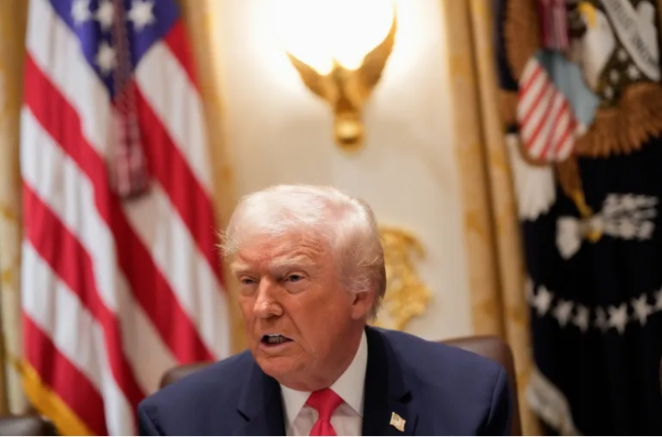
The ban on Syrians coincides with a thaw in US-Syria relations after President Ahmed al-Sharaa visited Washington, although the White House cited insufficient civil documentation and vetting procedures.
Trump framed the travel ban as essential to protect Americans from terrorism and prevent “mass, unvetted migration” from countries with weak governance or ongoing conflicts.
US Director of National Intelligence Tulsi Gabbard praised the policy, linking the restrictions to global security threats and citing recent mass shootings as justification for tighter immigration measures.
Republican lawmakers have escalated anti-Muslim rhetoric, with Senator Tommy Tuberville calling Islam a “cult” and urging an immediate halt to Muslim migration into the United States.
Trump’s original 2015 travel ban targeted several Muslim-majority countries, reflecting the administration’s long-standing focus on national security and stringent immigration controls.
The current expansion continues restrictive US immigration policies, emphasizing vetting and security while drawing criticism for discriminating against Muslims and refugees seeking asylum in America.
Critics argue that the ban disproportionately affects civilians fleeing conflict, including Palestinians seeking asylum and Syrians escaping war, raising serious ethical and humanitarian concerns about US policy.
The move comes amid ongoing Israeli attacks in Gaza and the West Bank, where violence has resulted in civilian deaths, including US citizens, highlighting persistent regional instability.
Humanitarian organizations warn that the policy prevents vulnerable populations from accessing safety, exacerbates crises in conflict zones, and undermines international obligations toward refugees.
The White House defended the expansion, asserting that individuals from these regions cannot currently be reliably vetted due to weak governance, ongoing conflicts, and terrorism-related risks.
Trump allies have framed the ban as a patriotic duty, emphasizing national security and public safety, while critics view it as a politically motivated targeting of Muslims.
Legal challenges and public outcry have followed the expansion, raising questions about the administration’s adherence to human rights norms and international refugee protections.
Observers note the ban could strain US diplomatic relations, particularly with countries in the Middle East and Africa, complicating cooperation on security and humanitarian initiatives.
The travel restrictions also intersect with domestic political debates, as Congress and advocacy groups examine the legality and morality of including Palestine and other countries in the ban.
Global reactions are mixed, with some nations criticizing the policy as discriminatory, while others stress the need for stronger security measures to prevent terrorism-related threats.
The expansion reflects a broader trend in US immigration policy, emphasizing restrictive entry measures, enhanced vetting procedures, and prevention of migration from countries deemed high-risk.
Humanitarian organizations emphasize that women, children, and other innocent civilians fleeing violence are disproportionately affected, raising ethical, practical, and legal concerns about the travel restrictions.
Critics warn that the ban could worsen refugee crises, limit access to humanitarian aid, and leave displaced populations without protection from violence or persecution.
Trump supporters argue the travel ban prioritizes American safety, framing the policy as a necessary precaution to secure borders and protect citizens from foreign terrorist threats.
The expansion has significant implications for Palestinians, who face violence in Gaza and the West Bank, and for Syrians escaping civil war, highlighting complex regional dynamics.
Congresswoman Tlaib called for legislative action to overturn the ban, emphasizing that discriminatory immigration policies have lasting consequences for global humanitarian efforts.
Some analysts suggest the ban is politically motivated, aiming to appease Trump’s conservative base by restricting Muslim-majority countries while framing the policy as a security measure.
Legal experts point out that international refugee laws may conflict with the US ban, and humanitarian groups continue to pressure the administration to allow safe entry for displaced civilians.
The travel restrictions are part of a pattern of policies designed to reinforce vetting and security while targeting countries with limited governance, ongoing conflict, and perceived terrorism risks.
Critics argue the administration’s approach disproportionately punishes innocent civilians, particularly children and families fleeing violence, while failing to address the root causes of global insecurity.
The US policy also affects diplomatic relations, potentially limiting collaboration on counterterrorism, humanitarian aid, and international refugee protection between the US and affected nations.
Trump’s decision marks a defining moment in US immigration history, highlighting the administration’s prioritization of national security over humanitarian considerations and sparking international debate.
The policy is likely to remain contentious, with ongoing legal battles, congressional scrutiny, and public debates shaping the future of US immigration and refugee policies.
The White House maintains that the travel ban is necessary to safeguard Americans, asserting that it targets regions where vetting is unreliable due to weak central authority and ongoing violence.
Humanitarian groups stress the urgent need for exceptions, particularly for women, children, and vulnerable populations, arguing that strict enforcement may cause unnecessary suffering and global criticism.
The ban’s expansion demonstrates the administration’s commitment to security-first policies, but critics argue it reinforces discriminatory practices against Muslims and populations fleeing humanitarian crises.
Trump’s approach contrasts with other nations that prioritize humanitarian obligations, raising questions about the US role in protecting vulnerable populations in conflict zones worldwide.
Ultimately, the expanded travel ban underscores the tension between national security and humanitarian responsibilities, with the US facing scrutiny from international organizations, human rights groups, and foreign governments.
Read also: Employment Rights Bill passes parliament after months of debate, transforming UK workers’ protections
The decision also intersects with domestic political narratives, as lawmakers, advocacy groups, and citizens debate the balance between protecting Americans and upholding human rights standards.
The long-term impact of the ban remains uncertain, with potential diplomatic, legal, and humanitarian consequences for Palestinians, Syrians, and other affected populations.
As the travel ban takes effect, advocacy groups continue to call for exemptions and legal challenges, emphasizing the moral and practical obligations of the United States toward refugees.
About The Author