Canadian MP Jenny Kwan has strongly rejected Israel’s claim that her delegation posed a public safety threat after being denied entry to the occupied West Bank.
Kwan, a New Democratic Party lawmaker, was part of a six-MP Canadian delegation blocked by Israel while attempting a fact-finding mission in Palestinian territories.
The delegation, organised by The Canadian-Muslim Vote, sought to meet Palestinian communities and Jewish families affected by the ongoing conflict in the West Bank.
“We followed every step required,” Kwan told newsmen. “How can members of parliament and humanitarian workers be considered a public safety threat?” she questioned.
The group of 30 Canadian delegates was turned back at Jordan’s King Hussein Bridge, which Israel controls, after undergoing lengthy security checks at the crossing.
Kwan said one female MP was “manhandled” multiple times by Israeli border agents while monitoring a delegate taken for additional questioning, highlighting concerns over treatment of officials.
The mission aimed to observe and report on daily realities faced by Palestinians amid increased military and settler violence in the West Bank region.
Delegates also planned meetings with Jewish families impacted by the conflict, intending to provide balanced, first-hand reporting of tensions on the ground in Palestinian areas.
“I reject the notion that our fact-finding mission is a security concern,” Kwan stressed. “The real danger lies in misinformation about what is happening on the ground.”
Global Affairs Canada stated the delegation traveled independently, not representing the government, and regretted the incident while asserting it could not intervene in Israel’s entry decisions.
Canadian Foreign Affairs Minister Anita Anand confirmed the ministry contacted the delegates and protested their mistreatment at the border, urging fair and respectful treatment of Canadians abroad.
Israel’s COGAT agency claimed the delegation was denied entry due to “security reasons” and lack of prior coordination, despite delegates having Israeli travel authorizations in place.
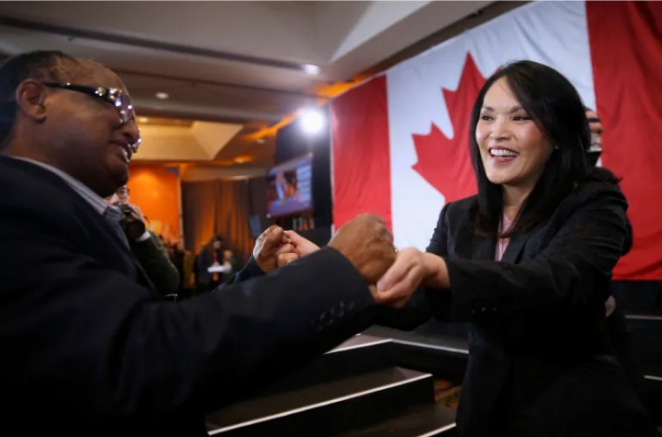
Kwan dismissed the claim, saying, “We followed every required step. Coordination was confirmed, yet Israel turned us away without clear explanation or justification for denial.”
Some analysts suggested the refusal may relate to Canada’s recognition of an independent Palestinian state in September, which drew criticism from Israeli leadership and Prime Minister Benjamin Netanyahu.
“Israel will not allow you to impose a terror state on us,” Netanyahu had declared at the UN, condemning countries supporting Palestinian sovereignty as interfering in Israeli security matters.
The recognition followed international protests against Israel’s war in Gaza, which has killed tens of thousands since 2023, prompting calls for accountability over civilian harm in the region.
Human rights advocates have also criticized Israel for increased violence against Palestinians in the West Bank, framing the entry restrictions as an attempt to control narratives on the ground.
Delegates questioned whether their denial aimed to prevent witnesses from reporting on humanitarian and civil realities in occupied Palestinian territories, a concern echoed by local rights groups.
Fawad Kalsi, CEO of Penny Appeal Canada, asked, “What are they trying to hide?” referring to Israeli border policies blocking observers and aid providers from reaching affected communities.
Kwan highlighted similar issues, noting foreign doctors were denied entry while attempting to bring medical supplies, emphasizing the broader humanitarian implications of Israel’s border control practices.
“If MPs face entry denial, imagine the challenges ordinary people experience daily, facing checkpoints, restrictions, and limited access to essential goods and medical care,” Kwan said.
The blocked delegation reflects ongoing tensions in Canada-Israel relations, balancing Canada’s historical support for Israel with advocacy for Palestinian rights and humanitarian access in the West Bank.
Observers note that such incidents may further complicate diplomatic ties, as Canada continues to advocate for easing movement restrictions and ensuring humanitarian aid reaches Palestinian populations.
The Canadian delegation’s experience underscores the challenges international observers face in occupied territories, raising questions about transparency, human rights compliance, and the limits of diplomatic influence.
Kwan concluded, “Witnessing what is happening firsthand is essential to counter misinformation. Denying entry only perpetuates ignorance and disinformation about conditions in the West Bank.”
As international attention grows, Canada and other nations continue monitoring Israel’s policies in Palestinian territories, calling for accountability, humanitarian access, and protection for foreign delegations visiting the region.
The incident serves as a reminder of the complex interplay between security claims, political recognition, and humanitarian obligations, highlighting the ongoing challenges in the Israel-Palestine conflict.
Read also: Maria Corina Machado injured in daring secret voyage to claim Nobel Prize as Maduro mocks her pain
About The Author