

Maria Corina Machado– Venezuela opposition leader Maria Corina Machado was injured during a perilous clandestine journey to Oslo, undertaken to collect her Nobel Peace Prize amid mounting threats.
Her spokesperson confirmed Machado fractured a vertebra while travelling by boat through rough seas, part of a secret escape from hiding inside Venezuela.
The injury occurred during a choppy maritime crossing that formed a critical stage of an elaborate, high-risk journey designed to evade Venezuelan security forces.
Machado, a leading critic of President Nicolas Maduro, has lived in hiding since being barred from contesting Venezuela’s presidential election earlier this year.
According to spokesperson Claudia Macero, the injury was confirmed medically, though further details were withheld beyond reports published by Swedish media.
Macero told AFP the fracture happened during a rough sea passage, emphasising the dangerous conditions faced during the covert operation.
Swedish newspaper Aftonbladet earlier reported that Machado sustained the injury aboard a small fishing boat battered by heavy waves.
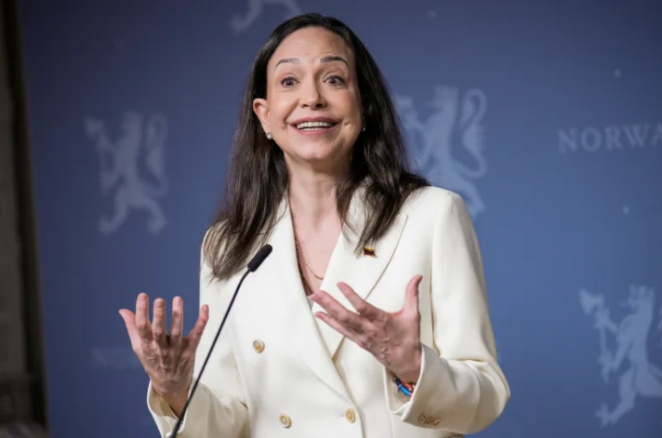
Doctors at Oslo University Hospital examined the 58-year-old opposition leader after she arrived in the Norwegian capital for Nobel-related events.
Machado’s secret journey reportedly involved disguises, false routes, and rapid transfers to avoid detection by Venezuelan authorities loyal to Maduro.
US media said she wore a wig and travelled from a remote Venezuelan fishing village aboard a wooden boat to Curacao.
From Curacao, Machado boarded a private plane that flew her to Norway, completing a dramatic escape likened to a cloak-and-dagger operation.
Machado later said she feared for her life during the voyage, particularly while crossing waters patrolled by heavily armed forces.
US military units operating in the Caribbean were reportedly alerted to avoid mistakenly striking the vessel carrying the opposition leader.
Several small boats have been attacked in recent months during US anti-narcotics operations targeting suspected drug trafficking routes.
The Trump administration claims such operations aim to halt drug smuggling, though critics argue they increase risks for civilians at sea.
Maduro has accused Washington of orchestrating regime change efforts in Venezuela, allegedly motivated by access to the country’s vast oil reserves.
Machado leads the Vente Venezuela party and has emerged as Maduro’s most prominent and popular political rival in recent years.
She was banned from running in Venezuela’s July presidential election, a move widely condemned by international observers and rights groups.
Following the ban, Machado announced she would go into hiding, citing credible threats to her life under Maduro’s government.
Despite those dangers, she attempted to reach Oslo to attend the Nobel Peace Prize ceremony honouring her political struggle.
The Nobel committee announced Machado as the winner in October, praising her steadfast defence of democracy and opposition leadership.
Unable to arrive in time due to the complexity and risks of her journey, Machado missed the official award ceremony in Oslo.
Her daughter accepted the Nobel Peace Prize on her behalf, delivering a speech sharply criticising Maduro’s authoritarian rule.
The speech warned that Venezuela’s democratic future depended on continued resistance, sacrifice, and international solidarity.
Hours after the ceremony, Machado made her first public appearance in a year, greeting supporters from a hotel balcony in Oslo.
Despite her fractured vertebra, she reportedly climbed over a barrier to meet cheering supporters gathered outside the hotel.
AFP reported that her physical pain did not deter her determination to appear publicly and thank those backing Venezuela’s opposition.
Machado later said Venezuelan authorities would have done everything possible to stop her from reaching Norway.
She maintained that the secrecy surrounding her escape was essential to prevent interception, arrest, or worse.
Maduro commented dismissively on state television, mocking reports of Machado’s injury with harsh personal insults.
“She says she has a broken vertebra,” Maduro said. “What’s broken is her brain and her soul because she’s a demon.”
The remarks drew condemnation from opposition figures and rights advocates, who accused Maduro of dehumanising political opponents.
Machado’s injury has further highlighted the extreme pressures faced by Venezuelan opposition leaders under the current regime.
International observers say her covert journey symbolises the broader struggle for political space and democratic participation in Venezuela.
Supporters argue that risking injury and arrest to accept a Nobel Prize underscores the depth of her commitment.
Critics of Maduro say the episode exposes the government’s intolerance of dissent and reliance on intimidation.
Meanwhile, Machado remains defiant, insisting that fear will not silence Venezuela’s democratic movement.
Her Nobel recognition has amplified international attention on Venezuela’s political crisis and alleged human rights abuses.

As she recovers from injury, Machado continues to frame her struggle as one for national dignity and democratic restoration.
For many Venezuelans, her ordeal has become a powerful symbol of resistance amid repression, exile, and political uncertainty.
The fractured vertebra, supporters say, has not broken Machado’s resolve, but instead strengthened her place in Venezuela’s opposition history.
About The Author


