Toronto man outruns streetcars –Toronto’s streetcar network is designed to move hundreds of thousands daily, yet chronic delays have turned routine trips into tests of patience for many commuters.
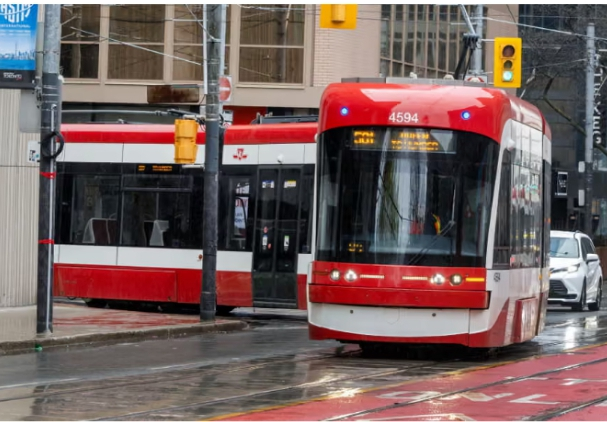
On certain downtown routes, passengers often watch pedestrians and cyclists glide past stalled trams caught behind traffic lights, turning vehicles, and closely spaced stops.
That everyday frustration inspired Toronto runner Mac Bauer to stage an unusual protest by racing streetcars on foot through busy city corridors.
Bauer, a dedicated road runner in his early thirties, films himself sprinting alongside operating streetcars to expose how slow the system has become.
Despite streetcars being capable of much higher speeds, Bauer has repeatedly beaten them in head-to-head races posted online for public scrutiny.
He insists the point is not athletic bragging rights, but highlighting systemic problems preventing transit vehicles from moving efficiently through the city.
Streetcars frequently halt at congested intersections, lack consistent signal priority, and share lanes with private cars, significantly reducing average travel speeds.
Bauer argues that modern transit should never be slower than a human runner under normal operating conditions within a major metropolitan city.
One of his most publicised races occurred along the 511 Bathurst route, historically among Toronto’s slowest streetcar lines.
Although new red-painted lanes were introduced to prioritise streetcars ahead of the 2026 FIFA World Cup, progress remains uneven.
Stops positioned too closely together continue to interrupt momentum, while downtown congestion quickly erases any advantage provided by dedicated lanes.
Bauer began racing streetcars after repeatedly underestimating how long simple trips across the city would take with his wife.
What started as casual experimentation soon gained traction online, with thousands of commuters sharing and commenting on his transit challenges.
His videos resonated with riders who felt their daily experiences were finally being represented in a clear, visual way.
The simplicity of the message proved powerful: if a runner can win, something is fundamentally broken within the system.
Transit advocates note that streetcars lack consistent signal priority, meaning traffic lights rarely adjust to allow uninterrupted movement.
Without extended green lights, streetcars lose valuable seconds at every intersection, compounding delays across entire routes.
Bauer’s activism coincided with growing public debate over Toronto’s decades-long underinvestment in rapid transit infrastructure.
City councillors have since referenced his races while pushing for stronger transit reforms and more aggressive signal priority policies.
Earlier in December, Bauer raced a newly opened light rail line and defeated it by a significant margin, sparking widespread criticism.
That project, costing billions, was intended to deliver fast, reliable service but instead launched with repeated disruptions and delays.
Officials later acknowledged performance shortcomings and committed to operational improvements following public backlash.
Bauer admits his running pace is not typical, yet insists even slower runners could still outperform many streetcars.
His message remains focused on accountability, not spectacle, as he urges city planners to prioritise efficiency over incremental fixes.
During a recent race near Lake Ontario, the gap narrowed considerably, suggesting improvements can make a measurable difference.
Dedicated lanes and reduced car interference helped the streetcar remain closer than on previous attempts.
For Bauer, that near-loss was encouraging rather than disappointing, signalling that targeted changes can restore public confidence.

He believes Toronto’s transit future depends on sustained political will, proper enforcement, and treating streetcars as true rapid transit.
Until then, he plans to keep running, documenting delays, and reminding the city that public transit should outpace human feet.
Bauer’s races have done more than entertain—they have exposed the shortcomings of Toronto’s transit system and sparked a wider conversation about traffic, delays, and the need for smarter infrastructure.
His efforts show that even small, creative actions can highlight systemic issues, pushing city planners and residents to rethink how public transport serves a growing metropolis.
In a city where speed and efficiency often lag behind demand, Bauer’s running activism reminds everyone that progress is possible, and that change sometimes comes in the most unexpected forms.
About The Author