President Trump expands US travel restrictions, placing Nigeria and 14 others under partial limits as Washington cites security gaps and vetting concerns.
President Donald Trump has signed a sweeping new presidential proclamation that significantly broadens US travel restrictions, tightening entry rules for citizens of countries deemed to pose heightened security risks.
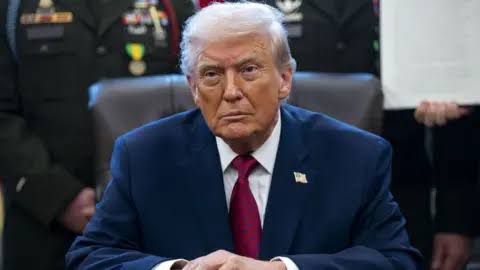
The action, announced on December 16, reflects the administration’s renewed emphasis on border control, immigration enforcement and national security cooperation.
According to a fact sheet released by the White House, the decision follows months of inter-agency reviews assessing how effectively foreign governments share information critical to US screening and vetting systems.
The administration argues that weaknesses in documentation, identity verification and law enforcement data exchanges continue to present security challenges that must be addressed through targeted entry limitations.
Nigeria is among 15 additional countries now placed under partial entry restrictions, a move that has drawn attention given the country’s close diplomatic, economic and people-to-people ties with the United States.
The White House stressed that the measure does not amount to a total ban, but instead introduces tighter controls on specific visa categories while preserving exemptions for certain travellers.
Under the new proclamation, full entry restrictions remain in place for 12 countries previously covered by Proclamation 10949.
These include Afghanistan, Burma, Chad, the Republic of the Congo, Equatorial Guinea, Eritrea, Haiti, Iran, Libya, Somalia, Sudan and Yemen. In addition, five new countries — Burkina Faso, Mali, Niger, South Sudan and Syria — have been elevated to full restriction status, alongside individuals travelling on documents issued by the Palestinian Authority.
The policy also reclassifies some nations that were previously under lighter limitations.
Laos and Sierra Leone, once subject to partial measures, have now been moved into the category of full restrictions.
Meanwhile, Burundi, Cuba, Togo and Venezuela continue to face partial entry limits rather than outright bans.
Beyond Nigeria, the newly affected group under partial measures includes Angola, Antigua and Barbuda, Benin, Côte d’Ivoire, Dominica, Gabon, The Gambia, Malawi, Mauritania, Senegal, Tanzania, Tonga, Zambia and Zimbabwe.
The White House said these US travel restrictions are deliberately country-specific, reflecting different levels of cooperation and institutional capacity rather than applying a uniform approach.
Despite the expansion, the proclamation outlines a range of exemptions.
Lawful permanent residents of the United States, current visa holders, diplomats, athletes and certain specialised visa categories are excluded from the restrictions.
US officials also retain the authority to admit individuals whose entry is deemed to serve national interests, including humanitarian, economic or diplomatic considerations.
However, the administration acknowledged tightening some family-based immigrant visa exemptions where fraud risks have been identified.
While these exemptions have been narrowed, the White House confirmed that case-by-case waivers remain available, allowing flexibility where compelling circumstances exist.
Explaining the rationale, officials said the US travel restrictions are designed to prevent the admission of individuals about whom the United States lacks sufficient, reliable information.
According to the White House, the goal is not punitive but corrective — encouraging foreign governments to improve civil registration systems, strengthen law enforcement databases and cooperate more fully with US authorities.
President Trump, quoted in the fact sheet, said it is the constitutional duty of the president to protect Americans from potential threats.
He argued that strong borders and careful vetting are essential tools for ensuring public safety, particularly at a time of evolving global security risks.
The White House revealed that the decision followed consultations with senior cabinet officials and detailed assessments conducted under Executive Order 14161 and earlier presidential directives.
These evaluations considered a range of factors, including document reliability, visa overstay rates, corruption levels and the ability of governments to confirm the identity and criminal history of their citizens.
Among the challenges cited were weak birth registration systems, fraudulent or easily altered civil documents and limited access to criminal record information.
In some cases, officials pointed to countries’ refusal to share passport samples or law enforcement data, as well as the use of citizenship-by-investment schemes that obscure applicants’ true identities.
The administration also highlighted concerns about countries that decline to accept the return of nationals ordered removed from the United States, or where terrorist, criminal or extremist networks are known to operate.
These factors, the White House said, directly inform the scope and severity of US travel restrictions imposed.
Framing the move within a broader policy agenda, the White House said President Trump is fulfilling a campaign promise to restore and strengthen travel controls.
Officials referenced a previous Supreme Court ruling that upheld similar measures, affirming that the president has broad authority to regulate entry into the country when grounded in legitimate national security objectives.
In a notable exception, the proclamation announced the lifting of nonimmigrant visa restrictions on Turkmenistan.
The White House credited improved cooperation and information sharing with US authorities for the decision, though it clarified that immigrant entry restrictions for Turkmen nationals remain in place.
As the policy takes effect, analysts expect ongoing diplomatic engagement between Washington and affected countries.
The White House indicated that the US travel restrictions are subject to review and could be eased if governments address identified deficiencies, reinforcing the administration’s message that cooperation, not isolation, is the ultimate objective.
Ireport247news
About The Author