Syria’s al-Sharaa has arrived in the United States for an official visit that analysts describe as a historic milestone in efforts to rebuild strained US-Syria relations.
The visit comes as Syria’s Ministry of Interior announced a “large-scale security operation” targeting ISIL cells nationwide, signaling stronger ISIL cooperation and counterterrorism coordination with Washington.
It marks the first official visit by a Syrian president to the US since the country’s independence in 1946, according to government officials and regional analysts.
Syria’s al-Sharaa, who overthrew Bashar al-Assad last year, is scheduled to meet President Donald Trump at the White House for talks focusing on ISIL cooperation and regional stability.
The White House meeting is expected to highlight opportunities to expand US-Syria relations through shared intelligence efforts, humanitarian assistance, and frameworks for long-term postwar reconstruction in Syria.
According to the White House, the talks will also address the possibility of Syria’s participation in the broader US-led international alliance aimed at defeating ISIL worldwide.
US envoy Tom Barrack said Washington “hopes Syria’s al-Sharaa will join the global coalition against ISIL,” noting the administration’s belief in dialogue over past hostilities.
The United States recently removed Syria’s al-Sharaa from its global “terrorist” sanctions list, opening the door for official diplomacy and renewed bilateral engagement after years of hostility.
Observers say this diplomatic rehabilitation signals a new chapter in US-Syria relations, emphasizing practical cooperation over confrontation to stabilize the post-conflict Middle East.
For Syria’s al-Sharaa, the trip offers a chance to secure reconstruction aid and foreign investment crucial to rebuilding a country devastated by thirteen years of civil war.
The World Bank estimates Syria’s postwar reconstruction needs exceed $216 billion, describing it as “a conservative best estimate” that may rise as infrastructure assessments continue.
Syria’s al-Sharaa is expected to request humanitarian support, energy development partnerships, and reconstruction loans from US agencies and allied donor institutions during his stay in Washington.
Analysts believe the visit also aims to normalize Syria’s global standing after years of pariah status due to allegations of human rights abuses and militant affiliations.
Though Syria’s al-Sharaa once led a militant faction, Hayat Tahrir al-Sham (HTS), he has since transitioned toward governance, promising reforms, secular administration, and nationwide demilitarization.
Washington delisted HTS from its terrorist designation in July, acknowledging Syria’s al-Sharaa’s shift away from extremist roots toward pragmatic state-building and renewed international cooperation.
Syrian state television broadcast images of Syria’s al-Sharaa boarding his plane, calling the trip “a journey to rebuild bridges and restore Syria’s rightful diplomatic place.”
Officials said the visit reflects “the will of a new Syria to engage globally” and promote cooperation on ISIL suppression, reconstruction, and long-term economic revival.
Meanwhile, in Damascus, security forces launched more than sixty coordinated raids across Aleppo, Hama, Idlib, Homs, and Damascus provinces targeting suspected ISIL operatives and safehouses.
According to Syria’s Interior Ministry, seventy-one people were arrested, with significant caches of weapons and explosives seized during the operations to dismantle ISIL networks.
The crackdown aligns with the narrative that Syria’s al-Sharaa seeks to prove his government’s credibility as a responsible security partner to Washington and its allies.
US intelligence officials cautiously welcomed the actions, saying they demonstrate a willingness by Syria’s al-Sharaa to fulfill early commitments toward deeper ISIL cooperation with the United States.
A White House statement noted that “the Syrian government’s proactive stance on counterterrorism marks a shift toward mutual goals,” hinting at prospects for sustained bilateral cooperation.
The United States is also exploring plans to reopen limited diplomatic channels in Damascus, potentially establishing a liaison mission to coordinate humanitarian and security initiatives.
Some officials in Washington have floated the idea of deploying a small counterterrorism advisory unit to assist Syria’s armed forces in training and intelligence sharing against ISIL.
Analysts warn, however, that deeper cooperation could face resistance from Congress, where skepticism remains high regarding Syria’s human rights record and governance transparency.
Senator Lisa Murkowski urged that “any engagement with Syria’s al-Sharaa must prioritize accountability and reform alongside counterterrorism to ensure sustainable and ethical US-Syria relations.”
Despite the criticism, others argue that pragmatic engagement with Syria’s al-Sharaa serves US interests by reducing Iran’s and Russia’s influence within Syrian territories.
Middle East scholar Maha Nasser said, “The US sees Syria’s al-Sharaa as a potential stabilizer — not perfect, but pragmatic enough to keep ISIL in check regionally.”
Diplomatic sources confirm that Monday’s White House meeting will feature discussions on energy reconstruction, border security, and Syria’s reintegration into multilateral economic frameworks.
The United States reportedly plans to link reconstruction assistance with Syria’s commitments to political inclusivity, economic reform, and cooperation on refugee repatriation efforts.
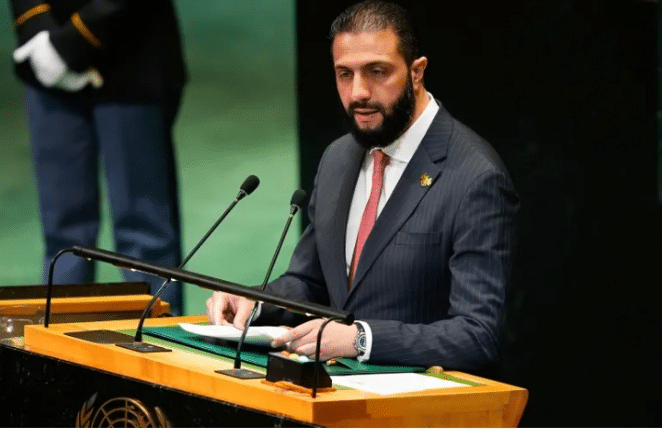
During his September appearance at the United Nations General Assembly, Syria’s al-Sharaa called for “a global partnership rooted in shared security and economic justice.”
His speech drew rare applause from Western diplomats, marking Syria’s tentative reentry into international diplomacy after more than a decade of isolation and sanctions.
Following the speech, the UN Security Council voted overwhelmingly to lift sanctions on Syria’s leadership, with fourteen members supporting and China abstaining.
Diplomatic observers say that decision paved the way for this official visit, which now stands as the most significant engagement between Damascus and Washington in generations.
For Syria’s al-Sharaa, the challenge will be convincing US leaders that his administration represents genuine reform, transparency, and commitment to peace and reconstruction.
Before his departure, Syria’s al-Sharaa told reporters his goal was “to open a new page with the world built on cooperation, peace, and mutual respect.”
The Syrian delegation includes senior officials in foreign affairs, finance, defense, and energy, all tasked with negotiating frameworks for reconstruction and foreign aid delivery.
Officials familiar with the agenda said Syria’s al-Sharaa will also meet congressional leaders and business executives to discuss investment in energy, transport, and housing projects.
Experts note that US companies could play a key role in Syria’s reconstruction if sanctions relief is paired with robust oversight and international accountability measures.
The United States Agency for International Development (USAID) has reportedly drafted proposals to provide non-military aid for education, healthcare, and infrastructure rebuilding programs.
Such measures would mark a remarkable turnaround in US-Syria relations, which were virtually severed for over a decade during the height of the Syrian civil war.
Syria’s al-Sharaa is also expected to attend a policy forum at Georgetown University, where he will deliver remarks on postwar reconstruction and international cooperation for development.
His visit has drawn global attention, symbolizing Syria’s slow but deliberate reintegration into diplomatic and economic networks long closed during the conflict years.
While challenges remain, many observers see the visit as an inflection point — a pragmatic test of whether dialogue can achieve what years of war could not.
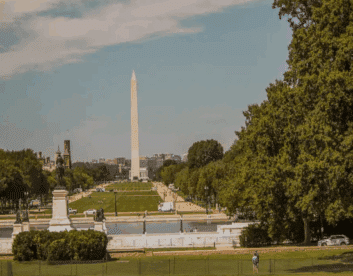
As the motorcade carrying Syria’s al-Sharaa entered Washington under tight security, both governments projected cautious optimism about the potential to rebuild trust through cooperation.
Should this engagement yield results, Syria’s al-Sharaa could emerge as a pivotal figure in reshaping Middle Eastern geopolitics and defining the next phase of regional stability.
In Washington, officials remain measured but hopeful, framing the visit as a “new start” grounded in shared security interests and an unwavering focus on sustainable postwar reconstruction.
If successful, the talks could redefine US-Syria relations for the first time in generations, transforming hostility into partnership and conflict into cautious cooperation for peace.
About The Author