

The Washington DC National Guard shooting has taken a startling turn as officials confirmed the alleged gunman previously worked with CIA-supported military units during the US war in Afghanistan.
A growing wave of scrutiny followed the incident after senior intelligence figures acknowledged the suspect had professional connections to agency-backed forces, prompting renewed debate about vetting, security, and America’s fast-changing political climate.
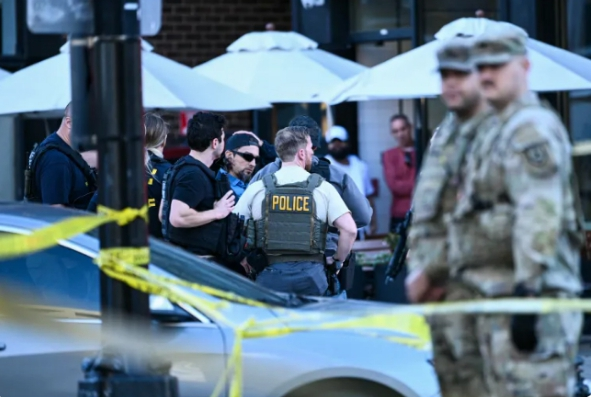
Authorities identified the suspect as Rahmanullah Lakanwal, a 29-year-old Afghan who arrived in the United States through the Operation Allies Welcome program shortly after the US military withdrawal from Afghanistan in 2021.
News of his identity and background intensified tensions nationwide, particularly as officials publicly acknowledged his past links to CIA partner units operating in Kandahar, a region long known for insurgent activity and foreign military presence.
The CIA ties revelation sparked immediate reactions across Washington, with experts describing the admission as “deeply unusual” given the sensitivity surrounding allied Afghan personnel who were evacuated during the chaotic end to the conflict.
“The confirmation alone tells us the government is under pressure to reassure the public,” said a former intelligence adviser, who noted that open acknowledgement of such affiliations is rarely made so quickly.
According to statements issued through major outlets, Lakanwal spent several years supporting US-backed military efforts in southern Afghanistan, including operational assistance roles before the collapse of the Afghan government.
His move to the United States came during a period when thousands of Afghans who worked with American forces were granted emergency pathways to safety, many fleeing Taliban reprisals and political upheaval.
However, the Washington DC National Guard shooting has reopened intense debate over the program, especially after immigration officials announced they had halted new residency applications from Afghan nationals pending fresh security reviews.
The policy shift, outlined publicly by US Citizenship and Immigration Services, represents one of the broadest suspensions of Afghan-related vetting since the 2021 evacuation, stirring concern among advocacy groups.
“Effective immediately, processing of all immigration requests relating to Afghan nationals is stopped indefinitely,” the agency posted, calling the decision a “necessary security reassessment under extraordinary circumstances.”
The announcement marked a dramatic policy reversal and immediately prompted criticism from refugee organizations who argued that one individual’s actions should not jeopardize the safety of thousands awaiting urgent relocation.
The suspect’s alleged background includes what investigators described as participation in a Kandahar partner force link, a detail confirmed by CIA Director John Ratcliffe during a late-evening media interview.
Ratcliffe described Lakanwal’s past work as “operational but not high-level,” stressing that his affiliation ended shortly after the US withdrawal and was not indicative of any ongoing intelligence relationship.
“The involvement was historic and clearly documented,” Ratcliffe said. “He served as part of a partner force in Kandahar, supporting missions before the evacuation period unfolded.”
His remarks quickly became a focal point of national conversation, drawing reactions from lawmakers who have repeatedly criticized the vetting processes surrounding Afghan evacuees.
In political circles, the Washington DC National Guard shooting has already escalated into a flashpoint issue, especially after President Donald Trump ordered 500 additional Guard troops into the capital following the incident.
Trump aggressively characterized the shooting as an “act of terror,” telling reporters the attack exposed “failures that can no longer be ignored.” He added that immigration now represented “the single greatest national security threat facing our nation.”
The White House’s swift deployment directive underscored the administration’s desire to project toughness on security while responding to what supporters say is a rising tide of domestic instability.
“The president wanted an immediate surge of protection,” said one senior official. “He believes a firm response is the only way to prevent further violence.”
Meanwhile, witnesses near Farragut Square described the terrifying scenes that unfolded moments before the attack, detailing sounds of rapid gunfire and chaotic movement as bystanders scrambled for cover.
“A loud crack echoed, then people started running,” said one office worker who was leaving a building nearby. “I saw uniforms on the ground and just froze. It felt unreal.”
Another witness recounted seeing panicked commuters fleeing toward nearby streets, describing the moment as “the most frightening thing I’ve ever lived through.”
The two National Guard members who were shot were reportedly conducting routine security duties in the area, part of ongoing deployments meant to reinforce federal operations during heightened political tensions.
Officials have not publicly released updated details on their conditions, but early reports indicated that both sustained serious injuries and were undergoing intensive treatment.
Analysts say the situation raises substantial questions about domestic risk assessment, particularly as intelligence agencies revisit long-standing assumptions around allied wartime personnel and post-conflict vetting.
“It forces a reconsideration of how we assess potential threats,” said a defense scholar. “The United States partnered with tens of thousands of Afghans. Distinguishing loyalty from volatility requires deep resources, and it remains an imperfect science.”
The fact that the suspect had documented ties to CIA-backed forces does not necessarily imply any ideological shift, analysts cautioned, but the optics immediately deepen political divides.
Some lawmakers warned against overgeneralization, arguing that many Afghan evacuees risked their lives to assist American troops and should not suffer collective punishment.
“We cannot use one tragedy to paint an entire population with suspicion,” one senator remarked. “Our Afghan allies are among the bravest people we’ve ever worked with.”
Others, however, called for aggressive reforms, citing the Afghan immigration review as a necessary step toward restoring public confidence.
“The programs must be restructured from the ground up,” a conservative congressman insisted. “People deserve to know the system is airtight.”
The shooting also reignited debate surrounding America’s postwar responsibilities, with humanitarian groups warning that abrupt policy changes could endanger countless Afghans still trapped under Taliban rule.
The emotional impact of the incident continues to unfold across Washington, where commuters, public officials, and security personnel struggled with the broader tensions unfolding across the capital city.
For residents, the visible increase in military presence is both reassuring and unsettling, raising concerns about how long emergency deployments may remain in place.
“It feels like we’re entering a new era of constant fear,” said a shop owner near the scene. “I understand why the soldiers are here, but I worry this isn’t temporary anymore.”
Political observers say the Washington DC National Guard shooting will likely shape national discussions surrounding immigration, intelligence oversight, and counterterrorism for months ahead.
With the presidential administration emphasizing a return to tough border measures and intelligence agencies reassessing past partnerships, the event has become a symbolic centerpiece in America’s evolving security narrative.
Public debate is expected to intensify as Congress schedules hearings into wartime ally relocation programs—hearings that could redefine one of the largest evacuation efforts in modern US history.
As the national conversation widens, many warn that policies shaped by fear rather than evidence could reshape America’s place in the global refugee landscape.
“This moment calls for accuracy, not panic,” stressed a policy expert. “We must avoid allowing a single case to dismantle years of alliances built under extraordinary circumstances.”
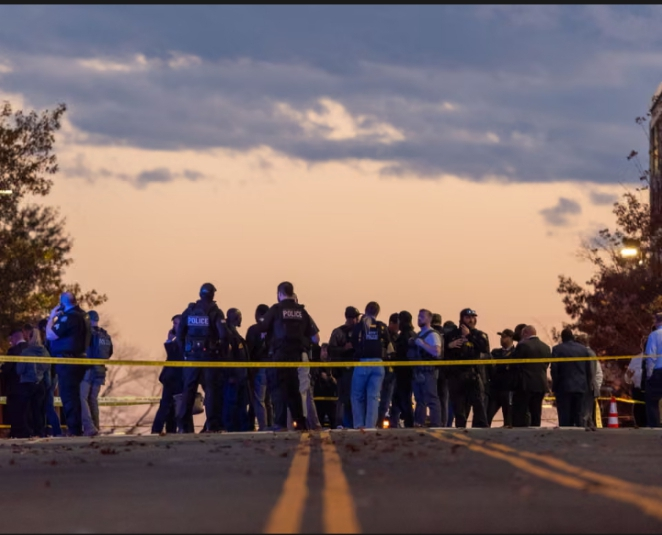
Yet the administration remains unwavering, promising deeper reforms and harsher restrictions as part of what it calls a “comprehensive threat mitigation strategy.”
Ultimately, the aftermath of the shooting appears poised to become a defining flashpoint in the ongoing struggle between humanitarian obligations and emergent national security tensions, a struggle likely to dominate political dialogue well beyond Washington.
About The Author


