Sudan army withdrawal from el-Fasher has triggered a wave of global alarm, as the United Nations warns of atrocities allegedly carried out by the Rapid Support Forces.
The retreat marks a devastating turning point in the Sudan conflict, effectively surrendering Darfur’s last army stronghold to the RSF, a group long accused of ethnic massacres and war crimes.
Sudan’s army chief, General Abdel Fattah al-Burhan, confirmed the army’s withdrawal on Monday, citing efforts to protect civilians from what he called the “systemic destruction” unleashed by RSF fighters.
In his televised statement, al-Burhan said the decision came after desperate attempts to hold el-Fasher collapsed under unrelenting bombardment, forcing troops to leave to “spare citizens from annihilation.”
“We are determined to avenge what happened to our people in el-Fasher,” he said, vowing that “these criminals will be held accountable before Sudan and the world.”
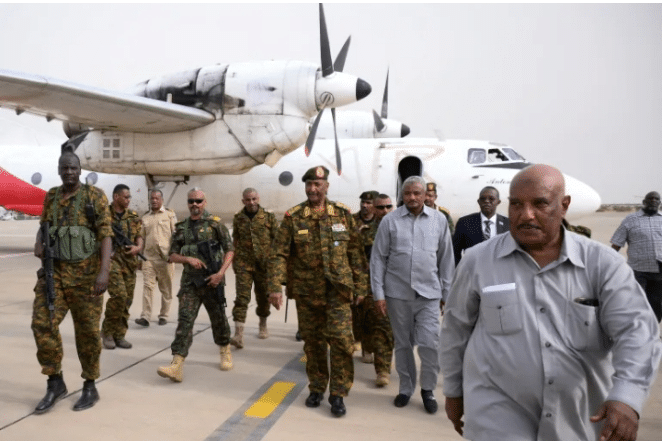
The United Nations responded swiftly, warning that the Sudan army withdrawal from el-Fasher could open the door to fresh atrocities and mass killings of trapped civilians.
UN Secretary-General António Guterres described the fall of the city as a “terrible escalation in Sudan’s tragedy,” saying the level of human suffering was “beyond comprehension.”
According to UN estimates, more than 260,000 civilians — half of them children — remain stranded in el-Fasher, now fully controlled by RSF forces who have cut off all escape routes.
Humanitarian groups described scenes of horror across the city, with witnesses reporting summary executions, looting, arbitrary arrests, and sexual violence against women and girls.
The Sudan Doctors Union said the RSF’s takeover had transformed el-Fasher into a “brutal killing field,” accusing the militia of “targeting hospitals and slaughtering the wounded.”
In footage circulating online, RSF fighters were seen celebrating around the captured military headquarters, firing weapons into the air and chanting victory songs amid smoldering ruins.
The UN Human Rights Office reported “clear indications” that the killings may have been ethnically motivated, echoing patterns seen during Darfur’s darkest episodes two decades ago.
Volker Türk, the UN High Commissioner for Human Rights, warned that “the risk of large-scale ethnically motivated atrocities in el-Fasher is mounting by the day.”
The Sudan army withdrawal from el-Fasher comes amid fears the war could fracture the country further, echoing the painful split that created South Sudan in 2011.
The conflict erupted in April 2023 when tension between al-Burhan’s military and Mohamed Hamdan Dagalo’s RSF exploded into all-out war in Khartoum and across the provinces.
Since then, at least 40,000 people have been killed and nearly 12 million displaced, leaving Sudan in what the UN calls the world’s worst humanitarian catastrophe.
RSF fighters, descended from the notorious Janjaweed militia, have been accused by rights groups of executing civilians, burning villages, and committing widespread sexual violence.
The Sudan Doctors Network described the RSF’s latest offensive as a “heinous massacre,” claiming dozens were killed and thousands fled toward nearby Tawila to escape certain death.
“Hundreds of thousands of civilians are trapped and terrified – shelled, starving, and without access to food, healthcare or safety,” said UN humanitarian chief Tom Fletcher.
He added that humanitarian convoys had been denied access to the region, calling for “safe and unimpeded passage to those in desperate need of relief and protection.”
In Port Sudan, where the government remains headquartered, despair and outrage greeted the news of el-Fasher’s fall, with many accusing international powers of turning a blind eye.
“Darfur is bleeding again, and the world is watching silently,” said activist Amal Hussein, who fled el-Fasher last year. “It’s a nightmare repeating itself after twenty years.”
Human rights groups say what is happening in el-Fasher mirrors the atrocities of 2003, when Janjaweed militias waged genocidal campaigns against non-Arab ethnic communities.
The RSF, formed from those militias, now stands accused of continuing that legacy, with the Sudan army withdrawal from el-Fasher giving them unchecked power over Darfur.
The Darfur Network for Human Rights reported that more than 1,000 civilians had been detained in recent days, calling it “systematic targeting that could amount to war crimes.”
Among those detained was journalist Muammar Ibrahim, one of the last reporters remaining in the city, whose arrest sparked global outrage among press freedom groups.
The Sudanese Journalists’ Union condemned his detention, warning of “mass violations and media blackout similar to the genocide in Geneina in 2023.”
International outrage has grown, with several European governments urging the UN Security Council to convene an emergency session on Sudan’s deteriorating crisis.
“The world cannot remain silent as another genocide unfolds,” said Amnesty International’s regional director, who described the RSF’s actions as “crimes against humanity.”
The Sudan army withdrawal from el-Fasher has also deepened fears of famine, with food warehouses looted and aid convoys blocked by fighting across North Darfur.
According to the UN World Food Programme, hunger levels have reached “catastrophic proportions,” with children dying from starvation and hospitals running out of basic supplies.
Doctors in hiding told aid agencies that patients were executed in their hospital beds, while RSF fighters seized medical facilities and turned them into barracks.
A senior doctor from the Sudan Medical Association described the situation as “unimaginable cruelty,” saying, “We are witnessing the deliberate destruction of life and hope.”
Satellite images reviewed by humanitarian monitors show parts of el-Fasher burned to the ground, with entire neighborhoods razed during RSF offensives in late October.
Civilians fleeing the city have been forced to pay ransoms at checkpoints or risk being shot, echoing similar tactics used during previous RSF attacks in Darfur.
The International Organization for Migration said at least 26,000 residents fled el-Fasher in just two days, seeking safety in the already overcrowded town of Tawila.
Analysts warn the Sudan army withdrawal from el-Fasher could embolden the RSF to push further east toward Port Sudan, threatening the government’s last functional stronghold.
“The fall of el-Fasher is not just symbolic,” said regional analyst Ahmed Soliman. “It represents the near-complete collapse of state authority in western Sudan.”
He added that the army’s retreat “signals the end of organized resistance in Darfur and the total triumph of a militia accused of genocide.”
In Khartoum, where remnants of the military still battle for control, panic spread that the army’s defeat in Darfur could shift the balance of power nationwide.
Sudanese civilians expressed frustration at both warring sides, accusing them of destroying the nation’s future while international diplomacy remains gridlocked.
“Neither the RSF nor the army cares for us,” said displaced teacher Fatima Idris. “They fight for power while our children die of hunger and disease.”
The Sudan army withdrawal from el-Fasher also reignited debate over whether the RSF should be formally designated a terrorist organization by international bodies.
The Sudan Doctors Union, echoing earlier demands, urged the UN and African Union to “impose sanctions and declare the RSF a terrorist entity responsible for mass killings.”
Western diplomats privately admit that while the RSF’s crimes are well-documented, geopolitical divisions in the Security Council make coordinated action difficult.
Russia and the United Arab Emirates, both accused of supporting different sides, have blocked earlier resolutions on Sudan, frustrating humanitarian efforts.
Humanitarian organizations meanwhile plead for a ceasefire, warning that Sudan’s war risks igniting a regional catastrophe spilling into Chad, South Sudan, and the Central African Republic.
As the world debates, survivors from el-Fasher continue to send desperate audio messages describing burned homes, missing relatives, and mass graves on the city’s outskirts.
“The smell of death is everywhere,” said a mother who fled to Tawila. “They shot my brother for trying to carry food to our neighbors. Nobody is safe anymore.”
The International Criminal Court confirmed that it is expanding its investigation into alleged war crimes and crimes against humanity committed in Darfur.

Chief prosecutor Karim Khan said his office had received “credible evidence” of atrocities linked to the RSF and pledged to “hold those responsible to justice.”
Sudan’s army chief, however, vowed that the war was far from over, promising that “the resistance of the Sudanese people will not end with el-Fasher.”
For now, the Sudan army withdrawal from el-Fasher stands as a grim milestone, a symbol of defeat, despair, and a warning that Sudan’s nightmare is still deepening.
The world watches anxiously as famine, fear, and bloodshed engulf Darfur once again — a haunting echo of a conflict that refuses to fade from history’s conscience.
About The Author