States, LGs Repay N547.5bn Bank Debts Amid Rising FAAC Inflows
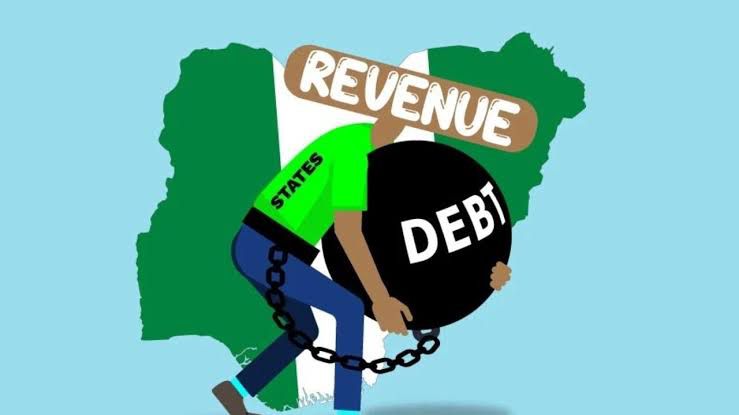
Sub-national governments across Nigeria significantly reduced their exposure to commercial bank loans in the past year, clearing an estimated N547.52bn bank debts on the back of stronger Federation Account inflows and tighter monetary conditions.
Fresh insights from the Central Bank of Nigeria’s latest Quarterly Statistical Bulletin indicate that banks’ total claims on states and local governments dropped from N2.68tn in June 2024 to N2.13tn in June 2025, representing a 20.4 per cent year-on-year decline.
Industry analysts say the sharp reduction reflects a strategic pivot by state governments and local councils, who opted to channel a portion of rising statutory revenues toward reducing bank debts, rather than sustaining costly loan obligations in a high-interest-rate environment.
The data further reveal that the repayment trajectory was gradual for much of the year before recording its largest correction at the end of the second quarter of 2025. In January 2024, banks’ exposure to sub-nationals stood at N2.73tn.
By January 2025, the figure had moderated to N2.44tn, and after brief fluctuations in February and March, outstanding balances eventually fell sharply to N2.13tn in June 2025.
This final drop accounted for the largest single-month repayment adjustment recorded within the period.
Financial observers attribute this development to two major macroeconomic triggers — elevated borrowing costs and unprecedented FAAC windfalls — both of which created a fiscal environment that favoured aggressive debt unwinding.
Throughout 2024, the Central Bank of Nigeria implemented a firm monetary tightening cycle, pushing the Monetary Policy Rate to 27.50 per cent as part of broader efforts to stabilise inflation and the exchange rate.
Although the benchmark rate was held steady through most of 2025, the cost of borrowing remained steep enough to discourage fresh debt accumulation.
The CBN’s first modest rate cut in September 2025, reducing the MPR to 27.00 per cent, came only after signs of easing price pressures. Even then, state governments continued to prioritise States, LGs repay N547.5bn bank debts initiatives over new commercial lending.
At the same time, Federation Account receipts experienced a significant lift as reforms in the oil and non-oil sectors increased revenue flows to the three tiers of government.
Official records from the Office of the Accountant-General of the Federation show that states and local governments jointly received N12.67tn in 2025, compared with N8.96tn in 2024 — excluding derivation funds. When the 13 per cent derivation component is accounted for, total receipts rose to N14.28tn in 2025, up from N10.31tn in 2024.
This translated to an additional N3.98tn in distributable revenue, a development widely viewed as a fiscal buffer that enabled more sub-nationals to commit resources toward reducing bank debts rather than rolling over obligations.
State governments were the biggest revenue earners in nominal terms, with their FAAC allocation rising from N5.19tn in 2024 to N7.31tn in 2025.
Local government councils followed a similar pattern as their annual allocation increased from N3.77tn to N5.35tn over the same period.
Monthly records further show a sustained climb in disbursements, particularly in the final quarter of 2025 when council allocations crossed the N500bn mark.
Fiscal analysts note that the boost in revenue coincided with stricter debt management strategies across many states, especially those previously constrained by recurring loan deductions.
A report by the Nigeria Extractive Industries Transparency Initiative recently highlighted that several states with weaker FAAC inflows were also among those servicing the highest bank debts, raising fresh concerns about the sustainability of their debt-to-revenue ratios.
The acting Director of Communication and Stakeholders’ Management at NEITI, Mrs Obiageli Onuorah, explained that while enhanced statutory inflows helped stabilise the fiscal position of many states, others remained vulnerable due to historic debt exposure and limited internally generated revenue.
Her concerns echo the long-standing position of the Debt Management Office, whose Director-General, Ms Patience Oniha, has consistently advised sub-nationals to explore Public-Private Partnerships and broaden tax mobilisation frameworks rather than relying predominantly on commercial bank loans.
According to her, a shift toward PPP-backed infrastructure financing would reduce fiscal vulnerability, attract private capital and ensure more sustainable economic development outcomes.
Macroeconomic analysts also caution that while the fact that States, LGs repay N547.5bn bank debts signals improved fiscal discipline, long-term financial resilience will ultimately depend on how effectively sub-nationals convert increased revenues into productive development investments.
They stress that declining bank exposure should ideally be complemented by deeper governance reforms, transparency in public expenditure and more aggressive IGR-expansion strategies.
Overall, the combination of higher FAAC inflows, elevated lending costs and improved fiscal responsibility appears to have shaped one of the most significant declines in state-level bank debts in recent years.
The repayment wave, stakeholders say, marks a critical moment in Nigeria’s sub-national public finance landscape — one that may reshape borrowing behaviour and fiscal sustainability trends going forward.
About The Author