
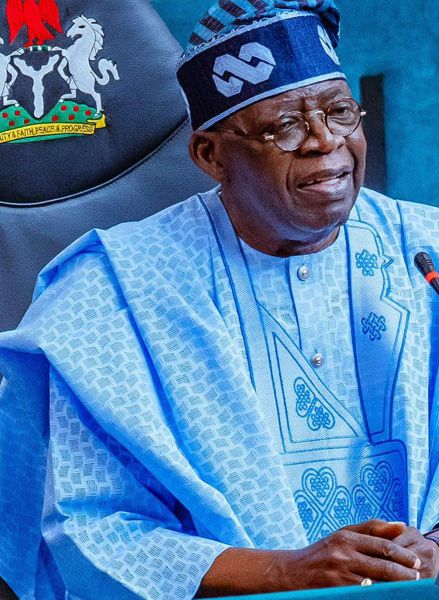
Oil revenue shakeup: States back Tinubu’s Executive Order
State governments have thrown their weight behind President Bola Tinubu’s latest directive on oil and gas remittances, arguing that the policy is fundamentally about constitutional order rather than immediate fiscal gains.
At the centre of the debate is Executive Order 9 (EO9), signed in February 2026, which mandates that statutory oil and gas revenues due to the Federation be paid directly into the Federation Account before any deductions or discretionary spending by agencies.
The policy has ignited industry-wide reactions, but state finance commissioners insist it represents a governance correction rather than a revenue windfall.
Speaking during a televised policy discussion, the Chairman of the Forum of State Commissioners of Finance, Akintunde Oyebode, described the directive as a necessary enforcement mechanism to ensure that revenues accruing to the Federation are treated in line with constitutional provisions.
According to him, while the financial effect of the policy may be measurable, it is modest relative to total inflows. He estimated that management fees, frontier exploration allocations and gas flaring penalties targeted by EO9 could add roughly N1.5tn annually to the Federation Account.
Placed against a distributable pool that he said receives in excess of N30tn per annum, the increment represents a single-digit percentage increase.
“The quantum is not the central issue,” he argued. “The central issue is safeguarding federation revenues.”
Constitutional custody versus fiscal optics
The Oil revenue shakeup: States back Tinubu’s Executive Order narrative, Oyebode maintained, should not be framed as states “getting more money.” Rather, he said, the emphasis should be on restoring constitutional custody of federation resources.
Under Nigeria’s fiscal architecture, revenues collected on behalf of the Federation are expected to flow into the Federation Account for sharing among the Federal Government, states and local governments. EO9 seeks to tighten that chain by limiting interim retentions and deductions.
The Presidency has characterised the order as a constitutional enforcement action, not executive lawmaking. However, critics argue that implementation details could have operational consequences for industry players.
One of the loudest reactions has come from the Petroleum and Natural Gas Senior Staff Association of Nigeria, which warned that abrupt remittance adjustments could send adverse signals to investors and complicate sector financing arrangements.
Oyebode countered that any legitimate contractual obligations would remain protected, urging stakeholders to await the guidelines of the implementation committee before drawing conclusions.
“If there are binding agreements in place, they will be respected,” he said, adding that disputes over interpretation should ultimately be resolved in court.
Petroleum Industry Act and JV inflows
Beyond the immediate effects of EO9, state finance officials are drawing attention to deeper structural concerns. Oyebode pointed to a significant decline in joint venture inflows following the enactment of the Petroleum Industry Act.
He claimed that prior to the PIA framework, joint ventures contributed approximately $12bn annually to the Federation.
Post-implementation, that figure has reportedly fallen to about $2bn.
While analysts differ on the underlying drivers—ranging from asset restructuring to governance transitions—the commissioners argue that these shifts deserve more scrutiny than the narrower sums captured under EO9.
The Oil revenue shakeup: States back Tinubu’s Executive Order debate, they contend, must therefore be understood within a broader context of petroleum sector reforms and revenue optimisation.
NNPC profitability and fiscal buffers
Concerns have also been raised about whether the directive could strain the operations of NNPC Limited, particularly in relation to its financing model and reinvestment strategy.
Oyebode sought to downplay those fears, referencing the company’s audited 2024 financials, which reportedly showed a profit of N4.5tn on revenues estimated around N45tn. Relative to those figures, he described the remittance adjustments as proportionally limited.
From the states’ perspective, improved transparency and predictable remittance structures could enhance fiscal planning and intergovernmental trust.
Investor climate and capital inflows
Despite the controversy, state officials insist that the broader oil and gas investment climate remains resilient. Oyebode cited approximately $10bn in recent sectoral investments and referenced major project milestones and final investment decisions as evidence of momentum.
Whether EO9 strengthens or unsettles that trajectory will likely depend on regulatory clarity and coordination between fiscal and energy authorities.
Economic observers note that investors typically prioritise policy consistency and legal certainty. Any perception of retroactive adjustments or contract disruption could elevate risk premiums. Conversely, stronger constitutional alignment may improve sovereign credibility if executed transparently.
State debt, borrowing and transparency reforms
The televised discussion also expanded to state fiscal management more broadly. Oyebode rejected suggestions that states rely excessively on federal transfers, arguing that revenues in the Federation Account are constitutionally shared entitlements, not discretionary allocations.
On debt sustainability, he claimed that many states have reduced domestic debt stocks by between 15 and 20 per cent over the past two years. Increases in naira-denominated foreign debt, he explained, largely reflect exchange-rate adjustments rather than fresh borrowing.
He further defended state borrowing practices, stating that loans are typically tied to structured borrowing plans and multilateral projects in water supply, agriculture, environmental management and infrastructure.
Transparency reforms under World Bank-supported fiscal programmes, he added, have compelled states to publish budgets, procurement records, quarterly performance reports and audited accounts.
A governance inflection point?
As implementation guidelines for EO9 take shape, the Oil revenue shakeup: States back Tinubu’s Executive Order conversation is likely to intensify across legal, financial and energy circles.
For state governments, the principle is clear: revenues constitutionally due to the Federation must be remitted in full before allocation. For industry stakeholders, the priority is operational predictability and contract sanctity.
The coming months will reveal whether EO9 evolves into a durable fiscal reform that strengthens revenue discipline—or becomes another flashpoint in Nigeria’s complex petroleum governance landscape.
About the Author




Downloaded the 12betapp the other day. Betting on the go is so much easier now! The app is well-optimized and doesn’t lag. Get it from 12betapp if you’re on the move a lot.
8jl has some interesting options to explore. Found a few games I hadn’t seen before. Could be your next favorite spot. Worth a visit 8jl.
Trying out phdreamvip1 and so far, so good. The VIP perks are definitely a plus. If you’re looking to level up your experience, have a gander at phdreamvip1.