

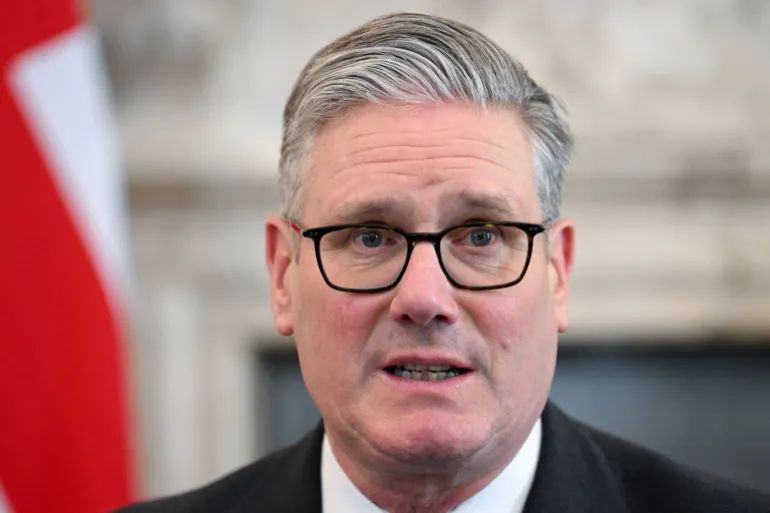
The Starmer welcomes Trump ceasefire deal response signals growing international support as Keir Starmer praised the agreement between the United States and Iran as a step toward stability.
Starmer described the development as a breakthrough moment, stating, “I welcome the ceasefire agreement reached overnight, which will bring a moment of relief to the region and the world.”
His remarks align with a broader global reaction, as multiple leaders express cautious optimism that the temporary halt in hostilities could open the door to sustained diplomatic progress.
The UK prime minister emphasized the importance of collective action, urging continued cooperation among international partners to ensure the ceasefire holds beyond the initial phase.
“Together with our partners we must do all we can to support and sustain this ceasefire,” Starmer said, highlighting the need for coordinated diplomatic engagement.
He also stressed the importance of turning the pause into something more durable, adding that efforts must focus on transforming the agreement into a “lasting” resolution.
A key priority outlined by Starmer is the reopening of the Strait of Hormuz, a critical global trade route whose stability is essential for energy markets and economic security.
The waterway has remained central to tensions between Iran and Western powers, making its safe operation a crucial benchmark for any successful agreement.
Starmer’s comments reflect a pragmatic approach, balancing optimism with recognition of the challenges involved in maintaining peace in a volatile region.
His government sees the ceasefire not as an endpoint but as an opportunity to build momentum toward a broader diplomatic settlement.
The UK’s involvement is expected to intensify, with Starmer traveling to the Middle East to engage directly with regional leaders.
According to officials, the trip will focus on discussions with Gulf states aimed at reinforcing diplomatic efforts and ensuring compliance with ceasefire conditions.
This move underscores Britain’s intention to play an active role in shaping outcomes rather than remaining a passive observer.
Starmer’s diplomatic outreach also signals the importance of regional buy-in, as lasting peace will require cooperation from multiple stakeholders beyond the United States and Iran.
The ceasefire has already begun to shift the tone of international discourse, moving from immediate crisis management toward longer-term conflict resolution.
However, uncertainties remain, particularly regarding how both sides will implement and verify commitments made under the agreement.
Starmer’s emphasis on partnership suggests that multilateral frameworks could be key to addressing these challenges effectively.
The UK’s position aligns with calls from other global leaders who see diplomacy as the only viable path to reducing tensions and preventing further escalation.
At the same time, the success of these efforts will depend heavily on actions taken in the coming days, especially regarding maritime security.
The Strait of Hormuz remains a focal point, with its reopening serving as a tangible sign of de-escalation and cooperation.
Starmer’s remarks highlight the interconnected nature of regional stability and global economic health, particularly in relation to energy supply chains.
His visit to the Middle East is expected to include high-level meetings aimed at strengthening alliances and coordinating responses.
These engagements could help build consensus around next steps, including mechanisms to monitor and enforce the ceasefire.
The UK government has indicated that maintaining momentum will be critical to preventing a return to hostilities once the initial ceasefire period ends.
Starmer’s tone suggests cautious optimism, acknowledging progress while recognizing the fragility of the current situation.
He has framed the moment as an opportunity that must be seized through sustained effort and diplomatic commitment.
Read also: Trump ceasefire deal: Two-week pause in Iran conflict signals possible Middle East breakthrough
The broader international community appears to share this view, with many leaders emphasizing the importance of unity.
As negotiations continue, attention will remain focused on whether the ceasefire can evolve into a comprehensive agreement.
Starmer’s involvement underscores the role of global powers in supporting regional peace initiatives.
His approach reflects a belief that coordinated diplomacy can help bridge divides and create conditions for lasting stability.
Ultimately, the coming days will determine whether this moment of relief can be transformed into a durable peace.
About The Author
