

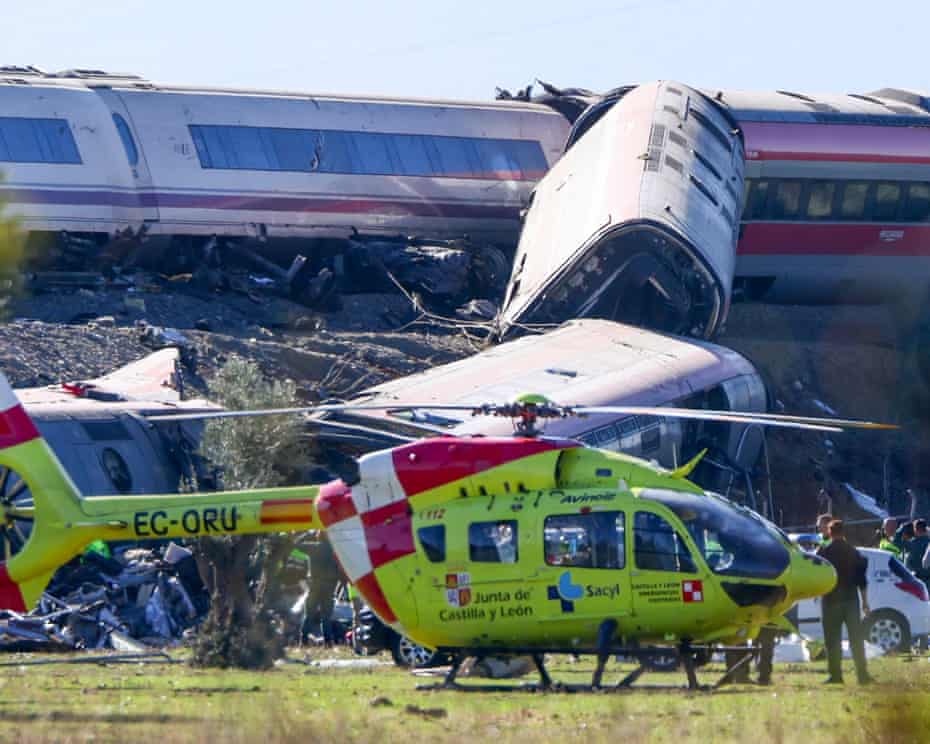
Spain train crash crisis has deepened, with 69 people confirmed dead following Wednesday’s collision between two high-speed trains in Toledo province. Prime Minister Pedro Sánchez warned that victims could include people from as many as 27 nationalities as authorities continue identifying the dead and searching for missing passengers.
At least 70 people remain reported missing, raising fears that the death toll could increase. Emergency services have so far identified only 13 victims, while 31 bags containing partial human remains are awaiting identification.
Authorities say the identification process is particularly complicated because of the condition of some remains. Officials are coordinating with foreign embassies and consulates to establish the identities and nationalities of those affected.
Sánchez vows to restore confidence in Spain’s high-speed rail system
Sánchez acknowledged that the disaster had seriously damaged public confidence in Spain’s high-speed railway network, which has long been regarded as a source of national pride.
He described that confidence as “broken” and pledged that his government would work to rebuild trust and prevent another tragedy of similar magnitude.
“The government’s job is not just to make the diagnosis, but to offer solutions so that a tragedy of this magnitude never happens again. And that’s what we’re doing,” Sánchez said.
Of the 110 people hospitalised following the collision, 71 have been discharged, while 39 remain in hospitals receiving treatment.
The scale of the disaster has prompted renewed scrutiny of railway safety, operational procedures and the decisions made by officials in the minutes before the collision.
Transport minister points to possible control centre failure
Transport Minister Óscar Puente said preliminary evidence pointed towards a possible failure within the command and control centre operated by Adif, the company responsible for Spain’s railway infrastructure.
“At present, evidence points to a failure within Adif’s command and control centre,” Puente said, while stressing that investigators were still working to establish precisely what happened.
He rejected calls to resign, arguing that the immediate priority should be to establish the facts, explain the circumstances surrounding the crash and introduce measures to prevent a recurrence.
“My duty now is not to discuss my position, but to resolve the problem, clarify what happened, and offer clear explanations,” he said.
Puente added that he would not use railway workers as a shield or make premature judgments about where responsibility lay.
He said the government would respond to the findings of the investigation rather than make decisions based on political pressure following the tragedy.
How the collision happened remains under investigation
An initial interim report by the independent body investigating the crash confirmed that the high-speed AVE train was travelling at between 160 and 200 kilometres per hour when it struck a stationary train ahead of it.
The collision followed a signalling failure in the Urda area that caused six trains to stop. Investigators are examining communications between the operations centre and train drivers to understand how the situation developed.
Leaked recordings published by Spanish media have revealed confusion in communications during the critical minutes before the collision.
The operator who authorised the Renfe AVE train to resume its journey before it collided with the stationary Iryo service has declined to be interviewed by the Civil Guard, according to Spanish media reports.
However, the train drivers’ union has warned against drawing premature conclusions, insisting that investigators must examine possible systemic failures alongside individual decisions.
The full investigation could take weeks or months, with the interim report indicating that some key witnesses had not yet been interviewed.
Signalling failures and safety procedures face scrutiny
Puente said signalling failures were not uncommon but insisted that railway safety systems were designed to manage such incidents without causing accidents.
He cited approximately 170 similar signalling incidents recorded in 2026, describing the figure as within the normal range by European standards.
He also defended the LZB signalling system, describing it as “a robust, highly-reliable” system still used in several countries, including Austria, Germany and the United Kingdom.
Spain is gradually introducing the European Rail Traffic Management System, known as ERTMS, which is intended to improve interoperability and railway safety. Puente said the system was expected to become fully operational on the Madrid-Sevilla route in early 2027.
The minister explained that when signalling systems fail, high-speed trains must follow alternative safety procedures. These include keeping a following train stationary until the train ahead moves or instructing it to proceed at a severely restricted speed.
He stressed that automatic systems had correctly stopped the trains and that they resumed moving only after manual instructions were issued by the operations centre.
“The protocol … is clear,” he said, adding that the decision taken did not follow the required procedure.
He said the investigation and the judiciary would have to establish the reasons for the decisions and their consequences.
Minister defends staffing levels but accepts need for improvements
Puente said 16 controllers were working at the control centre when the crash occurred, describing the number as normal operating conditions.
He also disputed claims that railway control centres were understaffed, noting that the number of operators had increased from 1,008 in 2016 to nearly 1,700.
“It is simply incorrect to suggest the service is understaffed,” he said.
Nevertheless, the minister acknowledged that staffing figures and technological improvements did not mean there was nothing to address.
He said Spain should not have to deal with two major train crashes within nine months and pledged that the government would spare no effort in addressing the crisis.
Puente also said authorities were evaluating whether other railway lines should be reviewed. Spain has traditionally prioritised keeping services running during maintenance work to limit disruption, but the government may need to reconsider that approach.
He acknowledged that changing the system could face resistance from passengers concerned about interruptions to rail services.
Public confidence shaken as minister insists trains remain safe
Despite acknowledging the damage to public confidence, Puente maintained that he still trusted Spain’s railway system and would continue travelling by train.
“I believe our system is safe and that these events … are truly exceptional,” he said.
He added that he would dedicate his full efforts to providing solutions capable of restoring confidence among Spanish passengers.
The minister also defended his earlier description of the circumstances surrounding the crash as “inexplicable”, saying the incident required a thorough investigation rather than immediate assumptions about responsibility.
Asked whether he would resign if doing so brought comfort to victims’ families, Puente described the issue as delicate but questioned whether his departure would resolve the underlying problems.
He acknowledged that he would face criticism, insults and assumptions of guilt during the political campaign but said he had no immediate plans to step aside.
Foreign victims identified as death toll remains uncertain
Spain’s Foreign Ministry has confirmed that at least 51 foreign nationals from 23 countries were involved in the crash.
At the time of the latest figures, two foreign nationals were believed to have died, nine had been injured and 18 were largely unharmed. The status of another 22 remained unclear.
Czech authorities confirmed that a Czech citizen died in the collision, while Portugal also confirmed that one of its citizens was among the victims. A Portuguese crew member was reported to have been killed.
The figures could change as authorities continue identifying victims and establishing the circumstances of those still missing.
Sánchez said the number of nationalities represented among those affected could reach 27, underlining the international dimension of the tragedy.
Spain faces pressure to prevent another railway disaster
The crash has created an immediate challenge for Sánchez’s government as Spain prepares for parliamentary elections next month.
The disaster could shift political debate towards railway safety and the government’s record on transport infrastructure, potentially overshadowing other campaign issues.
Authorities face pressure to provide clear answers about the signalling failure, the decisions that allowed the AVE train to resume its journey and whether existing safety procedures were properly followed.
The investigation will also need to establish whether the collision resulted from an isolated operational error or exposed wider weaknesses in railway systems and procedures.
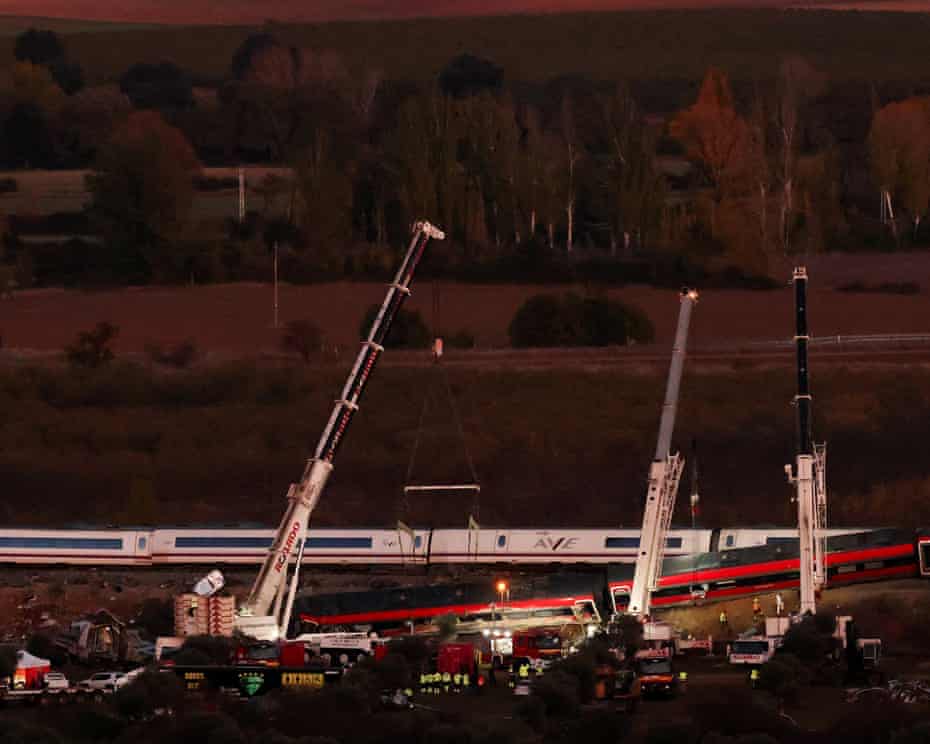
For now, rescue and identification work continues, while families wait for confirmation about missing relatives.
With 69 deaths confirmed and at least 70 people reported missing, the final human toll remains uncertain. The government has pledged to establish what happened and implement changes, but restoring public confidence will depend on the investigation’s findings and the effectiveness of any subsequent reforms.
About The Author


