Texas ICE Detention – A second man being held at a US immigration detention facility in Texas has died within a span of just two weeks, US Immigration and Customs Enforcement (ICE) confirmed on Monday.
The latest death has intensified concerns about the conditions and medical care provided in US immigration detention facilities, particularly under the Trump administration’s ongoing deportation efforts.
The man, Victor Manuel Diaz, 36, originally from Nicaragua, was found “unconscious and unresponsive in his room” on 14 January at the Camp East Montana detention facility in El Paso, ICE said in a press release.
The facility, which is located on the Fort Bliss military base, has faced scrutiny for its rapid construction and the management of detainees during large-scale deportation operations.
ICE officials stated that staff immediately notified contract medical personnel on site to administer life-saving measures.
Emergency medical technicians arrived at the facility but were unable to revive Diaz, who was pronounced dead just after 4 pm. ICE has described the death as a “presumed suicide,” although it noted that the official cause of death is still under investigation.
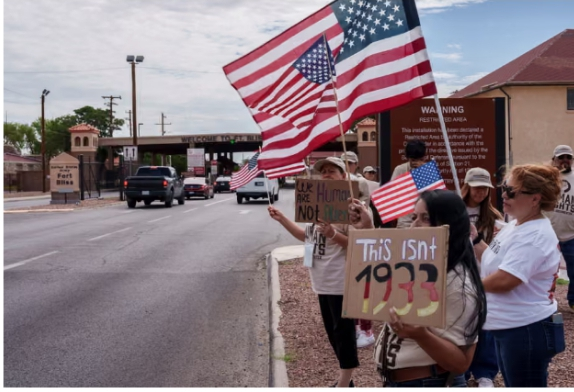
Protesters have previously gathered at the Cassidy Gate at Fort Bliss to oppose mass deportations and the construction of Camp East Montana.
Images captured on 17 August 2025 show demonstrators holding signs and voicing concerns over the potential mistreatment of detainees and the rapid pace at which the facility was being built.
Critics of ICE operations have argued that the conditions at temporary tent-based detention centers can be harsh, with limited access to medical care and inadequate oversight.
Diaz was initially detained on 6 January during a controversial Trump administration deportation blitz in Minneapolis, Minnesota.
He first entered the United States through the Mexican border in March 2024, at which point border patrol agents apprehended him. He was then released on parole and given a court date with an immigration judge.
An immigration judge issued a removal order against Diaz on 26 August 2025, in absentia. He was subsequently detained on 12 January 2026 to facilitate his deportation.
Camp East Montana, a large tent-based facility built on Fort Bliss, was designed to house hundreds of detainees during these deportation operations.
The rapid growth of such facilities has drawn criticism from human rights advocates, who argue that emergency medical care may not be sufficient for all detainees.
The death of Diaz comes just days after another man, Geraldo Lunas Campos, 55, died in the same detention camp. Campos, who had immigrated from Cuba, passed away on 3 January.
ICE stated that Campos was experiencing medical distress at the time and that staff had attempted to provide emergency treatment. Authorities have indicated that Campos’ death is potentially being investigated as a homicide.
The back-to-back deaths have renewed public scrutiny of ICE detention practices. Critics argue that these deaths highlight the risks faced by detainees in temporary facilities, particularly those with preexisting medical conditions or limited access to care.
Advocates for immigration reform have called for increased transparency regarding how deaths in custody are reported and investigated.
Legal experts have noted that deaths in ICE custody are not uncommon, but the short interval between Diaz and Campos’ deaths is particularly alarming.
The federal government has faced lawsuits in the past over alleged negligence and inadequate medical care at detention facilities, and these new cases may prompt additional legal and policy review.
In response to the deaths, ICE has maintained that it follows established protocols for detainee health and safety. Officials have emphasized that contract medical staff are present at facilities like Camp East Montana and that emergency procedures are in place.
Nonetheless, human rights groups continue to challenge the adequacy of care, especially in newly constructed or temporary facilities.
Detention facilities like Camp East Montana were established to accommodate a surge in deportations and detentions ordered during heightened enforcement campaigns.
The large-scale operations have been controversial, with critics claiming that they prioritize speed and numbers over individual well-being.
Supporters argue that such facilities are necessary for enforcing immigration law and managing the growing number of detainees.
The circumstances surrounding Diaz’s death remain under investigation. ICE has not released additional details about the specific events leading up to his death, citing ongoing inquiries.
Similarly, the investigation into Campos’ death has yet to conclude, and authorities have not confirmed whether foul play was involved.
Community organizations and immigration advocates have called for independent oversight of ICE facilities, arguing that internal investigations alone may not ensure accountability.
In addition to medical concerns, advocates have highlighted the psychological strain of detention, particularly in large, temporary tent facilities where detainees are held for extended periods.
Experts have pointed out that both physical and mental health issues are common among detainees. High levels of stress, coupled with limited access to healthcare and restricted social support, can exacerbate preexisting conditions and increase the risk of self-harm.
The deaths of Diaz and Campos underscore these systemic challenges and raise questions about how detention practices could be improved to prevent further tragedies.
Some legal scholars have also noted the potential impact on ongoing immigration court proceedings. The deaths may affect the timeline and logistics of deportation operations, as facilities and staff are scrutinized more closely by courts and oversight bodies.
Additionally, public attention on these deaths could influence future policy decisions regarding temporary detention centers and large-scale enforcement campaigns.
The deaths have prompted calls from lawmakers and activists for ICE to reevaluate its detention strategies. There is particular concern about the reliance on tent-based facilities and the ability of these sites to provide adequate medical and mental health care.
Some advocates have proposed alternatives, including community-based supervision and case management, which they argue could reduce risks for detainees while still ensuring compliance with immigration laws.
For families of detainees, these deaths are deeply distressing. Advocacy groups have reported receiving numerous inquiries from relatives seeking information about the circumstances of the deaths and the well-being of other detainees.
Transparency in communication, along with timely and thorough investigations, is seen as essential to addressing public concern and maintaining accountability within ICE operations.
As investigations continue, the broader debate over the treatment of immigrants in detention facilities remains highly charged. The deaths of Victor Manuel Diaz and Geraldo Lunas Campos are likely to intensify scrutiny of ICE and its operational procedures.
Observers say these cases may influence policy discussions not only in Texas but across the United States, as the government balances immigration enforcement with humanitarian considerations.
ICE has reiterated that it follows federal guidelines for detainee care and that all deaths in custody are taken seriously. However, advocates and legal experts argue that systemic issues persist, particularly in facilities designed for rapid processing and temporary housing.
The challenge remains to ensure that enforcement operations do not come at the cost of detainee safety and human rights.
The coming weeks are expected to bring further updates on the investigations into both deaths.

Meanwhile, public debate continues over the role of detention in US immigration policy, the conditions within such facilities, and the broader implications for detainees’ safety and human rights.