

Russian forces advance in Donetsk as Moscow claims the capture of Dibrova village, intensifying military operations in eastern Ukraine and raising urgent concerns for civilian safety.
President Vladimir Putin described the seizure as “a decisive and necessary step” in securing eastern Ukraine, adding that “our troops are following the operational plan precisely.”
Ukrainian President Volodymyr Zelenskyy condemned the advance as “an illegal occupation of sovereign land,” urging the international community to hold Russia accountable for its aggression.
Clashes continue around Sloviansk and Siversk, where Ukrainian defenders face mounting pressure, while artillery bombardments increasingly damage civilian infrastructure and disrupt essential services in local towns.
A NATO spokesperson warned, “The rapid advance of Russian forces in Donetsk threatens regional security. Immediate diplomatic intervention is essential to protect civilians from further harm and escalation.”
Russian military officials reported controlling several surrounding villages near Zaporizhzhia, strengthening Moscow’s strategic position and signaling intentions to consolidate territorial gains in Ukraine’s eastern regions.
Governor Ivan Fedorov reported one civilian death and multiple injuries in Orikhiv, emphasizing that “residents continue to face critical humanitarian conditions, with electricity and heating disrupted in freezing temperatures.”
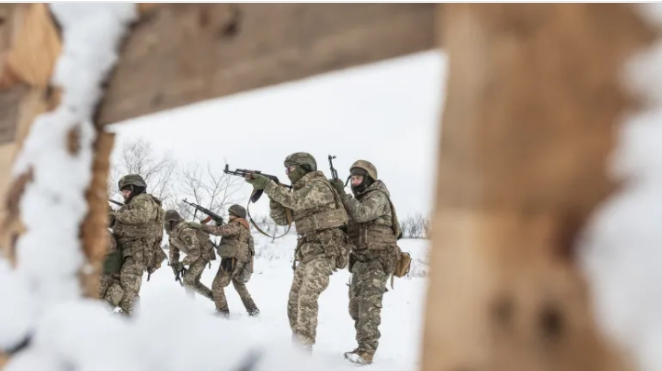
Ukrainian troops in Kharkiv continue rigorous training, preparing for potential counteroffensives while fortifying defensive lines to slow Russian advances and protect vulnerable communities along contested borders.
Colonel Maksym Ivanov emphasized, “The resilience and determination of our forces are critical. Every position we hold is essential for civilian protection and operational readiness.”
Peace negotiations between Kyiv and Washington gained international attention, with Trump and Zelenskyy praising progress toward a potential resolution despite ongoing Russian military activity.
US President Donald Trump called discussions “productive and intensive,” noting that “both sides are closer than ever to establishing a framework for lasting peace agreements.”
Zelenskyy highlighted that “continued Russian provocations, including attacks on civilian areas, undermine the possibility of peace and strain diplomatic efforts toward a ceasefire.”
Russian Foreign Minister Sergey Lavrov condemned Ukraine’s alleged drone attacks on Putin’s Novgorod residence, declaring, “Such actions will not go unanswered and require reassessment of Moscow’s negotiating stance.”
Lavrov added that Ukraine deployed 91 long-range drones, calling the operation “reckless” and justifying Russia’s plans to maintain pressure on Ukrainian positions in contested regions.
Zelenskyy dismissed the claims as “false narratives aimed at weakening Ukraine’s international support,” reaffirming his country’s commitment to negotiations while defending national territory.
US special envoy Steve Witkoff consulted with Kyiv negotiators, stating that “daily virtual meetings with European security advisers ensure Ukraine maintains a coherent and informed approach during talks.”
Rustem Umerov, Ukraine’s top negotiator, said, “Coordination with American and European partners is essential to navigate complex negotiations and respond to Russian escalations effectively and timely.”
Russian General Valery Gerasimov reported that Moscow captured 6,460 sq km, including 334 villages, asserting that Russian forces are advancing along multiple fronts with coordinated operations.
Independent verification of battlefield claims remains difficult, as reports from both Russian and Ukrainian sources frequently conflict on territorial control, casualties, and infrastructure damage.
Putin’s televised meeting with senior commanders highlighted strategic ambitions, including expansion along the Russian-Ukrainian border and potential offensives targeting Sloviansk and Kramatorsk.
“The complete liberation of Donbas and Zaporizhia is proceeding in stages,” Putin emphasized, “with operations aligned with the objectives of our special military operation.”
Observers noted that Putin’s military appearance was likely intended to influence international perceptions and strengthen Russia’s leverage ahead of ongoing peace talks in Florida.
Many analysts suggest that Trump’s statements indicate concern that prolonged warfare benefits Moscow, warning that extended conflict undermines Ukraine’s negotiating position and territorial integrity.
Fresh Russian attacks on Kyiv disrupted electricity and heating for a third of the city, underscoring the dangers civilians face despite international diplomatic efforts.
A Ukrainian MP stated, “The main obstacle to peace remains Putin. His escalation tactics endanger civilians and destabilize the region, complicating any ongoing negotiation efforts.”
Ukrainian forces continue counter-drone operations, using rifles and improvised weapons to disrupt Russian reconnaissance and strike capabilities in critical eastern sectors under attack.
Local authorities reported widespread residential damage, with men boarding windows against shelling, emphasizing the extreme winter conditions and urgent needs of displaced civilians.
International responses urge restraint, with NATO and EU officials calling for cessation of hostilities while reinforcing diplomatic channels to prevent escalation of the Russia-Ukraine conflict.
“Peace cannot be achieved through ongoing aggression,” said a European diplomat, “and civilian protection and respect for sovereignty remain non-negotiable in any resolution process.”
Russia also accused Britain of influencing Ukraine’s recent actions, claiming Western support encourages Kyiv to continue provocations, undermining peace negotiations and prolonging the conflict.
Analysts believe such claims are a narrative to frame Ukraine as the aggressor and justify Moscow’s continued military operations in Donbas and Zaporizhzhia.
Despite global calls for restraint, both sides remain entrenched, with Ukraine focusing on defense while Russia pursues strategic offensives to consolidate control in eastern regions.
Zelenskyy reiterated Ukraine’s stance: “We seek peace but will defend our citizens and territory against unlawful incursions by Russian forces, emphasizing protection of civilians above all.”
Trump and Zelenskyy’s optimism regarding a potential truce provides a diplomatic opening, although military clashes continue to highlight the fragility of negotiations in real time.
“The opportunity for a sustainable agreement is narrow,” said a conflict analyst, warning that delays or inaction could lead to further Russian territorial gains and prolonged civilian suffering.
The humanitarian situation worsens daily, with casualties, displacement, and damaged infrastructure raising urgent international concerns about civilian well-being and access to aid.
Read more here:Ukraine-Russia war latest: cracks emerge over peace deal as Trump offers limited security guarantees for Kyiv
Civilians endure harsh winter conditions with limited medical care, electricity, and heating, underscoring the urgent need for humanitarian assistance in conflict-affected areas of eastern Ukraine.
International organizations continue to monitor the situation closely, calling for compliance with humanitarian law and urging both Moscow and Kyiv to prioritize civilian protection during military operations.
The conflict remains dynamic, with ongoing battlefield developments, diplomatic negotiations, and international pressure capable of significantly shaping the trajectory of the Russia-Ukraine war.
About The Author


