Russia-Ukraine war– Russia launched a fresh wave of missile and drone attacks across Ukraine, killing three people and knocking out power supplies as winter deepens and temperatures continue to fall nationwide.
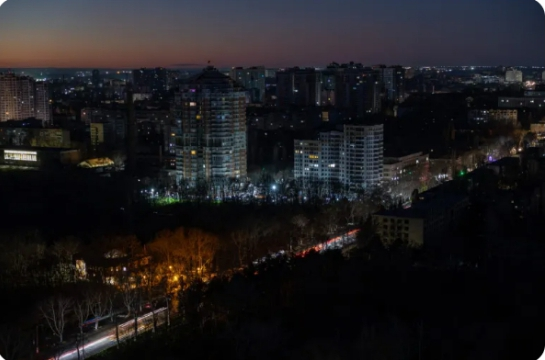
Ukrainian officials said homes, ports and energy infrastructure were targeted overnight, leaving large parts of Kyiv and surrounding regions facing emergency power outages and renewed insecurity.
President Volodymyr Zelenskyy confirmed at least three deaths in the Zhytomyr region, including a four-year-old child, adding that dozens more people were wounded nationwide.
He said Russia was deliberately hitting civilian infrastructure, warning that energy facilities had again become “primary targets” as Ukrainians struggle with cold and prolonged darkness.
Ukraine’s Energy Ministry introduced emergency power cuts in several regions, stressing that engineers were racing to stabilise the grid after repeated strikes damaged substations.
In Kyiv, traffic lights failed, apartment blocks went dark and residents sought shelter in metro stations as air raid sirens echoed through the capital before dawn.
A father in one damaged neighbourhood said debris from a crashed drone littered the street outside his building, underscoring the randomness and fear of the attacks.
Poland and allied NATO aircraft were scrambled to protect Polish airspace after strikes landed close to Ukraine’s western border, highlighting growing regional alarm.
The violence followed United States-led talks in Miami involving Ukrainian and European officials, alongside separate contacts with Russian representatives seeking limited progress toward peace.
Despite the talks, Moscow intensified its campaign against Ukraine’s energy system, which Kyiv says is aimed at breaking civilian morale during the harsh winter months.
Ukrainian Foreign Minister Andrii Sybiha said “Russia must be forced into peace,” arguing that collective transatlantic pressure was the only path toward ending the war.
He wrote that increasing the cost of continued aggression was essential, noting that Ukraine could not accept peace “at any price” without security guarantees.
In southern Ukraine, Russia struck the port city of Odesa, damaging warehouses, energy facilities and a Lebanon-flagged vessel carrying Ukrainian soya beans.
Deputy Prime Minister Oleksii Kuleba said the civilian ship was hit during overnight shelling, though no casualties were reported among the crew.
Odesa’s ports are critical for Ukraine’s exports and fuel imports, making them strategic targets as Russia seeks to pressure Kyiv economically and militarily.
Regional officials said Russian forces had threatened to cut Ukraine “off from the sea,” escalating fears about supply chains and food security beyond Ukraine’s borders.
Meanwhile, Russia’s nuclear regulator issued an operating licence for a power unit at the Zaporizhzhia nuclear plant, seized early in the invasion.
Rosatom described the move as a step toward long-term operation, though the plant remains shut down and dependent on external power to prevent overheating.
Ukrainian officials and international observers have repeatedly warned that any fighting near nuclear facilities risks catastrophic consequences for the wider region.
At the defunct Chornobyl plant, director Sergiy Tarakanov warned a Russian strike could collapse the internal radiation shelter protecting the damaged reactor.
“If a missile or drone hits nearby, it will cause a mini-earthquake,” he said, adding that no one could guarantee the structure would remain standing.
The International Atomic Energy Agency earlier said the shelter had lost primary safety functions after damage this year, though radiation levels remain stable.
Russia also reported intercepting Ukrainian drones over Belgorod, Crimea and several southern regions, signalling continued exchanges across the front lines.
In Russia’s Stavropol region, authorities confirmed an attempted Ukrainian drone strike on a petrochemical plant, triggering fires but causing no casualties.
As both sides target energy and industrial sites, civilians continue to bear the brunt of the conflict, enduring blackouts, cold homes and constant uncertainty.
Ukrainians sheltering underground said exhaustion was replacing resilience, with many questioning how long daily life can continue under relentless attack.
Still, public sentiment remains defiant, with many insisting that territorial concessions or weakened security guarantees would only postpone future violence.
After nearly four years of war, the latest strikes underline how fragile hopes for peace remain, even as diplomatic efforts intensify behind the scenes.
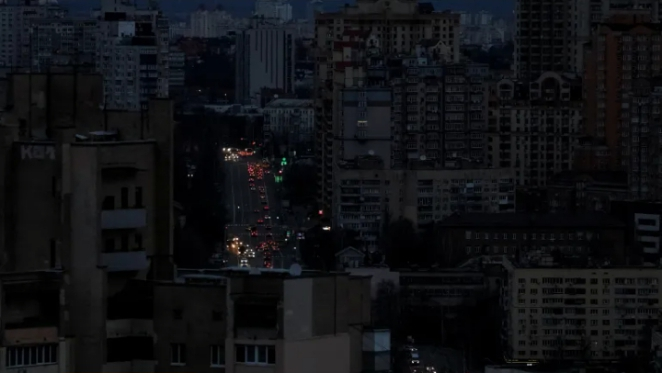
For now, Ukraine braces for more attacks, racing to restore power while preparing its population for a winter shaped by darkness and danger.
About The Author