Russia killed Alexei Navalny with frog toxin, Western intelligence agencies from five countries have concluded, stating that laboratory analysis found a rare and lethal substance in the opposition leader’s body and that only the Russian state had the means, motive, and opportunity to deploy it during his imprisonment.
The findings, released at the Munich Security Conference, mark the most definitive official accusation to date that the Kremlin was directly responsible for the death of its most prominent critic.
According to a joint statement issued by the United Kingdom, France, Germany, Sweden, and the Netherlands, forensic samples taken from Navalny’s body before his burial revealed traces of epibatidine, a powerful toxin naturally found in the skin of certain Ecuadorian dart frogs.
Intelligence officials said the substance is not produced by dart frogs in captivity, is not found in Russia, and has no plausible innocent explanation for appearing in the body of a political prisoner held in a high-security Arctic penal colony.
Alexei Navalny died in February 2024 while serving a 19-year sentence in a remote Siberian prison, a death that Russian authorities initially attributed to natural causes.
The new intelligence assessment directly contradicts that account, stating that the poisoning was deliberate and constituted a violation of international chemical weapons law.
The UK government described the killing as “barbaric” and confirmed it would formally report Russia to the Organisation for the Prohibition of Chemical Weapons for breaching the Chemical Weapons Convention.
Officials said the use of a rare biological toxin represented a calculated attempt to evade detection while silencing a political opponent who had continued to influence Russian politics even from behind bars.
Intelligence agencies involved in the inquiry said biological samples were quietly secured before Navalny’s burial and transferred to specialist laboratories in two European countries.
After nearly two years of analysis and verification, scientists concluded that the toxin was present in sufficient quantities to have caused paralysis, respiratory failure, and death.
In their joint assessment, the agencies stated: “Only the Russian state had the means, motive, and opportunity to deploy this lethal toxin to target Alexei Navalny during his imprisonment in a Russian penal colony, and we hold it responsible for his death.”
The statement added that the absence of epibatidine from Russia’s natural environment made accidental exposure impossible.
Navalny’s widow, Yulia Navalnaya, responded publicly to the findings, saying the conclusions confirmed what she had believed from the moment of her husband’s death.
In a statement shared on social media, she said the poison “causes paralysis, respiratory arrest, and a painful death,” adding that the investigation proved her husband was killed using a chemical weapon. She accused Russian president Vladimir Putin of bearing personal responsibility and called for international accountability.
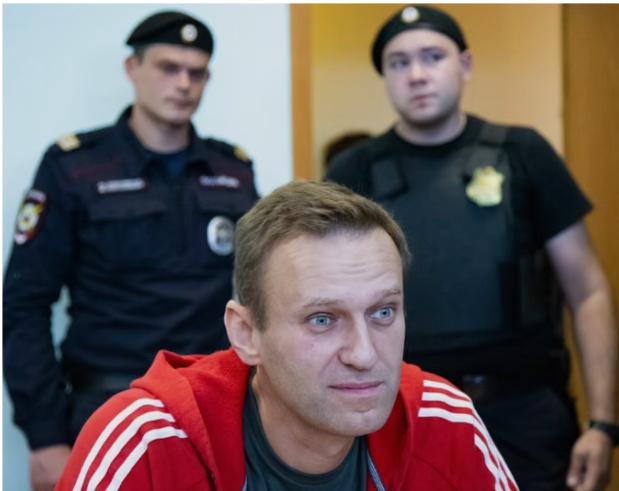
Although Western governments had long suspected that Navalny was poisoned, officials said the identification of the specific toxin represents a major development. Previous cases involving Russian dissidents and defectors have relied on circumstantial evidence or classified intelligence rather than confirmed laboratory findings.
Russia has a documented history of using toxic substances against perceived enemies of the state. The 2006 killing of Alexander Litvinenko in London using radioactive polonium and the 2018 nerve agent attack on former spy Sergei Skripal in Salisbury established a pattern that Western officials say continues to this day. Navalny himself survived a poisoning attempt in 2020, after which he accused Russian security services of trying to kill him.
British officials said the timing of the disclosure was deliberate. Russia announced Navalny’s death just as the Munich Security Conference convened two years earlier, limiting immediate international scrutiny. Releasing the findings at the same forum was intended to underscore what officials described as a “long-standing campaign of repression by the Kremlin.”
The UK foreign secretary, Yvette Cooper, said the investigation demonstrated that Russia had not destroyed all of its chemical weapons stockpiles as claimed in 2017 and had failed to renounce biological weapons, as required under international conventions. She said the case showed the “despicable tools” the Russian state was willing to use against political opposition.
Russia has rejected the accusations, dismissing them as politically motivated and denying any involvement in Navalny’s death. The Kremlin has repeatedly accused Western governments of spreading disinformation, while refusing to open an independent international inquiry into the case.
The United States did not participate in the intelligence assessment, a fact noted by officials, though American authorities have previously expressed confidence that Navalny was killed as a result of state actions. European governments said the multinational nature of the investigation was intended to strengthen its credibility and avoid unilateral accusations.

For many analysts, the findings reinforce broader concerns about Russia’s conduct both domestically and internationally. Western officials argue that the use of poison against a high-profile political prisoner demonstrates a willingness to violate international norms with impunity, particularly as Russia remains engaged in the war in Ukraine.
Navalny’s death has become a symbol of the risks faced by political opponents in Russia, where dissent has been increasingly criminalised and independent voices silenced. Even in death, Western leaders say, Navalny continues to expose the lengths to which the Russian state will go to maintain control.
The intelligence findings are expected to intensify diplomatic pressure on Moscow, including calls for expanded sanctions and renewed efforts to hold Russian officials accountable through international legal mechanisms. While enforcement options remain limited, European governments say documenting responsibility is essential to preventing future abuses.
As investigations into chemical weapons use continue, Navalny’s case is likely to be cited alongside earlier incidents as evidence of a systematic policy rather than isolated acts. For supporters of the late opposition leader, the report offers not closure, but confirmation that his warnings about the Russian state were tragically justified.
Read also: Four men named by Ro Khanna in Epstein files have no connection to offender
About The Author