

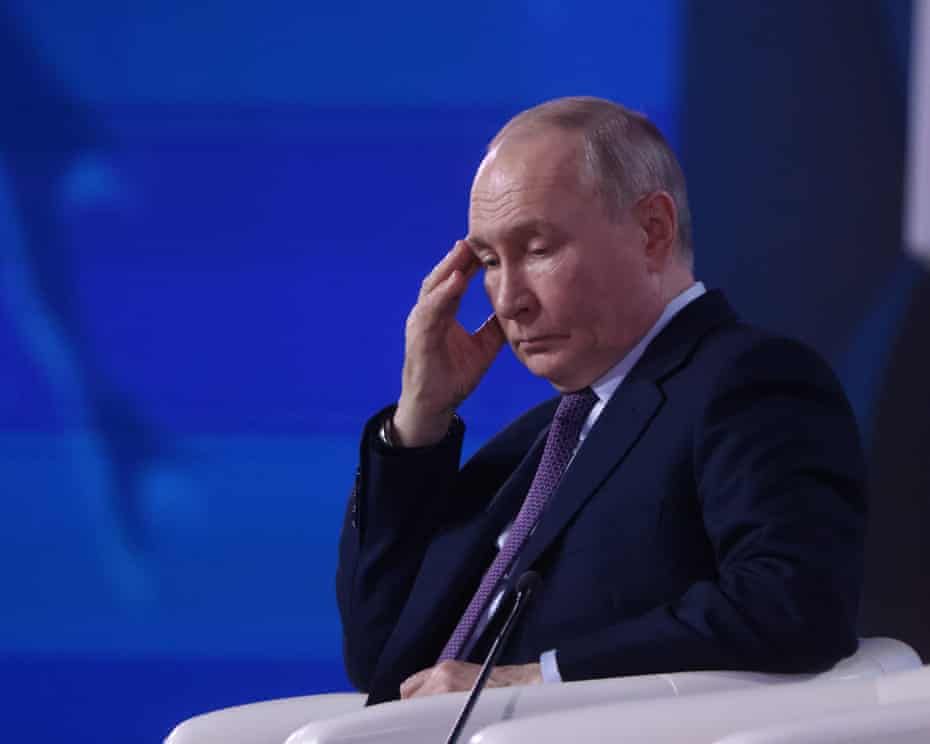
Moscow claims Russia captures Ukrainian village Kivsharivka as Ukrainian drone attacks target major Russian ports, sparking fires and escalating the ongoing conflict between the two countries in Eastern Europe.
Moscow announced on Sunday that its forces had taken control of Kivsharivka, a village in Ukraine’s Kharkiv region, according to Russian state news agency RIA Novosti. The claim has not been independently verified.
The capture of Kivsharivka comes amid heightened hostilities, as Ukraine has intensified its drone attacks on Russian infrastructure, aiming to disrupt key military and economic targets that are crucial to Moscow’s war efforts.
Ukrainian long-range drones struck the oil terminal at Russia’s Ust-Luga port for the second time in a week, according to Kyiv’s SBU security agency, causing serious damage and sparking a significant fire at the facility.
Alexander Drozdenko, governor of Russia’s northern Leningrad region, confirmed that the Ust-Luga port fire was caused by a Ukrainian drone attack. The port is a major petroleum export hub, handling millions of barrels annually.
Russia’s reliance on its northern ports makes these strikes particularly damaging. The Ust-Luga port alone exported over 32 million metric tons of oil products in 2025, showing the scale of disruption Ukraine aims to achieve.
Overnight, more than 200 Russian drones were launched across Ukraine, resulting in at least five deaths and sixteen injuries, according to Ukraine’s Air Force. Residential areas, ports, and hospitals were among the targeted locations.
Odesa was particularly affected during these strikes, including damage to a maternity hospital. President Volodymyr Zelensky condemned the attacks, describing the night as one of “pure terror” and emphasizing the indiscriminate targeting of civilians.
Zelensky said such attacks demonstrate that Russia has no intention of ending the war. He stressed the importance of coordinated international efforts to protect civilians and maintain Ukraine’s defense capabilities and diplomatic leverage.
Ukrainian Foreign Minister Andrii Sybiha described the attacks as barbaric and underscored the need for true strength to stop such acts. Ukraine’s response has focused on strategic targeting of Russian economic and military infrastructure.
In response to the escalating drone attacks, Ukraine has increasingly focused on oil refineries and export terminals, aiming to weaken Russia’s war economy while peace talks brokered by Washington have stalled in recent weeks.
The conflict has begun affecting neighboring countries. Finland reported a suspected territorial violation by drones, detected in its southeastern region. Several drones have crashed on the territory of Estonia, Latvia, and Lithuania after going astray from Ukrainian attacks.
Finnish authorities took the matter seriously. Small, slow-moving objects were detected flying at low altitude over a maritime area and inland near Kouvola. One drone fell north of the town, another east of it, prompting an ongoing investigation.
The Finnish Air Force conducted an identification mission with an F/A-18 Hornet fighter jet to assess the drones’ origins. Officials have yet to determine whether the drones were Ukrainian in origin or deviated due to navigation errors.
Meanwhile, Ukrainian President Volodymyr Zelensky traveled to Jordan for urgent meetings with Gulf states, aiming to strengthen defense ties. He highlighted security as a top priority, stressing the need for coordinated international support.
Zelensky’s visit to the Gulf comes amid intensifying attacks, particularly on strategic Russian infrastructure, and underscores Ukraine’s efforts to secure military and logistical support from international partners to counter Moscow’s aggression.
Russian officials have reportedly taken controversial measures to reinforce their military forces. Patients from alcohol rehabilitation centers in Petrozavodsk and other regions have been forcibly conscripted, described as older, physically unfit, and vulnerable recruits.
This recruitment strategy has been widely criticized as exploitative, raising questions about Russia’s manpower management amid ongoing high-intensity conflicts. Ukrainian officials have noted that Moscow is increasingly relying on weak and vulnerable individuals for frontline service.
In addition to conventional military measures, Russia has been using drones for targeted strikes across Ukraine, including residential areas, ports, and hospitals. Ukraine’s counter-drone operations aim to mitigate these attacks and limit civilian casualties.
Satellite images show smoke rising from Ust-Luga port after the latest Ukrainian strikes. Reports indicate that multiple drones were intercepted over Russia’s northern regions, including Leningrad, demonstrating the ongoing intensity of aerial confrontations.
Russia’s Ust-Luga port is operated by Transneft, the state-owned oil pipeline monopoly. The facility handles roughly 700,000 barrels of oil exports per day, showing how Ukraine’s drone strikes aim to affect Moscow’s energy economy significantly.
On the diplomatic front, US Secretary of State Marco Rubio denied claims that the Trump administration demanded Kyiv hand over Ukraine’s eastern Donbas region to receive security guarantees. He called the allegations “untrue” and misleading.
The geopolitical tensions continue to escalate. Russia has also allegedly used spy satellites to photograph the joint UK-US military base on Diego Garcia following Iran’s missile launches, reportedly assisting Tehran with surveillance efforts.
Zelensky highlighted the use of Russian satellites in intelligence sharing with Iran as part of growing concerns about Moscow’s cooperation with Tehran. These developments indicate that the conflict has broader implications beyond the immediate battlefield.
The ongoing conflict underscores Ukraine’s strategy of weakening Russian infrastructure while seeking international support for defense and economic security. Drone attacks on ports, oil refineries, and military bases aim to constrain Moscow’s war capacity.
Meanwhile, Russia’s capture of Kivsharivka in Kharkiv shows the continued pressure on Ukrainian frontline positions. Both sides are investing heavily in offensive and defensive operations, signaling that the conflict may continue to escalate.
As the war progresses, civilian areas, ports, and hospitals remain vulnerable to drone and missile strikes. International monitoring and humanitarian responses are increasingly critical to prevent further casualties and protect essential infrastructure.
Ukraine’s international outreach, including Zelensky’s meetings in the Gulf, aims to secure strategic partnerships, military aid, and coordination to counter Russia’s aggressive operations, particularly targeting energy export facilities crucial for Moscow’s economy.
Read also:Israel strikes Iranian command centres in Tehran escalation
Russian officials’ use of unconventional recruitment strategies, along with sustained drone and missile attacks, demonstrates the complexity and intensity of the conflict, as both sides adapt to new tactics and operational challenges on the battlefield.
Experts warn that continued drone attacks on Russian ports, oil refineries, and critical infrastructure may increasingly disrupt Moscow’s economy, while also highlighting Ukraine’s ability to strike deep inside Russian territory.
The ongoing war between Russia and Ukraine has significant regional and global implications, from energy security to geopolitical alliances, as nations monitor the conflict’s evolution and respond with diplomatic, military, and humanitarian measures.
In summary, Russia captures Ukrainian village Kivsharivka amid Ukraine’s intensified drone attacks on strategic Russian ports, causing fires and demonstrating the escalating nature of the Russia-Ukraine conflict, which continues to draw international concern.
About The Author
