


Rodrigo Duterte ICC trial case moves to full hearing
The Rodrigo Duterte ICC trial case has moved into a full judicial phase after former Philippines president Rodrigo Duterte was confirmed to face charges of crimes against humanity at the International Criminal Court, according to the Guardian.
ICC judges ruled that there are substantial grounds to believe Duterte was responsible for widespread killings linked to his war on drugs, which rights groups say resulted in thousands of civilian deaths.
The decision marks a major step in one of the most significant international criminal cases involving a former head of state in recent years.
ICC confirms charges over drug war killings
Pre-trial judges at the International Criminal Court unanimously confirmed charges of crimes against humanity, including murder and attempted murder.
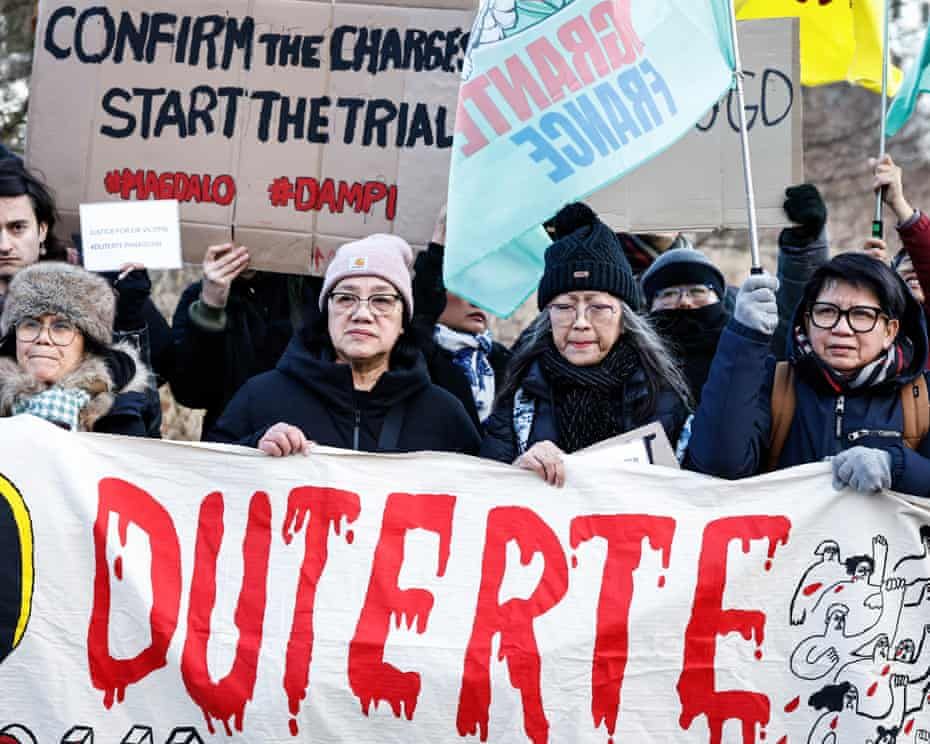
The court found evidence suggesting the killings formed part of a widespread and systematic attack against civilians during Duterte’s presidency and earlier leadership in Davao.
According to the Guardian, prosecutors argued that Duterte exercised significant authority over the anti-drug campaign, including influence over operations and enforcement decisions.
A trial date has not yet been announced.
War on drugs allegations and leadership role
The case centres on Duterte’s controversial anti-drug campaign, which intensified after he became president in 2016.
Prosecutors allege he held ultimate influence and authority over the operations, which they say resulted in large-scale killings.
During earlier proceedings, he was described as being at the very heart of the crackdown.
He was also quoted saying
“If I become president, you will all get wiped out. I will order your execution within 24 hours.”
Estimates cited in the case suggest as many as 30,000 people may have been killed, although official figures from Philippine authorities are significantly lower.
Defence rejects charges and challenges jurisdiction
Duterte has denied all allegations, insisting that his campaign targeted criminality and drug trafficking.
His legal team has described his public statements as hyperbole, bluster and rhetoric, arguing they should not be treated as evidence of criminal intent.
Defence lawyers also challenged the ICC’s jurisdiction over the case, but the court rejected those arguments.
The defence maintains that the prosecution’s claims of a coordinated state killing policy are unfounded.
Arrest, health claims and trial uncertainty
The Rodrigo Duterte ICC trial case follows his arrest in Manila in 2025 and transfer to The Hague.

He did not attend earlier hearings, citing age and health concerns, including claims of memory decline.
In a written statement, Duterte described himself as old, tired and frail.
Despite these claims, ICC judges ruled that proceedings should continue, clearing the way for a full trial process.
Victims and rights groups welcome ruling
Victims’ families and human rights organisations have welcomed the court’s decision.
A representative of victims said
“We have long waited for this moment. It’s been nearly 10 years since Duterte started implementing his deadly war on drugs.”
Amnesty international called the ruling a historic moment for victims and international justice.
The decision has been widely seen as a major milestone in accountability efforts for alleged state-linked violence.
International justice implications
The case highlights the role of the International Criminal Court in prosecuting crimes against humanity.
Such crimes involve systematic or widespread attacks against civilian populations and are among the most serious under international law.
The trial will test how effectively international legal systems can hold former leaders accountable.
It may also influence future global debates on sovereignty, justice, and human rights enforcement.
Read also: US Navy Secretary John Phelan fired by Pentagon amid defense leadership tensions
The confirmation of charges against Rodrigo Duterte marks a major development in international criminal justice.
As the case proceeds toward trial, it will remain under close global scrutiny due to its political and legal significance.
The outcome could have lasting implications for accountability standards applied to state leaders worldwide.