Hundreds of residents took to the streets after the deadly Rio police raid, demanding the governor step down following more than 120 fatalities in Rio’s favelas.
The protest in Vila Cruzeiro, part of the Penha favela complex, reflected public outrage over the Rio police raid, which claimed dozens of lives, including several officers, in the city’s deadliest operation.
Authorities mobilized thousands of police and military personnel across Rio’s most densely populated neighborhoods, conducting the Rio police raid to target organized crime and gang strongholds.
Residents described chaotic scenes as heavily armed officers confronted gang members, resulting in widespread violence and multiple fatalities across steep hillside communities during the operation.
Initial reports significantly underestimated the death toll, as locals later discovered dozens of bodies in wooded areas near the favelas, shocking the public and intensifying anger over the operation.
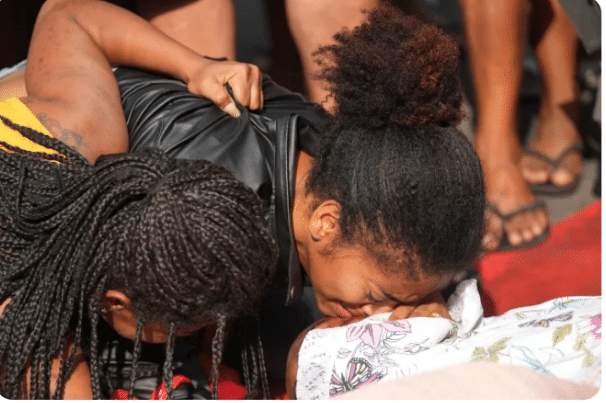
Families of victims, activists, and local representatives joined protests, mourning loved ones and condemning the police response as an indiscriminate massacre targeting vulnerable communities.

Chants against the state governor echoed throughout the streets, calling for immediate resignation and accountability, with demonstrators insisting justice must follow the deadly intervention.
Signs carried at demonstrations read, “Lives lost are not victories,” highlighting public perception that the operation was excessively violent and indiscriminate in its execution.
Human rights organizations condemned the operation, calling it disastrous and urging independent inquiries into the deaths to ensure accountability for the use of excessive force.
Judicial authorities demanded a detailed account of how the operation was conducted, questioning the chain of command and measures taken to prevent civilian casualties during the raid.
Officials accused federal authorities of abandoning the city in its fight against gang activity, framing the intervention as a necessary response to escalating criminal control in Rio neighborhoods.
The incident has triggered a nationwide debate over policing strategy, ethics, and the limits of using force in low-income urban areas where gang violence is prevalent.
Public outrage remains high, as residents emphasize the human cost of militarized operations, questioning whether such raids provide meaningful security or merely escalate violence.
Demonstrations persisted despite official statements defending the operation, with protesters insisting accountability is essential for both local leadership and broader governance standards.
Rights groups emphasized the need for structural reforms in policing, arguing that lethal force, as seen in the operation, should be a last resort rather than standard practice in poor neighborhoods.
Families of those killed urged authorities to acknowledge the tragedy, ensure transparent investigations, and seek alternatives to military-style interventions that harm residents.
The raid left communities traumatized, raising questions about morality and the effectiveness of interventions that result in large numbers of civilian deaths in urban neighborhoods.
Advocates stressed that preventing future tragedies requires independent investigations, structural reforms, and accountability measures to ensure excessive force is never repeated.
Local leaders called for the establishment of early-warning mechanisms to prevent unnecessary confrontations between police and residents during future law enforcement operations.
The ongoing debate over the governor’s responsibility continues, with citizens demanding clear explanations for decisions that led to the deadly operation and refusing to let the issue fade from attention.
Public outcry underscores growing concern about militarized policing, highlighting the need for policies that prioritize human life alongside security objectives in urban neighborhoods.
Community members affected by the operation continue mobilizing, pressing for recognition of suffering and interventions designed to protect residents rather than target them indiscriminately.
The tragedy has become a focal point for nationwide discussions on policing, human rights, and governance, with residents insisting that accountability cannot be delayed or ignored.
The federal government’s role has come under scrutiny, with critics claiming lack of coordination exacerbated the chaos and contributed to the large-scale fatalities seen during the operation.
Analysts warned that violent interventions such as the raid often deepen mistrust between law enforcement and residents, undermining long-term public safety and social cohesion in affected neighborhoods.
Community leaders emphasized the importance of dialogue and community policing as alternatives to raids, arguing that sustainable security requires cooperation rather than confrontation.
Reports of bodies found with evidence of brutality intensified criticism, prompting calls for forensic examinations and full transparency regarding the circumstances of each death.
International organizations have urged Brazil to uphold human rights standards, calling for impartial investigations into the operation and assurance that future policing respects civilian life.
The public debate now extends to national policy, as legislators consider reforms aimed at preventing excessive use of force and ensuring accountability in urban policing strategies.
Protesters continue to gather daily in affected neighborhoods, demonstrating their determination to hold local and state authorities responsible for decisions that led to unnecessary deaths.
Families of victims continue to share personal stories, humanizing the statistics and emphasizing the enduring emotional impact of the raid on entire communities.
Legal experts highlighted that failure to conduct thorough investigations could erode public trust in both the judicial system and law enforcement institutions tasked with maintaining order.
Community organizers stressed the need for emergency response systems that prioritize civilian safety and minimize lethal engagement during operations against criminal networks.
Observers noted that international attention on the Rio police raid may pressure authorities to implement long-term reforms, balancing law enforcement objectives with respect for human rights.
The incident has sparked reflection across society about how urban security policies can avoid repeating the mistakes witnessed in Rio, while protecting vulnerable populations in favelas.