

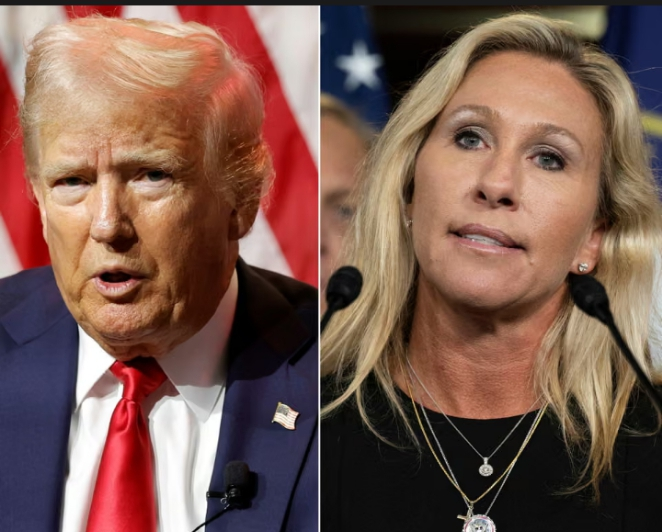
Republicans mocked Trump privately before eventually embracing him, according to Marjorie Taylor Greene, who says colleagues secretly ridiculed him long before publicly presenting themselves as loyal supporters.
Greene describes shifting loyalties across Capitol Hill, insisting that many Congressional Republicans drastically changed tone once Trump’s commanding position in the 2024 presidential nomination process became impossible for them to ignore.
She argues their sudden public praise reflected survival instincts rather than ideological agreement, noting that mockery behind closed doors quickly disappeared after Trump secured dominance and reclaimed control over party direction.
The Georgia conservative claims colleagues laughed at Trump’s speeches, exaggerated his gestures, parodied his wording, and dismissed his style privately while portraying unwavering respect whenever cameras appeared nearby.
According to Greene, this double standard was widespread and sustained, revealing what she considers a deeper problem inside Washington: leaders afraid to speak directly when political risks intensify.
She explains that GOP tensions worsened as lawmakers realized opposing Trump openly could trigger damaging consequences, including primary challenges, donor backlash, or negative attention from Trump’s highly active base.
Greene maintains that Trump loyalty fears shaped nearly every internal Republican interaction, keeping dissent quiet while members performed unity in public to avoid confrontations capable of harming their reelection prospects.
She accuses colleagues of mocking her in earlier years for defending Trump, only to later mirror her public position after the former president reestablished dominance during the competitive nomination period.
These shifts, she says, reflected political calculation rather than genuine alignment, with lawmakers selecting whichever stance minimized personal risk during a chaotic and heavily polarized period within Republican politics.
In Greene’s telling, the transformation was sudden: colleagues who joked about Trump privately soon appeared on television wearing red caps, repeating slogans, and reaffirming commitment to Trump’s platform.
She claims these reversals were dramatic yet predictable, as Congressional Republicans typically adjust rapidly to whichever figure secures grassroots loyalty, ensuring personal political safety above ideological consistency.
Greene’s criticism extends beyond personal frustration, highlighting what she views as a culture of fearfulness that prevents honest debate among lawmakers responsible for national decision-making.
She argues the environment discourages dissent, encouraging members to prioritize avoiding Trump’s anger over providing sincere assessments or offering productive internal disagreements crucial for party evolution.
According to Greene, this fear is magnified by Trump’s social media presence, especially his willingness to call out lawmakers personally, generating waves of attention that can derail political careers.
She believes the threat of such public targeting keeps members aligned, even when privately questioning Trump’s rhetoric or strategic direction, resulting in cautious behaviors and hidden frustrations.
Greene says these circumstances contribute to a political environment where truth is secondary, replaced by calculated displays of unity designed to maintain stability within the party’s fractured landscape.
She insists many lawmakers privately admit concerns about Trump’s unpredictability, yet they refuse to express these views externally due to worries about retaliation from influential grassroots activists.
Greene contends this pattern worsened sharply after Trump publicly criticized her, which she says unleashed hostility from supporters who previously viewed her as among his strongest allies.
She recounts receiving threats from both political sides at different times, noting a shift when she opposed Trump’s handling of documents tied to allegations involving the late financier Jeffrey Epstein.
Her disclosures emphasize how fragile alliances within the party became, as any sign of disagreement with Trump could instantly transform supportive voices into critics, intensifying personal vulnerability.
Greene claims she reported hundreds of threats to officials, arguing that no member should face such dangers simply for holding differing perspectives within a party supposedly committed to open discussion.
She says Trump’s labeling her a traitor escalated tensions further, triggering new waves of aggression from online groups that previously praised her loyalty, revealing the volatility of political loyalties.
In her perspective, the moment demonstrated how quickly Trump loyalty fears shape behavior, influencing not only colleagues’ decisions but also the reactions of politically energized supporters nationwide.
Greene portrays the environment as emotionally exhausting, arguing that politics should allow disagreements without provoking harassment, intimidation, or hostility toward lawmakers or their families.
She has expressed disappointment that her concerns about Epstein survivors became political flashpoints rather than opportunities for shared commitment to accountability and justice across party lines.
Greene suggests her stance disrupted expectations from Trump-aligned Republicans who assumed unwavering agreement from her, resulting in tensions that redefined her relationship with the former president.
She believes such situations reveal the danger of unquestioned loyalty, arguing that leaders must be challenged respectfully when necessary, especially on sensitive topics involving legal processes and public trust.
Greene says the reluctance of Congressional Republicans to confront difficult topics openly stems from a desire to avoid public conflict, even when evidence suggests discussions would benefit the nation.
Her interview underscores deep divisions inside the GOP, with lawmakers trapped between personal convictions and political realities shaped by Trump’s continued dominance among conservative voters.
She argues that Republicans mocked Trump privately because they underestimated his staying power, and when proven wrong, they adapted their public stance to maintain relevance and influence.
Greene notes such behavior erodes authenticity within political leadership, leaving voters uncertain about lawmakers’ true beliefs and weakening accountability at a moment requiring strong, transparent governance.
According to her, the party must confront this internal conflict, acknowledging differences openly instead of masking them through forced unity or escalating hostility toward dissenting members.
She believes transparency fosters trust, while secrecy encourages resentment and confusion, especially when lawmakers portray public loyalty while doubting leadership choices behind closed doors.
Greene warns that continuing this pattern risks long-term instability within Republican politics, as members struggle to balance grassroots expectations with national responsibilities requiring consistent, principled decision-making.
Her message suggests that meaningful progress requires courage from lawmakers willing to express authentic viewpoints, even when uncertain about potential fallout from influential party figures.
Greene says such courage is essential if the GOP hopes to rebuild cohesion disrupted by years of internal clashes, shifting alliances, and persistent uncertainties about future leadership directions.
She contends that avoiding difficult conversations only prolongs dysfunction, preventing the party from addressing strategic challenges that determine policy direction and electoral competitiveness nationwide.
According to Greene, frank dialogue could clarify expectations, reduce misunderstandings, and strengthen cooperation, but fear continues undermining the willingness of many lawmakers to participate fully.
She emphasizes that the issue extends beyond personal disputes, affecting the broader capacity of government to function effectively during increasingly polarized political times.
Greene hopes her comments encourage reflection among colleagues, pushing them to consider how private mockery and public alignment undermine credibility and weaken the public’s trust in representative institutions.
She argues lawmakers owe the public honesty, even when it risks backlash, because democracy thrives when leaders speak sincerely rather than crafting positions solely for political preservation.
In her view, acknowledging mistakes or disagreements should not be seen as betrayal but as evidence of integrity, strengthening both personal accountability and collective trust within the party.
Greene believes lasting reform requires confronting the culture that allowed Republicans to mock Trump privately while supporting him publicly, revealing inconsistencies shaping national discourse.
Her criticism signals deeper frustrations with a system where political pressure overshadows convictions, leaving leaders navigating unpredictable dynamics dictated by external reactions rather than thoughtful decisions.
She warns that the cycle will continue unless the party makes space for principled disagreement without branding members as traitors or undermining their safety through aggressive rhetoric.
Greene concludes that a healthier political environment requires courage, transparency, and a willingness to challenge harmful norms, even when doing so disrupts familiar systems within Washington.
Her interview continues to spark debate across the country, highlighting unresolved issues surrounding leadership, loyalty, accountability, and the ongoing struggle to define the future of Republican governance.
About The Author


