Reps step down agency’s 2026 budget review amid oversight standoff
The House of Representatives Committee on Science and Engineering has stepped down consideration of an agency’s 2026 budget proposal, escalating tensions between lawmakers and the leadership of the National Centre for Technology Management (NACETEM).
The development, which unfolded during a budget defence session in Abuja on Thursday, has triggered moves by the committee to recommend the removal of the agency’s Director-General, Dr Olushola Odusanya, and delete the centre’s allocation from the 2026 Appropriation Bill.
The decision came after the DG failed to appear before the committee to defend the proposal and did not transmit the required documents for legislative scrutiny, lawmakers disclosed.
The controversy surrounding how Reps step down agency’s 2026 budget review underscores recurring friction between ministries, departments and agencies (MDAs) and the National Assembly during appropriation cycles.
Lawmakers cite constitutional responsibility
Chairman of the committee, Mr Inuwa Garba, who represents Yamaltu/Deba Federal Constituency of Gombe State, described the agency’s absence as unacceptable, particularly during the critical budget defence period.
Garba emphasised that the legislature’s constitutional responsibility to scrutinise public expenditure cannot be treated with levity by presidential appointees.
He argued that since President Bola Tinubu personally appeared before the National Assembly to present the national budget, it was inappropriate for any appointee to disregard invitations to defend their agency’s spending plans.
According to him, the decision through which Reps step down agency’s 2026 budget review should serve as a warning to other heads of agencies who might contemplate similar conduct.
“No presidential appointee should consider an invitation from parliament optional,” Garba stated, adding that oversight remains a core pillar of democratic governance.
Beyond stepping down the review, the committee resolved to recommend the deletion of NACETEM’s allocation from the 2026 Appropriation Bill.
It also indicated its intention to formally recommend the immediate removal of the Director-General for failing to honour the legislative summons.
Lawmakers maintained that compliance with oversight procedures is not merely procedural but a statutory requirement tied to public accountability.
The escalation of events that led to the moment where Reps step down agency’s 2026 budget review reflects a broader pattern of strained engagement between MDAs and parliamentary committees.
In recent years, several agencies have faced criticism for late submissions, incomplete documentation, or delegating junior officials without prior communication.
Pattern of strained MDA-legislature relations
Budget defence sessions often reveal institutional bottlenecks, including delayed financial reporting and weak revenue performance.
Committees have, on multiple occasions, threatened to slash allocations or suspend budget consideration where compliance gaps were identified.
Legislative analysts note that the power of appropriation resides exclusively with the National Assembly under the Constitution. Consequently, MDAs must account for prior releases and justify new spending proposals before funds can be approved.
The decision in which Reps step down agency’s 2026 budget review reinforces the Assembly’s attempt to assert its oversight authority in the face of perceived administrative disregard.
In a related development during the same session, the committee expressed dissatisfaction with the 2025 budget performance and 2026 proposal of the Nigerian Council of Food Science and Technology (NiCFOST).
Lawmakers raised concerns over the council’s low Internally Generated Revenue (IGR), which reportedly stood at approximately N385,000 in 2024 and N285,860 in 2025.
Members of the panel described the figures as inadequate, particularly for a regulatory and professional body expected to demonstrate revenue sustainability.
They also queried the sharp rise in overhead costs, which increased from N95.40m in 2025 to N195.73m in the 2026 proposal — a jump of more than 100 per cent.
The registrar of NiCFOST, Mrs Veronica Nkechi-Eze, attributed the council’s limited revenue to its narrow funding base, which consists primarily of registration fees and annual professional dues.
She explained that the council charges N5,000 for registration and N2,000 as annual dues from about 10,000 members.
However, she acknowledged she had no immediate explanation for the spike in overhead costs, stating that the increase was not reflected in the original submissions to the Budget Office.
Garba reiterated that the committee’s actions should deter other agencies from undermining parliamentary authority.
Observers say the episode in which Reps step down agency’s 2026 budget review highlights systemic challenges in Nigeria’s public financial management framework.
Frequent disputes during budget defence season often delay the passage of appropriation bills and complicate fiscal planning timelines.
Public finance experts argue that stronger institutional coordination between MDAs and legislative committees could reduce such conflicts and enhance efficiency in budget processing.
The removal of an agency’s allocation from the Appropriation Bill could have operational consequences, particularly if not resolved before the final harmonisation stage.
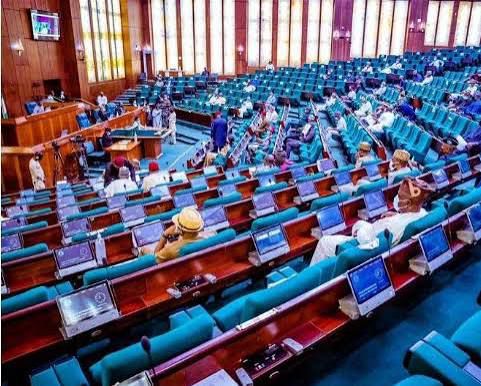
However, legislative aides note that committees often use such measures as leverage to secure compliance before final plenary approval.
The decision through which Reps step down agency’s 2026 budget review may therefore open the door for renewed engagement if the agency leadership responds promptly.
For now, the development sends a clear message about the importance of transparency, documentation, and responsiveness during legislative scrutiny.
At the heart of the dispute lies the broader question of institutional accountability within Nigeria’s governance architecture.
The Constitution empowers the National Assembly to ensure that public funds are spent efficiently and in accordance with approved estimates.
When agencies fail to present detailed justifications or appear before committees, lawmakers argue that it weakens democratic oversight.
The unfolding situation where Reps step down agency’s 2026 budget review reflects the legislature’s resolve to reinforce compliance standards ahead of the 2026 fiscal year.
As the appropriation process continues, attention will focus on whether affected agencies regularise their engagement with the committee and provide the necessary documentation.
With budget scrutiny intensifying, stakeholders expect further developments in the coming days as lawmakers deliberate on final recommendations.
About The Author