RAF specialists have been deployed to Belgium after drone incursions caused major disruptions at Brussels and Liège airports, marking a serious escalation in Europe’s hybrid warfare threats.
The United Kingdom responded quickly, demonstrating its unwavering commitment to NATO allies by sending its elite specialists equipped with sophisticated drone-detection systems and neutralization capabilities for support.
Flights were halted at Brussels and Liège airports due to suspected Russian-backed drone activities. RAF specialists are now working closely with Belgian defense officials to restore order.
The counter-uncrewed aerial systems unit, led by RAF specialists, brings advanced technologies capable of detecting, tracking, and neutralizing enemy drones across both civilian and restricted military airspace zones.
Sir Richard Knighton, Britain’s Chief of the Air Staff, confirmed that RAF specialists were mobilized after Belgium requested NATO assistance, emphasizing unity and readiness among European defense partners.
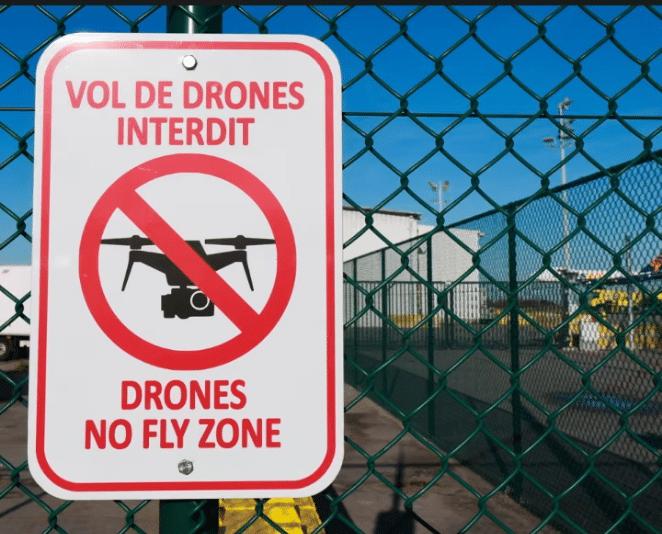
Belgium’s defense ministry welcomed the immediate support, noting that RAF brought crucial expertise from years of operations combating aerial threats during global counter-insurgency and hybrid warfare missions.
Knighton explained that hybrid warfare requires a coordinated multinational response. RAF specialists’ deployment ensures NATO allies remain prepared against threats designed to destabilize vital infrastructure without traditional warfare.
Flights at Brussels and Liège airports resumed cautiously following countermeasures implemented by RAF specialists, whose detection systems identified and disrupted suspicious drone patterns targeting Belgian airspace corridors.
The United Kingdom’s decision to deploy RAF specialists follows similar actions by Germany and France, reflecting the strengthening cooperation among NATO allies against evolving security challenges.
Belgium has faced repeated drone incursions targeting power facilities and logistics centers. RAF specialists will provide real-time threat analysis, safeguarding airports and supporting military intelligence operations simultaneously.
Investigations suggest that the disruptive drones might originate from networks linked to Russia. RAF specialists now collaborate with Belgian intelligence to analyze recovered fragments and signal data.
Hybrid warfare continues to evolve, combining cyberattacks, disinformation, and drone incursions. RAF specialists are trained to operate across all domains—air, cyber, and intelligence—to counter complex hostile strategies.
The counter-uncrewed aerial systems unit remains central to this mission. The specialists coordinate with Belgian counterparts to enhance surveillance and create an integrated defensive network across critical air corridors.
Flights at Brussels and Liège airports represent vital European connections. Protecting them ensures both economic stability and the credibility of NATO allies against coordinated aerial and electronic interference operations.
Knighton warned that hybrid warfare seeks to undermine public confidence through subtle, repeated disruptions. RAF specialists therefore emphasize early detection, intelligence sharing, and resilient defense cooperation across Europe.
The United Kingdom’s Ministry of Defence praised RAF specialists for their rapid deployment, describing their contribution as essential to ensuring the safety of NATO allies’ civilian and military infrastructure.
Belgium’s Prime Minister, Alexander De Croo, publicly thanked the British government, acknowledging that RAF specialists provided critical capabilities that helped prevent further airport shutdowns and regional transport disruptions.
Meanwhile, Brussels and Liège airports introduced stricter airspace control zones, guided by recommendations from RAF specialists, combining radar enhancements and advanced drone neutralization countermeasures across surrounding areas.
The deployment symbolizes renewed unity among NATO allies at a time of increasing security concerns. RAF specialists embody practical cooperation and deterrence through real-time joint operations within Europe.
German Defence Minister Boris Pistorius linked the incidents to geopolitical tensions surrounding frozen Russian assets, emphasizing how hybrid warfare now merges military, economic, and information-based aggression tactics.
As part of ongoing collaboration, RAF specialists will remain stationed temporarily in Belgium, offering training to local air defense personnel on modern counter-drone interception and data-sharing techniques.
Knighton reiterated that the UK’s counter-uncrewed aerial systems unit remains at the forefront of NATO’s readiness strategy, adapting to rapidly changing hybrid warfare environments and emerging technologies.
This mission also highlights Britain’s investment in defense modernization. RAF specialists represent an evolving military capability essential for responding to unconventional threats and safeguarding international security interests.
RAF specialists play dual roles—protective and instructional—helping Belgium strengthen autonomous counter-drone capabilities while simultaneously demonstrating NATO’s ability to respond swiftly and decisively to aerial provocations.
The collaboration showcases technological precision. RAF specialists use high-frequency sensors, AI-supported radar interpretation, and rapid-deployment jammers designed to disrupt rogue drone communication signals instantly and safely.
Knighton stressed that hybrid warfare’s hallmark lies in ambiguity. RAF specialists confront this uncertainty through coordinated multinational intelligence efforts and unified strategic deterrence across NATO member states.
RAF specialists’ operations reinforce the European security framework by demonstrating the effectiveness of interoperability, knowledge exchange, and trust between partner nations under NATO’s shared defense structure.
Belgium’s defense spokesperson highlighted that collaboration with RAF specialists significantly enhanced national preparedness, enabling the country to respond proactively to any similar incidents targeting its infrastructure.
Reports indicate that counter-drone patrols coordinated by RAF specialists have already prevented potential incursions since their deployment, providing reassurance across Brussels and Liège airports’ extensive flight networks.
Beyond physical defense, RAF specialists contribute intelligence data into NATO’s central monitoring hub, strengthening predictive systems against drone swarm tactics and electronic signal interference attempts.
Hybrid warfare remains an expanding concern across Europe. RAF specialists serve as a critical deterrent, integrating new methods that counter aerial, digital, and psychological manipulation efforts simultaneously.
The British Parliament recently endorsed increased defense funding, ensuring RAF specialists and allied units can maintain technological superiority and sustain global security commitments alongside NATO allies.
Experts agree that this deployment marks a turning point in European counter-drone cooperation. RAF specialists symbolize operational excellence, adaptability, and solidarity in a complex, modern security landscape.
The integration of RAF specialists within Belgium’s defense response underscores trust among NATO allies and demonstrates an enduring collective determination to maintain peace and prevent regional destabilization.
Belgian officials confirmed that the joint mission with RAF specialists will transition into a permanent intelligence-sharing agreement, supporting NATO’s broader campaign to secure continental airspace from hybrid threats.
The counter-uncrewed aerial systems unit continues upgrading drone detection systems. RAF specialists are training Belgian teams to maintain continuity once British support gradually phases out after mission completion.
Knighton said that this cooperation serves as a blueprint for future NATO operations against hybrid warfare. RAF specialists exemplify the effectiveness of unity, readiness, and disciplined precision under pressure.
RAF specialists’ presence has restored operational confidence across Belgium. Their expertise ensures that Brussels and Liège airports remain symbols of European resilience against hostile hybrid and technological interference.
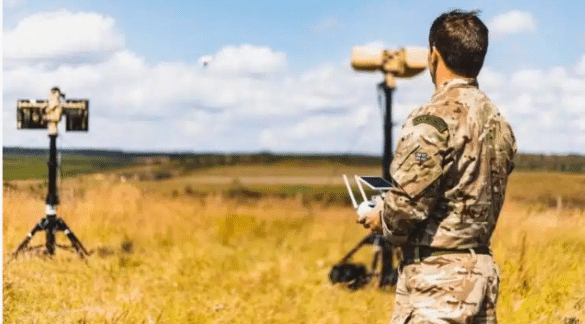
The successful intervention reaffirms Britain’s strategic vision within NATO. RAF provide vital leadership, innovation, and deterrence—values essential to maintaining transatlantic stability and mutual trust among allies.
RAF specialists will return home after completing their mission, but their legacy will continue shaping Europe’s counter-drone strategies and strengthening NATO’s response framework for future hybrid warfare challenges.
Ultimately, the deployment of RAF represents more than a tactical success—it is a testament to international solidarity, technological mastery, and the enduring commitment to collective European defense.