

The Presidency has fired back at Dino Melaye over his criticism of Nigeria’s debt policy, defending Tinubu’s government and borrowing strategy.
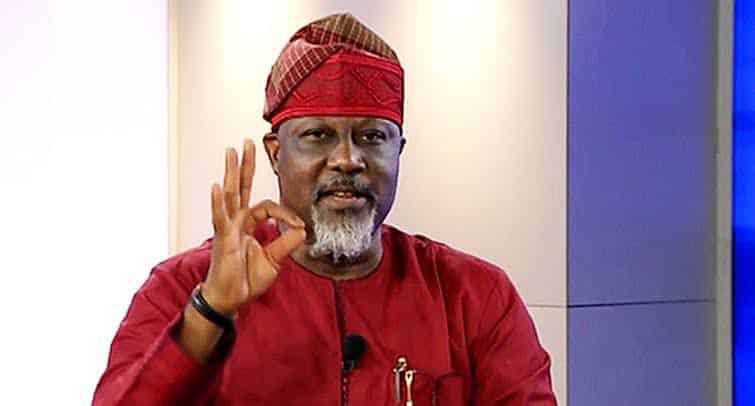
Former Senator Dino Melaye has come under strong rebuke from the Presidency after his recent comments criticizing the financial policies of President Bola Tinubu’s administration.
Melaye, who has long been a vocal political figure in Nigeria, raised alarm over what he described as an “unsustainable” borrowing trend by the federal government.
During a recent television interview, Melaye suggested that Nigeria’s debt situation had become so dire that the government might soon be forced to borrow from local fintech firms such as OPay and Moniepoint if current borrowing patterns continued.
He specifically questioned the rationale behind the government’s recent request for $1.7 billion from the World Bank, highlighting that the National Assembly had already approved about $21 billion in external borrowing in the current fiscal year.
Melaye also took the opportunity to promote his political party, the African Democratic Congress (ADC), asserting, “I’m a proud member of the ADC, and by the grace of God, that is the party that will unseat Tinubu and send the APC out of the Villa come May 29, 2027.
“There are critical issues bedevilling this country: hunger, malnutrition, misgovernance, and maladministration.”
The Presidency responded promptly to Melaye’s remarks, with Minister of Youth and Sports Development, Sunday Dare, condemning the former senator’s statements as theatrical and misleading.
Dare said, “Barrister Dino Melaye has once again traded substance for spectacle. In his latest television appearance, he cast himself as Nigeria’s chief political entertainer, tossing around cheap jabs about ‘borrowing from OPay and Moniepoint.’”
Dare clarified that the nation’s debt situation is more nuanced than Melaye portrayed.
According to him, “Nigeria’s total public debt stood at ₦149.39 trillion as of March 31, 2025, according to the Debt Management Office.
“The increase from last year is not a result of reckless borrowing but largely the arithmetic of naira depreciation.
“When the currency adjusts, the naira value of existing external debt rises—whether or not new loans are taken.”
The minister further noted that Nigeria’s debt-to-GDP ratio, at 40–45%, is relatively moderate compared to other African economies such as South Africa, which stands at 70%, and Ghana, which exceeds 90%.
“The real challenge for Nigeria is revenue mobilization, not runaway borrowing.
“Encouragingly, government revenues are improving, which strengthens our capacity to meet debt obligations and finance development projects,” Dare added.
Highlighting the strategic role of borrowing, the minister explained, “Borrowing is a legitimate and necessary tool for financing growth, critical infrastructure, and reform initiatives.
“What matters is the sustainability of debt, not sensational headlines or political point-scoring.”
He concluded by asserting that Melaye’s commentary reflects a lack of understanding of basic economics, stating, “Until he acquaints himself with these fundamentals, his statements will continue to serve as entertainment rather than enlightenment.”
About The Author


