The NCAA and NSIB investigations confirm that the Air Peace co-pilot was not at fault during the July 13 runway excursion at Port Harcourt Airport.
The Nigerian Civil Aviation Authority (NCAA) has defended its decision to clear the Air Peace co-pilot, David Bernard, following the recent runway excursion at Port Harcourt International Airport.
According to the regulatory body, both its internal investigation and the preliminary findings of the Nigerian Safety Investigation Bureau (NSIB) found no evidence of wrongdoing on the part of the first officer.
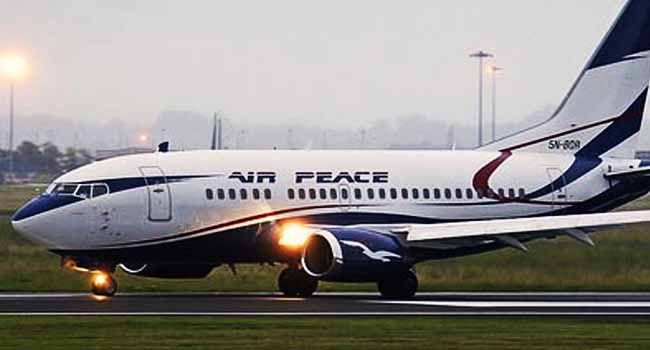
The incident occurred on July 13, 2025, when an Air Peace aircraft veered off the runway during landing.
The NSIB’s preliminary report revealed that the plane touched down 2,264 metres from the runway threshold, significantly beyond the recommended touchdown zone.
It eventually came to a stop 209 metres into the clearway, fortunately avoiding any serious injuries.
Early toxicological tests conducted on the flight crew indicated the presence of certain substances, including traces suggestive of alcohol consumption.
In addition, one cabin crew member tested positive for THC, the psychoactive component of cannabis.
However, both the airline and the crew disputed these results, maintaining that all personnel strictly followed aviation safety protocols.
Addressing growing public concerns, the NCAA emphasized that its decision to clear the Air Peace co-pilot was based on due process and careful review of all available evidence.
Speaking during a live session on X Space, Michael Achimugu, Director of Public Affairs and Consumer Protection at the NCAA, stated that Bernard was not found culpable by either the NCAA or the NSIB.
“I learnt yesterday that the NCAA was being blamed for giving clearance to the first officer.
“But based on our internal findings and the NSIB’s preliminary report, the co-pilot was not found culpable,” Achimugu said.
During the critical moments of the flight, the Air Peace co-pilot had advised the captain to perform a go-around—a standard safety maneuver to abort landing when conditions are unsafe.
The captain, however, did not follow this advice, which contributed to the runway excursion.
The NCAA highlighted that Bernard’s timely recommendation demonstrated adherence to safety protocols and reinforced his professional judgment.
“Given that, it would be unfair to keep someone grounded for a year while investigations continue if there is no evidence of misconduct,” Achimugu added, emphasizing that regulatory decisions must balance accountability with fairness.
The NCAA also confirmed that it remains in communication with the NSIB to obtain a comprehensive report.
“I have spoken with their team and am awaiting detailed feedback. Transparency and accountability are our priorities,” Achimugu noted.
Aviation experts observing the incident have pointed out that runway excursions are often the result of multiple factors, including approach technique, weather conditions, and crew coordination.
While toxicology results can raise concerns, isolating individual responsibility is critical before taking punitive action.
The case of the Air Peace co-pilot underscores the importance of following due process in such investigations.
Air Peace, one of Nigeria’s leading airlines, affirmed that its crew operates under strict safety protocols.
The airline expressed confidence in the NCAA’s decision, emphasizing that Bernard’s actions were consistent with global aviation best practices.
In particular, the first officer’s advice to execute a go-around was highlighted as a demonstration of sound judgment in a high-pressure situation.
The incident has also reignited discussions about regulatory oversight, crew safety, and the role of investigative bodies like the NSIB.
Analysts argue that timely communication and transparency during investigations help prevent misinformation and maintain public trust.
By publicly clarifying the exoneration of the Air Peace co-pilot, the NCAA reinforced its commitment to both aviation safety and the fair treatment of personnel.
The clearance of the Air Peace co-pilot highlights the necessity of thorough investigations, adherence to due process, and recognition of professional conduct in complex aviation scenarios.
Both the NCAA and NSIB continue to collaborate to ensure that incidents like the Port Harcourt runway excursion are fully understood and that lessons learned contribute to stronger safety protocols in Nigeria’s aviation industry.
About The Author