Bolivia stands on the edge of a dramatic transformation as voters prepare for a run-off election that signals a historic political shift in Bolivia and the definitive end of socialism.
For the first time in nearly two decades, Bolivians will choose between two pro-market candidates — conservative former president Jorge Quiroga and centrist economist Rodrigo Paz — both offering different paths forward.
The Bolivia election 2025 represents not only a change in leadership but also a turning point in national identity after years of populist and socialist governance.
“This is not just another election,” said Carlos Mendoza, a 45-year-old shop owner in La Paz. “It’s our chance to start again and rebuild faith in politics.”
Polls suggest a tight race, with Jorge Quiroga holding a narrow lead. Both he and Rodrigo Paz have pledged to repair relations with the United States after two decades of strained diplomacy.
The political shift in Bolivia takes place amid an unprecedented economic crisis. Inflation above 20 percent, fuel shortages, and dwindling foreign reserves have deepened public frustration and widened inequality.

“We have no dollars, everything costs more, and fuel is running out,” said vendor Felicidad Flores. “We can’t survive like this anymore. Something must change.”
The Bolivia election 2025 has already marked the collapse of the once-dominant Movement Towards Socialism (MAS), which failed to reach the second round for the first time since 2006.
MAS’s downfall underscores the end of socialism as a political force in Bolivia, with voters seeking pragmatic solutions over ideology after years of unfulfilled promises and economic decline.
“The model that worked under Morales no longer fits,” said analyst Daniela Osorio. “The political shift in Bolivia is not just ideological — it’s born from necessity and fatigue.”
Bolivia was once South America’s fastest-growing economy, but years of subsidies, underinvestment, and corruption have eroded its fiscal foundation. Queues at petrol stations and soaring prices now define daily life.
Driver Javier Quispe described the crisis bluntly: “We’re worse off than before. Even finding basic goods has become a struggle. The people have lost patience.”
For analysts, whoever wins this Bolivia election 2025 will face the immediate challenge of restoring public trust and stabilizing the economy before unrest takes root.
Glaeldys Gonzalez of the International Crisis Group said, “If the next president cannot provide relief quickly, the streets will erupt again.”
Jorge Quiroga, who governed briefly from 2001 to 2002, has promised sweeping reforms, including the privatization of loss-making state firms and the attraction of foreign investment.
“Bolivia cannot continue living in a fantasy of subsidies,” Quiroga declared during a rally. “We need to open up and compete again on the world stage.”
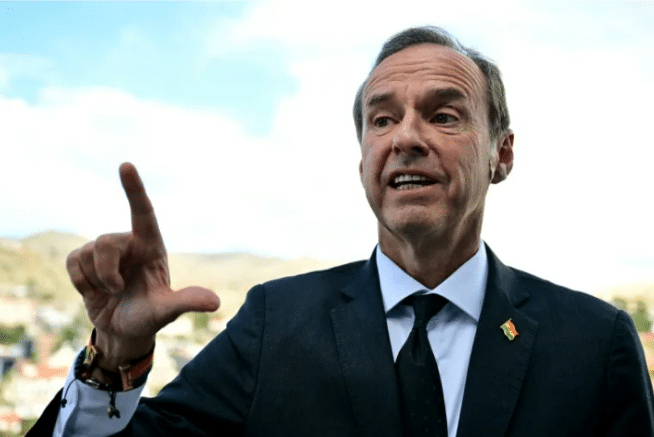
In contrast, Rodrigo Paz, an economist and senator, proposes a gradual reform strategy he calls “capitalism for all” — maintaining some social protections while decentralizing spending to empower local governments.
“We can’t abandon the poor in the name of reform,” Paz said. “But we also can’t sustain a system that’s clearly collapsing. Balance is essential.”
That contrast captures the tension behind the political shift in Bolivia — a struggle to blend fiscal discipline with compassion after decades of polarized politics.
Both candidates have courted Washington’s favor, signaling a diplomatic reset. US Secretary of State Marco Rubio described the vote as “a transformative opportunity to renew bilateral relations based on trust and shared prosperity.”
Observers note that improved ties with the US could attract investors, but they warn against returning to the neoliberal patterns of the 1990s that deepened inequality.
“The political shift in Bolivia must not repeat past mistakes,” said sociologist Maria Gutierrez. “Reform must be inclusive or the cycle of disillusionment will continue.”
Despite being constitutionally barred from running, Evo Morales remains a potent symbol. Accused of human trafficking — a charge he denies — he has urged supporters to boycott the election.
“Even weakened, Morales remains capable of mobilizing resistance,” noted Osorio. “His presence alone complicates the transition to a post-socialist reality.”
Nearly eight million Bolivians are eligible to vote, and participation is mandatory. Polls open at 8am local time, with results expected by evening.
Economist Juan Rojas of Cochabamba University warned that the end of socialism does not guarantee economic revival. “Without transparency and clear planning, change could turn chaotic,” he said.
Still, optimism persists that the political shift in Bolivia will deliver a more stable and pragmatic leadership model. Citizens across La Paz, Cochabamba, and Santa Cruz express cautious hope for renewal.
“I don’t care about left or right anymore,” said teacher Andrea Molina. “We just want jobs, security, and dignity. That’s all people are asking for.”
International observers describe this Bolivia election 2025 as one of Latin America’s most consequential political events, capable of redefining alliances across the region.
If successful, the political shift in Bolivia could inspire neighboring countries to reconsider populism’s legacy and reimagine governance in a post-crisis era.
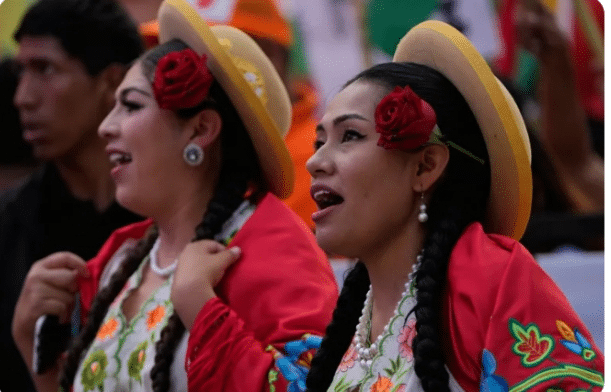
As one campaign banner in La Paz read: “Our future begins again.” It captures the sentiment of a nation that is weary but willing to hope once more.
Whether led by Jorge Quiroga or Rodrigo Paz, the next administration faces the monumental task of converting aspiration into reality and making the political shift in Bolivia truly meaningful for its people.
About The Author