Inspector–General of Police, Olatunji Disu, paid glowing tribute to his predecessor, Olukayode Egbetokun (retd.), during a ceremonial pullout parade in Abuja, marking the end of his long and distinguished service in the Nigeria Police Force.
The ceremony, held at the Force Headquarters, drew prominent personalities from across the country’s security and political landscape.
Senior government officials, service chiefs, traditional leaders, lawmakers, and both serving and retired police officers gathered to celebrate the career of the former police chief.
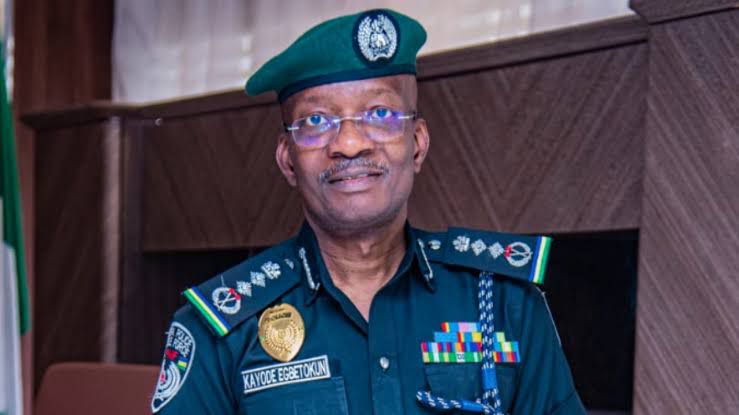
The event symbolised the official closing chapter of Egbetokun’s more than three-decade career in law enforcement.
Addressing the audience, Disu described his predecessor as a disciplined professional whose leadership helped redefine modern policing in Nigeria.
According to him, the Egbetokun legacy is anchored on strategic reforms, improved operational capacity, and a renewed focus on professionalism within the police institution.
The Inspector–General explained that Egbetokun’s administration introduced key reforms aimed at strengthening the efficiency of the Nigeria Police Force while also restoring public confidence in the institution.
He noted that the former police chief consistently emphasised intelligence-led operations, improved training systems, and stronger internal accountability mechanisms.
Disu stated that these initiatives significantly improved the way policing responsibilities were handled across the country.
He added that the reforms helped reposition the force to respond more effectively to emerging security threats, including cybercrime, organised criminal networks, and other modern security challenges.
Observers at the ceremony also noted the significance of the event itself. The pullout parade represented a rare honour for a retired police chief.
It was reportedly the first time in about sixteen years that such recognition was accorded to an outgoing Inspector–General of Police who retired from an active command position.
The last time a similar ceremonial exit was organised was in 2010 for a former police chief, making the occasion both symbolic and historic for the Nigeria Police Force.
Many attendees described the ceremony as a fitting tribute to a leader whose tenure influenced several structural improvements within the force.
While reflecting on the professional journey of the retired police chief, Disu highlighted Egbetokun’s academic and strategic background, noting that he combined operational experience with intellectual depth.
The former police boss holds a doctorate in Peace and Security Studies, an achievement that many believe influenced his approach to security management and policy reforms.
According to Disu, the Egbetokun legacy also reflects a strong belief in knowledge-driven policing.
He said the retired IGP consistently encouraged officers to pursue education, training, and professional development in order to strengthen the institutional capacity of the police.
The current police chief also recalled a significant moment in their shared professional history.
Many years ago, both officers served together at the Lagos State Government House during the administration of then Governor Bola Ahmed Tinubu.
At the time, Egbetokun served as Chief Security Officer to the governor while Disu worked as Aide-de-Camp.
Disu described that period as one of intense responsibility and professional collaboration, adding that neither of them imagined that their careers would later intersect again at the highest level of police leadership in Nigeria.
Reflecting on the broader impact of the retired police chief’s tenure, Disu noted that the Egbetokun legacy would remain visible in institutional reforms introduced during his administration.
Among these were the strengthening of the intelligence structure of the force and the expansion of operational units across different regions of the country.
During his own farewell address, Egbetokun expressed appreciation to the officers and institutions that supported him throughout his career.
He emphasised that leadership within the Nigeria Police Force requires collective commitment, discipline, and continuity.
The retired police chief explained that one of his priorities while in office was to ensure that the institution developed stronger internal processes capable of addressing contemporary security challenges.
He pointed to several initiatives introduced during his tenure.
These included the expansion of the police cybercrime centre to improve digital investigations nationwide and the creation of specialised operational units to respond rapidly to security incidents.
In addition, he highlighted the establishment of new police mobile squadrons, area commands, and divisions aimed at bringing policing services closer to communities across Nigeria.
Infrastructure development also formed part of the achievements associated with the Egbetokun legacy.
During his tenure, several police facilities were either completed or upgraded across different states, improving working conditions for officers and enhancing operational readiness.
The retired IGP also acknowledged the support he received from the federal government, the National Assembly, security agencies, and international partners during his years in service.
Expressing gratitude to his family and colleagues, he described policing as more than a career, calling it a lifelong commitment to national service.
Although he has now stepped away from active duty, he affirmed that his dedication to the Nigeria Police Force remains unwavering.
Several dignitaries who attended the ceremony also offered tributes. Former police leaders commended Egbetokun’s contributions to institutional growth and urged the current leadership to sustain the reforms introduced during his tenure.
For many observers, the ceremony served not only as a farewell event but also as a reminder of the importance of continuity in public institutions.
As the Nigeria Police Force moves forward under new leadership, the Egbetokun legacy continues to shape conversations about reform, professionalism, and the future direction of policing in the country.
Ireport247news