


Peter Obi exits ADC amid crisis, citing Nigeria toxic politics and internal battles shaking Nigeria’s opposition ahead of 2027.
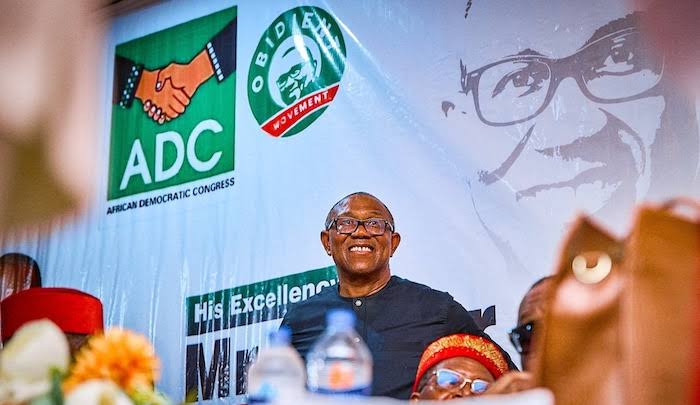
Former presidential candidate, Peter Obi, has announced his resignation from the African Democratic Congress (ADC), raising concerns over what he described as an increasingly toxic political environment and growing internal crises within party structures.
In a deeply reflective message shared via his official X (formerly Twitter) account, Obi opened up on the personal and political struggles that informed his decision, offering rare insight into the emotional toll of navigating Nigeria’s complex political landscape.
A decision rooted in principle, not personal conflict
Obi clarified that his exit from the party was not triggered by personal grievances with its leadership. He specifically acknowledged the roles of party chairman David Mark and former Vice President Atiku Abubakar, emphasizing that neither had treated him unfairly.
Instead, he pointed to broader systemic challenges, alleging that the same forces that destabilized the Labour Party Nigeria—his former political platform—are now resurfacing within the ADC.
According to Obi, these issues include persistent internal disputes, legal battles, mistrust among stakeholders, and a shift away from issue-based politics toward power struggles and exclusion.
“A society that punishes integrity”
In his statement, he wrote:
“I woke up this morning after my church service with a deeply reflective heart, and despite every constraint, I felt compelled to share these thoughts with you.
“Many people do not truly understand the silent pains some of us carry daily—the private struggles, emotional burdens, and quiet battles we face while trying to survive and serve sincerely in difficult circumstances.
“We now live in an environment that has become increasingly toxic, where the very system that should protect and create opportunities for decent living often works against the people—a society where intimidation, insecurity, endless scrutiny, and discouragement have become normal.
“More painful is when some of those you associate with, believing you would find understanding and solidarity among them, become part of the pressure you face. Some who publicly identify with you privately distance themselves or join in unfair criticism.
“We live in a society where humility is mistaken for weakness, respect is seen as a lack of courage, and compassion is treated as foolishness—a system where treating people equally is questioned simply because you refuse to worship status, tribe, class, or power.
“Personally, I have never looked down on anyone except to uplift them. I have never used privilege, position, or resources to oppress others, intimidate the weak, or make people feel small. To me, leadership has always been about service, sacrifice, and helping others rise.
“Let me state clearly: my decision to leave the ADC is not because our highly respected Chairman, Senator David Mark, treated me badly, nor because my leader and elder brother, Alhaji Atiku Abubakar, or any other respected leaders did anything personally wrong to me. I will continue to respect them.
“However, the same Nigerian state and its agents that created unnecessary crises and hostility within the Labour Party that forced me to leave now appear to be finding their way into the ADC, with endless court cases, internal battles, suspicion, and division, instead of focusing on deeper national problems and playing politics built more on control and exclusion than on service and nation-building.
“Even within spaces where one labours sincerely, one is sometimes treated like an outsider in one’s own home. You and your team become easy targets for every failure, frustration, or misunderstanding, as though honest contribution has become a favour being tolerated rather than appreciated.
“And when you choose to leave so that those you are leaving can have peace, and you step out into the cold, you are still maligned and your character is questioned. Despite all your efforts to continue working for a better Nigeria and engaging people with sincerity and goodwill, those who do not wish you well continue to attack your character and question your intentions.
“There are moments I ask God in prayer: Why is doing the right thing often misconstrued as wrongdoing in our country? Why is integrity not valued? Why is the prudent management of resources, especially when invested in critical areas like education and healthcare, wrongly labelled as stinginess? Why are humility and obedience to the rule of law often taken to be weakness rather than discipline?
“Let me assure all that I am not desperate to be President, Vice President, or Senate President. I am desperate to see a society that can console a mother whose child has been kidnapped or killed while going to school or work.
“I am desperate to see a Nigeria where people will not live in IDP camps but in their homes. I am desperate for a country where Nigerian citizens do not go to bed hungry, not knowing where their next meal will come from.
“Yet, despite everything, I remain resolute. I firmly believe that Nigeria can still become a country with competent leadership based on justice, compassion, and equal opportunity for all.”
What next for Peter Obi?
While Obi did not announce his next political move, his statement leaves open the possibility of continued engagement in national discourse and reform advocacy.
As the political landscape gradually shifts toward the 2027 elections, his next steps are likely to attract significant attention from supporters, critics, and stakeholders across the country.
About The Author
