

Pakistan Afghanistan shelling kills civilians after mortar fire struck villages in eastern Afghanistan overnight, killing children and civilians as tensions between the two neighbours escalate following weeks of cross-border fighting.
Afghan officials confirmed the Pakistan Afghanistan shelling kills civilians incident occurred in Khost province when mortar rounds landed in residential areas, triggering anger among residents already suffering from rising insecurity.
Authorities in Khost province reported that three children and one woman died during the shelling in the Gurbuz district after Pakistani forces allegedly fired multiple mortar rounds across the border late Sunday.
A provincial spokesperson explained that the attack struck Nari village shortly after midnight, destroying parts of civilian homes and killing a child and woman instantly during what local authorities described as “indiscriminate shelling”.
Officials later confirmed that two additional children were killed in another location within the Afghan Dubai area of Khost province after additional mortar shells struck nearby residential structures.
Local residents said families rushed victims to nearby clinics following the blasts, while community members gathered to mourn the dead and assess damage caused by the explosions in residential neighbourhoods.
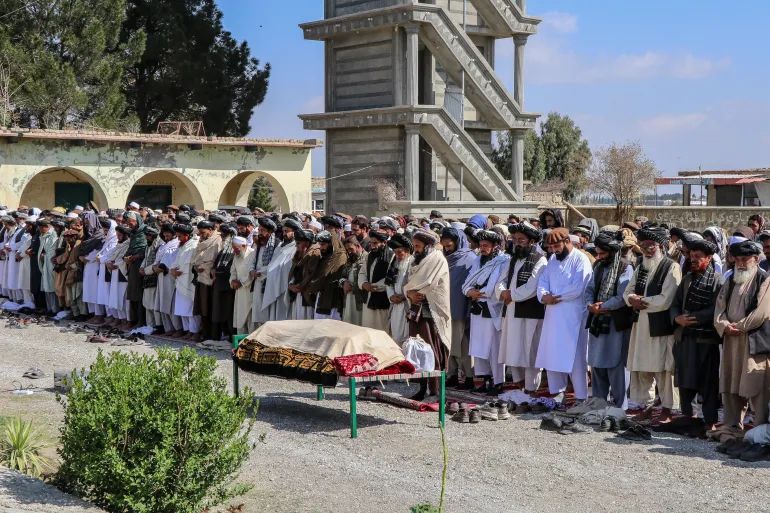
Government officials described the incident as part of escalating border tensions that have intensified during recent weeks between Afghan authorities and Pakistani forces along their shared mountainous frontier.
Afghan authorities said cross-border clashes during the past week alone have killed at least eighteen civilians, raising concerns among humanitarian groups about worsening conditions for ordinary residents.
The latest violence reflects a deteriorating security environment between the two neighbouring countries as accusations and counter-accusations continue over responsibility for attacks and militant activities.
Pakistan has repeatedly accused Afghanistan of harbouring fighters linked to Tehreek-e-Taliban Pakistan, a militant organisation responsible for several attacks inside Pakistani territory in recent years.
Afghanistan’s Taliban authorities have strongly denied those accusations, insisting that they do not support cross-border militant operations and rejecting Islamabad’s claims as politically motivated.
The conflict has grown increasingly volatile since late February, when heavy fighting erupted following air attacks that Afghan officials said killed civilians inside Afghan territory.
In response to those alleged strikes, Afghanistan launched retaliatory cross-border attacks targeting Pakistani positions along the border, significantly escalating the confrontation between the two sides.
The retaliatory operations sparked one of the most intense periods of fighting between the neighbours in recent years, raising fears that the confrontation could expand into a broader regional crisis.
Pakistan later declared what officials described as “open war” against Afghan authorities, signalling a major escalation in rhetoric as well as military operations across the border.
Reports suggested that Pakistani forces subsequently targeted areas near Afghanistan’s capital while continuing air and artillery attacks against locations believed to host militant groups.
The growing conflict has also forced thousands of Afghan civilians to flee their homes, creating a humanitarian emergency in border provinces already struggling with poverty and food shortages.
International humanitarian agencies have warned that the situation could deteriorate rapidly if hostilities continue without diplomatic intervention or a negotiated ceasefire agreement.
The United Nations World Food Programme announced it had begun mobilising emergency assistance for families displaced by the escalating conflict in eastern Afghanistan.
Officials from the organisation said more than twenty thousand families have already been forced to abandon their homes because of the ongoing violence.
Humanitarian workers warned that many displaced families urgently need food supplies, shelter materials and medical assistance to survive the coming weeks.
The World Food Programme’s country director said the organisation was preparing immediate food aid deliveries to prevent worsening hunger among vulnerable families affected by the fighting.
He warned that Afghanistan was already facing severe economic hardship and food insecurity even before the latest escalation in cross-border violence.
According to humanitarian officials, additional instability could push millions more people into hunger across Afghanistan, where the population already faces widespread poverty.
Aid agencies also expressed concern that the conflict risks destabilising a region already under pressure from multiple geopolitical tensions and economic disruptions.
The violence comes amid broader regional uncertainty linked to escalating tensions in the Middle East and disruptions to global energy markets.
Observers say the overlapping crises could create additional economic and political strain on neighbouring countries struggling to maintain stability.
Diplomatic efforts are now underway to reduce tensions between Afghanistan and Pakistan before the conflict escalates further.
China announced that its special envoy had spent the past week mediating discussions between officials from both countries.
Chinese authorities said their diplomatic initiative aimed to encourage an immediate ceasefire and open dialogue between Kabul and Islamabad.
Beijing confirmed that special envoy Yue Xiaoyong travelled between both countries attempting to ease tensions and encourage negotiations.
A spokesperson for China’s Ministry of Foreign Affairs said Beijing has consistently worked through diplomatic channels to reduce conflict between Afghanistan and Pakistan.
Chinese officials stressed that stability along the Afghanistan-Pakistan border remains critical for regional security and economic development.
Analysts note that China has strong strategic interests in preventing further instability across Central and South Asia.
The region plays an important role in Beijing’s economic connectivity initiatives and broader geopolitical strategy.
Despite mediation attempts, military activity along the border has continued, with both sides accusing each other of provoking violence.
Afghan officials insist Pakistan initiated the latest attacks, while Pakistani authorities argue that militant groups based in Afghanistan continue to threaten their security.
The conflicting narratives have made diplomatic resolution increasingly complicated as distrust grows between the two governments.
Local communities along the border remain the most vulnerable to the escalating confrontation.
Villagers in affected regions say they live in constant fear of sudden shelling and cross-border attacks that can erupt without warning.
Many families have begun relocating temporarily to safer areas, though limited resources make relocation difficult for most residents.
Regional security analysts warn that without a ceasefire agreement, the risk of further civilian casualties remains high.
They argue that both countries face pressure to demonstrate military strength while also avoiding a prolonged conflict that could destabilise the region.
Read also: UK plans to deploy mine-hunting drones to Strait of Hormuz instead of warships amid escalation fears
For Afghanistan’s civilian population, however, the immediate concern remains survival amid intensifying violence and humanitarian challenges.
Funeral prayers held for the victims in Khost province reflected the grief felt by communities already exhausted by years of war and instability.
Residents called on authorities and international mediators to intervene quickly before more innocent lives are lost.
As diplomatic talks continue behind closed doors, families in Afghanistan’s border villages remain uncertain about what the coming days may bring.
The latest tragedy underscores the urgent need for dialogue, restraint and international mediation to prevent further civilian suffering.
What do you think should happen next between Afghanistan and Pakistan — diplomacy or military pressure?
About The Author


