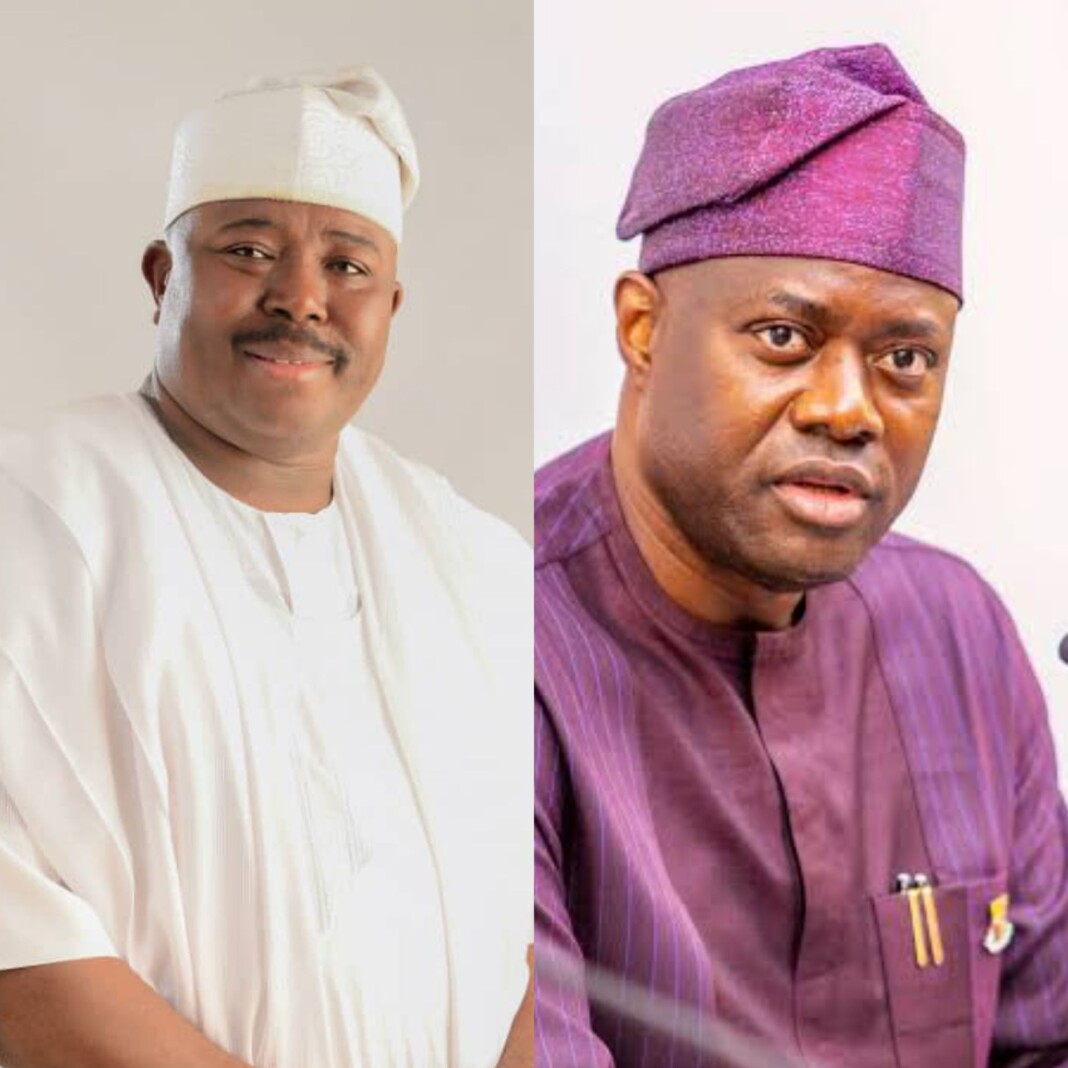

Makinde, who failed woefully to reset Oyo health sector in over seven years, wants to reset Nigeria in four years. He is a joke – Elder David Oluokun
Oyo State All Progressives Congress (APC) Peace Advocates Publicity Secretary, Elder David Oluokun, has criticised the presidential candidate of the Allied Peoples’ Movement (APM), Governor Seyi Makinde’s record in the state’s health sector, questioning his ability to deliver a proposed four-year “reset” of Nigeria ahead of the 2027 elections.
Oluokun argued that after more than seven years of the Makinde administration in Oyo State, concerns over healthcare infrastructure, medical equipment, manpower and access to quality services remain subjects of public debate.
He said the governor should explain the achievements and lessons from his administration before seeking to present a national transformation agenda.
In a statement titled, “Makinde, who failed woefully to reset Oyo health sector in over seven years, wants to reset Nigeria in four years – He is a joke,” Oluokun said the 2027 political conversation should focus on verifiable records, policy outcomes and detailed plans rather than campaign slogans.

Below is the full statement
Makinde, who failed woefully to reset Oyo health sector in over seven years, wants to reset Nigeria in four years -He is a joke

Politics is often a game of promises. But when promises are made against the backdrop of an existing record, citizens have every right to ask questions.

Governor Seyi Makinde has spent more than seven years in the saddle in Oyo State. Now, as discussions about the 2027 political contest intensify, the idea of a broader national role for him has generated debate.

For me, one question stands out: how can a governor who, in the assessment of his critics, has failed to sufficiently transform Oyo State’s health sector in more than seven years promise to reset Nigeria in four years?

That question deserves an answer.

Healthcare is not a sector where government can hide behind propaganda. A hospital either has the required equipment or it does not. A patient either receives treatment or is turned away. A primary healthcare centre either has medical personnel and essential drugs or it does not.

That is why the state of public healthcare in Oyo deserves serious scrutiny.

Consider Adeoyo Hospital, Yemetu, Ibadan.

Adeoyo is one of the state's oldest and most important public hospitals. It has served generations of residents and remains a significant institution in the state's healthcare system.

Yet, critics of the Makinde administration have continued to complain about infrastructure, equipment, manpower and the general quality of healthcare services in public hospitals.

After more than seven years in government, should residents not ask whether enough has been done to transform such a critical institution?

Then there is the LAUTECH Teaching Hospital, Ogbomoso.

A teaching hospital should be a centre of excellence where patients receive quality treatment while doctors and medical students have access to modern equipment and an environment conducive to training and research.

But critics have raised concerns about equipment, manpower and working conditions at the institution.

If these concerns persist, they deserve more than political arguments. They require answers.

The situation at primary healthcare centres is equally important.

Across communities in Oyo State, particularly rural areas, access to basic healthcare remains a major concern for many residents. The questions are simple: Are there enough health workers? Are essential drugs available? Are the facilities functional? Can pregnant women receive timely care? Can emergencies be handled before patients are transferred to bigger hospitals?

These are the realities that matter to ordinary people.

The Makinde administration, to its credit, has announced and implemented several interventions in the health sector.

The government has pointed to renovations, primary healthcare projects, health insurance initiatives, emergency medical services and other programmes as evidence of its efforts.

But government announcements are not the same thing as outcomes.

The real test is what the patient encounters at the point of care.

Can a poor resident walk into a public hospital and receive quality treatment without being pushed into financial distress?

Can a woman in a rural community access competent maternal care?

Can a doctor work in a properly equipped environment and receive the welfare required to remain in the system?

These are the questions that should determine whether the health sector has truly been transformed.

This is where Makinde's proposed national ambition becomes an interesting subject for public debate.

Nigeria is far bigger and more complex than Oyo State. The country has federal teaching hospitals, specialist medical centres, primary healthcare facilities and millions of people who depend on public healthcare.

So, when anyone says Nigeria can be “reset” within four years, Nigerians are entitled to ask for details.

What exactly is the reset plan?

What has been learnt from Oyo?

Which policies worked?

Which ones failed?

How will the proposed national administration finance healthcare?

How will it retain doctors and nurses?

How will it make health insurance accessible to poor Nigerians?

How will it equip hospitals and strengthen primary healthcare?

These are legitimate questions, not political attacks.

The argument here is not that Makinde has done nothing in Oyo State. That would be inaccurate. His administration can point to projects and policies in several sectors, including healthcare.

But the question is whether those interventions have produced the transformation promised.

That is where the government must allow the people to speak.

Seven years is a considerable period in governance. It is long enough for citizens to examine promises against outcomes.

Four years, on the other hand, is a relatively short period in which to transform a country as complicated as Nigeria.

Therefore, if Makinde wants Nigerians to believe in a four-year national reset, he must do more than repeat the phrase.

He must explain the blueprint.

He must defend his record.

He must acknowledge the gaps.

And, above all, he must tell Nigerians why the lessons from Oyo State qualify him to undertake a much larger national assignment.

For his critics, the contradiction is obvious: a man who has allegedly failed to sufficiently reset the health sector in Oyo State after more than seven years is now talking about resetting Nigeria in four years.

That is why they describe the promise as a joke.

Whether Nigerians will agree with that assessment is ultimately a matter for the electorate.

But one thing is certain: 2027 should be about records, evidence and credible plans—not slogans.

If Makinde wants to sell Nigerians the idea of a national reset, the people have every right to ask him to first explain the lessons from the Oyo experience.

After all, leadership is not merely about announcing what you intend to do.

It is also about showing what you have already done.

Elder David Oluokun

BSA VOICE OF REASON MEDIA