

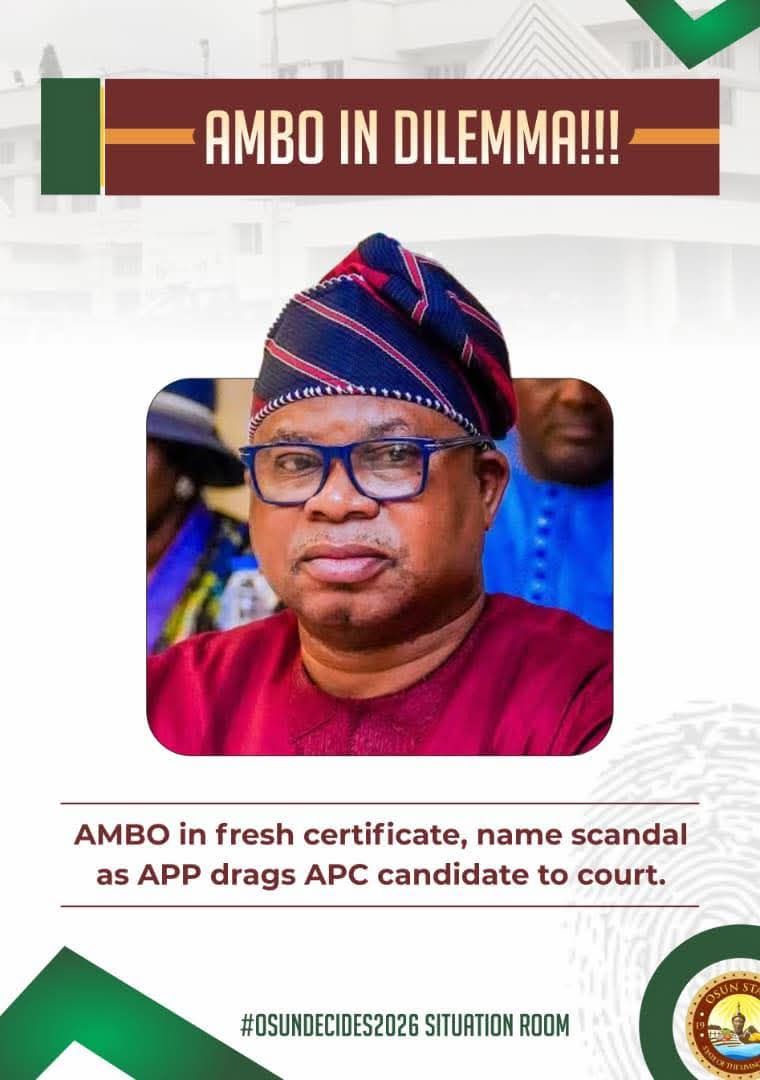
A major political storm has erupted ahead of the Osun State governorship election. The Action Peoples Party (APP) has taken the APC flag bearer Bola Oyebamiji, to court over alleged certificate and identity issues.
Court documents reveal that the APP claims Oyebamiji submitted questionable academic credentials to INEC. The party argues this raises serious doubts about his eligibility and highlights concerns over transparency in Nigeria’s electoral process.
Central to the controversy is a name discrepancy. Oyebamiji allegedly used “Munirudeen” in a federal appointment. APP claims this name does not appear on any academic certificates or personal official documents.
Further claims indicate he served as Managing Director of the National Inland Waterways Authority under the disputed identity. No legal documentation was provided to reconcile the discrepancy, raising accountability concerns.
The party asserts that the same documents were submitted to INEC during nomination. APP argues this undermines the credibility of the electoral screening process and questions the agency’s role in verifying candidate credentials.


Legal experts say the court may need to examine both the authenticity of documents and INEC’s procedures. The case could set precedent for eligibility checks in Nigerian elections.
Political observers note that the lawsuit may dramatically influence the Osun election. If Oyebamiji is disqualified, it could alter voter dynamics, giving opposition candidates a stronger chance to win the contest.
Nigeria has a history of electoral disputes linked to certificates. Past controversies involved forged qualifications or inconsistent names, forcing courts to uphold legal standards and protect the integrity of elections.
APP officials argue the alleged discrepancies violate election law, specifically rules requiring accurate candidate information. They insist that falsified or inconsistent identities should disqualify individuals from public office.
The Federal High Court in Osogbo will now decide the matter. Court proceedings are expected to draw significant public attention and ignite heated political debates across the state.
Observers say the timing of the lawsuit is critical. With the governorship election approaching, any ruling could influence campaign strategies and voter perception in the final weeks before polling.
Efforts to reach the APC campaign for comment were unsuccessful. The party has not publicly addressed the allegations, and Oyebamiji’s legal representatives have remained silent pending ongoing court proceedings.
Legal analysts warn that proving identity inconsistencies may be complex. Verification processes, witness testimony, and official document examination will be central to determining whether Oyebamiji can legally maintain his candidacy.
The controversy has sparked debates among civil society groups. Advocates for electoral transparency argue that such cases demonstrate the need for stricter vetting of candidates before election nominations.
Some political commentators suggest the lawsuit may reflect wider tensions between political parties. The APP’s legal action could be interpreted as a strategic move to weaken the APC’s chances in the governorship race.
Observers emphasize the importance of judicial independence. The court’s decision must balance the rule of law, fairness to the accused candidate, and protection of the public interest in a transparent election process.
If Oyebamiji is cleared, the ruling may boost his legitimacy. Conversely, if disqualified, it could encourage further scrutiny of candidate credentials nationwide, prompting reforms in the nomination process.
Experts note that election credibility is vital for democratic governance. Cases involving alleged false documentation can erode public trust, affecting voter turnout and the perceived fairness of electoral outcomes.
The lawsuit also highlights accountability concerns within federal agencies. The alleged use of a disputed name in government service raises questions about administrative oversight and verification of employee credentials.
APP officials say their legal action is about fairness, not politics. They claim ensuring candidates meet all legal and procedural requirements strengthens democratic institutions and deters misconduct in future elections.
Political analysts predict the case will dominate media coverage in Osun. Public discussions, social media debates, and news reporting will likely influence voter sentiment as the court continues its examination.
Observers stress the potential for broader implications. The court ruling could serve as a precedent for other states, emphasizing the need for political parties to vet candidates thoroughly and avoid controversies.
The Federal High Court is expected to hear arguments over the coming weeks. Lawyers for both parties will present evidence, while INEC may also be required to justify its acceptance of Oyebamiji’s nomination documents.
Civil society groups have called for transparency. They urge the court to consider not only legal technicalities but also public trust and electoral integrity when deciding the outcome of this high-profile case.
Analysts suggest the controversy may influence campaign messaging. Candidates may emphasize integrity, transparency, and qualifications to sway voters concerned about governance standards and election credibility in Osun.

Election monitors warn of potential unrest. High-profile disputes like this can trigger protests, demonstrations, or heightened political tensions, making calm, measured reporting and judicial transparency essential for stability.
Experts say the case reflects systemic challenges in Nigerian elections. Inadequate verification processes, administrative oversight gaps, and political competition create opportunities for disputes over candidate eligibility to emerge frequently.
Observers highlight the importance of legal precedent. The outcome may influence how INEC and political parties handle nominations in future elections, reinforcing accountability and deterring misrepresentation of candidates.
The court’s decision will likely be closely watched nationally. Political parties, civil society, and voters across Nigeria are paying attention, as the ruling could reshape standards for candidate eligibility nationwide.
Analysts conclude that the controversy underscores the interplay of law, politics, and public perception. Electoral integrity, judicial scrutiny, and transparent processes remain vital for democratic legitimacy in Nigeria.
Read also: APGA crisis worsens as Oyo leaders dump party ahead elections
As proceedings continue, all eyes remain on the Osun Federal High Court. The case promises to test legal frameworks, political strategies, and the capacity of institutions to uphold electoral rules fairly.
About The Author
